The Father of Indian Archaeology: A Historical Review of Cunningham’s Buddhist Discoveries
Sir Alexander Cunningham (1814–1893), was a British army engineer who is universally recognized as the “Father of Indian Archaeology”. As the first Director-General of the Archaeological Survey of India (ASI), founded in 1861, Cunningham’s work fundamentally shifted the study of Buddhism from a purely textual discipline into a grounded, archaeological science.
Before Cunningham, the physical geography of the Buddha’s life and the subsequent spread of the religion under the Mauryan and Gupta empires were largely lost to time. Through a combination of rigorous field surveys, structural excavation, and numismatics, Cunningham resurrected the spatial and material history of early Buddhism.
Methodological Innovation: Textual Mapping
Cunningham’s greatest methodological contribution was his reliance on the travelogues of early Chinese Buddhist pilgrims—specifically Faxian (Fa-Hien, 5th century CE) and Xuanzang (Hsuen Tsang, 7th century CE). These monks had meticulously recorded distances, directions, and descriptions of the Buddhist sites they visited in India.
Cunningham treated these texts not as mere myths, but as literal maps. By combining their accounts with classical Greek records (like the campaigns of Alexander the Great) and geographic surveys, he successfully retraced the steps of the pilgrims to identify long-lost sites, including Nalanda, Taxila, and Kushinagar.
Major Excavations and Discoveries
1. Sarnath: The First Sermon
At age 21, while stationed in Benares (Varanasi), Cunningham began exploring nearby Sarnath, the site where the Buddha delivered his first sermon. In 1837, and later in the 1850s, he excavated the Dhamek Stupa, a massive 5th-century CE structure. Furthermore, he worked alongside the scholar James Prinsep to translate inscriptions found at the site, which helped confirm the location’s immense theological significance. He also uncovered the famous Ashoka Pillar with its lion capital, which remains a masterwork of Mauryan art.
2. Sanchi and the Bhilsa Topes
In 1850, Cunningham excavated the stupas at Sanchi, one of the oldest surviving stone structures in India.
Alongside Lieutenant F.C. Maisey, he sank shafts into several stupas in the region. Inside Stupa No. 3, they discovered steatite relic caskets containing the bone fragments of Sariputta and Mahamoggallana—two of the Buddha’s chief disciples. This discovery provided physical validation of the early Buddhist canonical texts.
3. The Bharhut Stupa: Rescuing Early Iconography
In 1873, Cunningham stumbled upon the ruins of the Bharhut Stupa in Madhya Pradesh. The stupa itself had been largely dismantled by local villagers who were using its bricks for construction. Cunningham realized the immense value of the remaining red sandstone railings (vedika) and gateways (torana), which featured some of the earliest known examples of Buddhist narrative art.
Recognizing that leaving the stones on-site would result in their total destruction, he transported the heavy stone fragments to the Indian Museum in Kolkata. These carvings are pivotal to art historians because they depict the Buddha aniconically (through symbols like footprints, an empty throne, or the Bodhi tree) and illustrate numerous Jataka tales (past lives of the Buddha).
4. Mahabodhi Temple and Kushinagar
Cunningham was directly responsible for the restoration of the Mahabodhi Vihara at Bodh Gaya, the site of the Buddha’s enlightenment. During his work there in 1881, he discovered the Vajrasana (the Diamond Throne) and several Ashokan pillared bases.
He also identified Kushinagar (Kusinara) as the site of the Buddha’s Mahaparinirvana (final passing), unearthing a 1,500-year-old reclining Buddha statue that matched the exact descriptions left by Xuanzang.
Chronology of Discoveries
Sarnath Explorations
1837
Began investigations at Sarnath, leading to the excavation of the Dhamek Stupa and the Ashoka Pillar.
Sanchi Excavations
1850
Excavated the Great Stupa at Sanchi and surrounding sites, discovering the relics of key Buddhist disciples.
Establishment of the ASI
1861
Appointed as the first Archaeological Surveyor to the Government of India, formally establishing the Archaeological Survey of India.
Discovery of Bharhut
1873
Identified the heavily damaged Bharhut Stupa and rescued its invaluable narrative reliefs for preservation in Kolkata.
Mahabodhi Restoration
1881
Led the restoration of the Mahabodhi Temple at Bodh Gaya, uncovering the Vajrasana and Ashokan relics.
Primary References and Publications
For scholarly research, Cunningham’s own comprehensive monographs and ASI reports remain primary texts in the field of Buddhist archaeology. His major publications include:
The Bhilsa Topes, or Buddhist Monuments of Central India (1854): The first serious attempt to trace Buddhist history systematically through architectural remains, detailing his findings at Sanchi.
The Ancient Geography of India (1871): A monumental work synthesizing the campaigns of Alexander the Great and the travelogues of Xuanzang to reconstruct the historical landscape of the Buddhist period.
The Stûpa of Bharhut: A Buddhist Monument Ornamented with Numerous Sculptures (1879): The definitive record of the aniconic art, Jataka reliefs, and inscriptions he rescued from the site.
Mahâbodhi, or the Great Buddhist Temple under the Bodhi Tree at Buddha-Gaya (1892): His final major work detailing the excavations and the structural history of the site of enlightenment.
The Führer Forgeries: Archaeological Fraud and its Shadow over Buddhist Relic Authenticity
Dr. Alois Anton Führer (1853–1930) was a German Indologist and clergyman who served as the Archaeological Surveyor for the North-Western Provinces and Oudh in British India during the late 19th century. Initially regarded as a promising scholar who successfully reorganized the Lucknow Museum, Führer is now infamous for executing one of the most damaging series of forgeries, plagiarisms, and falsifications in the history of South Asian archaeology. His actions not only humiliated the colonial archaeological establishment but also cast a century-long shadow over the credibility of significant Buddhist discoveries (HUXLEY, 2010).
Fabrications and Epigraphical Fraud
Führer’s fraudulent activities spanned multiple regions and archaeological disciplines. He routinely plagiarized the works of other scholars, falsified excavation reports, and submitted entirely fake epigraphical data.
During an 1893–94 tour of Burma, Führer “invented in toto” inscriptions that did not exist. He artificially constructed these fake texts from obscure publications to support his own theories about the influence of North-Indian Buddhism on Burmese architecture (HUXLEY, 2010).
In the Terai region near the modern border of India and Nepal, Führer also continually made up reports regarding the ancient site of Kapilavastu (the childhood home of Siddhartha Gautama). He submitted official reports describing vast ruined stupas ready for excavation that were completely non-existent (FAlk, n.d.). Furthermore, finding himself filling a post for which he was underqualified, he engaged in distributing forged relics of the Buddha, including passing off a fake Buddha tooth to a Burmese monk (FAlk, n.d.).
The Tainting of the Piprahwa Discovery
Führer’s most lasting damage to Buddhist credibility concerns his association with the Piprahwa Stupa. In January 1898, a British landowner named William Claxton Peppé excavated a brick stupa on his estate at Piprahwa. He uncovered a massive stone coffer containing several soapstone and crystal reliquary urns. One of the urns bore a Brahmi inscription claiming to contain the bone relics of the historical Buddha, enshrined by his Shakya kinsmen (Allen, n.d.).
Because Führer was acting as an archaeological surveyor in the region at the time, he quickly attached his name to Peppé’s genuine discovery. When Führer was exposed as a serial forger later that year by the antiquarian Vincent Smith and the epigraphist Heinrich Lüders, the Government of India forced his resignation, suppressed his publications, and quietly hushed up the scandal (Allen, n.d.).
However, the damage was irreversible. The proximity of a known fraudster to the Piprahwa find led generations of scholars to suspect that the Piprahwa inscription—and perhaps the relics themselves—were planted or tampered with by Führer.
Impact on Buddhist Credibility
The fallout from Führer’s exposure had severe consequences for the global Buddhist community and the study of its early history:
Diplomatic Friction over Relic Distribution: At the time of the Piprahwa discovery, the British Government of India had agreed to offer the newly discovered relics to King Chulalongkorn of Siam for distribution among the Buddhist nations of Ceylon, Burma, and Siam. Führer’s scandal broke just as these diplomatic arrangements were being finalized. The revelation that the consulting archaeologist was a known fraudster placed a heavy question mark over the authenticity of the sacred remains, complicating their transfer and embarrassing the involved governments.
The “Siam Conspiracy” and Century-Long Skepticism: For over a century, epigraphists and historians debated whether Führer had forged the Piprahwa Brahmi inscription to secure academic glory. This intense scholarly doubt meant that one of the most important archaeological sites in Buddhist history was treated with suspicion. It was only in recent decades that modern epigraphical analysis largely cleared the Piprahwa inscription of Führer’s taint, confirming its antiquity (FAlk, n.d.).
The Weaponization of Doubt: Führer’s well-documented tendency to distribute fake relics provided permanent ammunition for skeptics to question the historical legitimacy of early Buddhist sites. His audacity in fabricating evidence gave critics a persistent reason to doubt the physical legacy of the historical Buddha.
Führer’s legacy serves as a stark historical case study of how a single bad actor in the archaeological record can deeply destabilize the historical and spiritual credibility of an entire religious tradition.
References
Allen, C. (n.d.). What Happened at Piprahwa.
Cited by: 2
FAlk, H. A. (n.d.). The Ashes of the Buddha.
Cited by: 21
HUXLEY, A. (2010). Dr Führer’s Wanderjahre: The Early Career of a Victorian Archaeologist. Journal of the Royal Asiatic Society, 20, 489-502. https://doi.org/10.1017/s1356186310000246
MODULE 1: The Tetra-Cameral Model – The Bio-Spiritual Engine
Focus: Understanding the heart as a quantum biological antenna and mapping the physical anatomy to spiritual reality.
1.1 Introduction to the Bio-Spiritual Engine
For centuries, human anatomy has viewed the heart merely as a mechanical pump, sustaining biological survival. However, advancing into a higher dimension of Christian leadership requires understanding the heart as a bio-spiritual engine. The Tetra-Cameral Model maps the four physical chambers of the human heart to the four pillars of optimized spiritual leadership: Competence, Character, Commitment, and Consciousness. This framework represents a physiological and spiritual shift, moving a leader from a state of mere biological survival into the fullness of divine life.
1.2 The Anatomy of the 4 C’s
The physical architecture of the heart reflects the spiritual architecture of a transformed leader:
The Right Atrium (Competence): The entry point. Just as deoxygenated blood enters here to be prepared for renewal, raw human skill and earthly competence are gathered here, requiring divine breath (oxygen/Spirit) to become useful for Kingdom purposes.
The Right Ventricle (Commitment): The chamber of propulsion. It pumps blood to the lungs. Spiritually, this represents the drive, the discipline, and the commitment required to push our raw competencies into the refining presence of God.
The Left Atrium (Character): Receiving the oxygenated, purified blood. This represents the accumulation of character—the internalized moral and spiritual fortitude that comes after refinement.
The Left Ventricle (Consciousness): The most powerful chamber, responsible for distributing life-giving blood to the entire body. In the renewed believer, this serves as the locus of Christ-consciousness, distributing divine awareness, spiritual intuition, and unified purpose throughout the individual’s life and leadership.
1.3 The Septum and the Word of God
The chambers of the heart are separated by the septum, a vital wall that prevents the mixing of oxygenated (renewed) and deoxygenated (unrenewed) blood. In the Tetra-Cameral framework, the septum symbolizes the dividing work of the Word of God, as described in Hebrews 4:12—dividing soul and spirit, bone and marrow. It ensures that divine consciousness is not diluted by carnal, survival-driven impulses.
1.4 Qualia and the Dark Energy of the Spirit
To understand how the heart interacts with God, we must look at qualia—the subjective, conscious experience of reality. Modern physics points to “dark energy” as the unseen force expanding the universe. In a theological parallel, the non-local spiritual data of God acts as a divine energetic force. The heart functions as a quantum biological antenna, uniquely tuned to capture this non-local spiritual data and translate it into human qualia—allowing the believer to subjectively “feel” and “know” the presence, conviction, and will of God before the cranial brain even processes the thought.
What is the “Mind” in Biblical Ontology?
To understand the biblical mind, one must look at the original Hebrew and Greek terminologies, which present a highly integrated model of human cognition:
The Hebrew Model (Leb / Lebav): In the Old Testament, there is no separate word for “brain” or “intellect.” The word typically translated as heart (leb) functions as the mind. It is the locus of logic, memory, emotional intelligence, and moral reasoning (e.g., Proverbs 23:7).
The Greek Model (Nous, Phronema, Dianoia): The New Testament writers, using Greek, employ more specific terms.
Nous refers to the intellect, the capacity for perceiving truth, and the reasoning faculty.
Phronema denotes a mindset, a cognitive inclination, or an overarching worldview.
Dianoia refers to deep thought, imagination, and the processing of information.
In scripture, the mind is the control center where consciousness meets commitment, ultimately shaping human character.
MODULE 2: The Cardiology of Conscience (Suneidesis) & The Cardiac Veto
Focus: The neurobiology of moral agency and the heart’s executive authority over the brain.
2.1 The Intrinsic Cardiac Ganglia: The Brain of the Heart
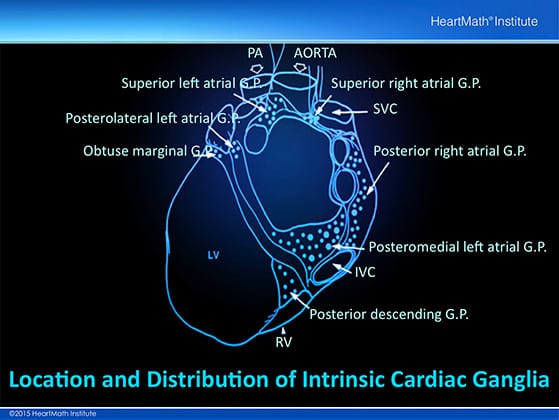
The concept of the “Cardiology of Conscience” bridges neuroscience and biblical truth. The heart possesses its own complex nervous system, known as the Intrinsic Cardiac Ganglia. This network contains tens of thousands of neurons that learn, remember, and make functional decisions independent of the cranial brain. Through afferent neurological pathways, the heart actually sends more signals to the brain than the brain sends to the heart. This establishes the heart as the primary biological resonator for Divine Law.
2.2 Suneidesis – The Seat of Moral Agency
The biblical concept of conscience (suneidesis) is not merely a psychological construct located in the cerebral cortex; it is a bio-spiritual reality seated in the heart. When a Christian leader is indwelt by the Holy Spirit, the Intrinsic Cardiac Ganglia becomes the physical interface for spiritual conviction. It is the sensory organ that perceives moral truth.
2.3 The “Spiritual Governor” and the Cardiac Veto
The cranial brain is fundamentally wired for biological survival—it prioritizes self-preservation, ego, and physical safety. In contrast, the regenerated heart is wired for sacrifice, divine obedience, and moral truth. The Cardiology of Conscience posits that the heart acts as a “Spiritual Governor.” When the cranial brain generates an impulse driven by fear, greed, or fleshly survival that conflicts with moral truth, the heart has the capacity to utilize a “veto power.”
2.4 Training the Veto
For Christian leaders, recognizing and empowering this cardiac veto is the essence of spiritual maturity. When faced with an ethical dilemma or a high-pressure leadership decision, the cranial brain will calculate the safest, most profitable route. The awakened conscience, resonating through the cardiac neural network, will signal a disruption if that route violates divine law. Leaders must be trained to pause, listen to the physiological cues of the heart’s veto, and allow the Left Ventricle’s Christ-consciousness to override the brain’s survival instincts.
MODULE 3: The Biology of Transformation – Rewiring the Carnal Mind
Focus: Understanding the biological mechanics of Romans 12:2 through neuroplasticity and the dopamine reward system.
3.1 The Biological Reality of Romans 12:2
The Apostle Paul’s directive, “Do not be conformed to this world, but be transformed by the renewing of your mind” (Romans 12:2), is not merely a poetic metaphor; it is a neurological imperative. For decades, science believed the adult brain was a static organ. We now understand the reality of neuroplasticity—the brain’s lifelong ability to reorganize itself by forming new neural connections. Every thought, habit, and meditation physically alters the microscopic landscape of the cranial brain. Transformation is therefore a biological process initiated by a spiritual decision.
3.2 The Carnal Mind and the Dopamine Hijack
To understand how to renew the mind, leaders must understand what they are renewing it from. The “carnal mind” (driven by the flesh) is largely governed by the brain’s primitive survival and reward centers.
Dopamine’s Role: Dopamine is the brain’s primary currency of motivation and reward. The secular, fallen world is engineered to hijack this system, providing cheap, immediate dopamine hits through status-seeking, constant digital stimulation, conflict, and instant gratification.
When a leader’s dopamine pathways are wired to worldly metrics, their leadership becomes reactionary and exhausted. They lose the capacity for deep spiritual focus because their neurological circuitry is addicted to the shallow and the immediate.
3.3 The Sanctification of the Synapse
Renewing the mind requires intentional neuro-sculpting. When a leader consistently chooses to meditate on scripture, exercise the “Cardiac Veto” (as discussed in Module 2), and act in obedience, they are literally starving the old neural pathways of the flesh and myelinating (strengthening) new neural pathways of the Spirit. Over time, the brain begins to release dopamine not in response to worldly validation, but in response to spiritual obedience, deep prayer, and kingdom impact. The biological reward system becomes aligned with the mind of God.
MODULE 4: Executive Control & The Philippians 4:8 Thought Filter
Focus: The role of the Dorsolateral Prefrontal Cortex (DLPFC) in taking every thought captive and applying divine cognitive framing.
4.1 The Dorsolateral Prefrontal Cortex: The Brain’s CEO
If the heart is the spiritual governor, the Dorsolateral Prefrontal Cortex (DLPFC) is the chief executive officer of the cranial brain. Located in the frontal lobes, the DLPFC is responsible for higher-order cognitive functions: working memory, complex problem-solving, cognitive flexibility, and, most importantly, inhibition (the ability to suppress inappropriate or unhelpful thoughts and urges).
4.2 The Vulnerability of the Untrained DLPFC
Under extreme stress, fatigue, or spiritual warfare, the amygdala (the brain’s fear center) can hijack the brain, effectively bypassing the DLPFC. This results in leaders making impulsive, fear-based, or morally compromised decisions. An untrained leader reacts; a biologically and spiritually renewed leader responds.
4.3 The Philippians 4:8 Protocol
The Apostle Paul provided the ultimate cognitive training framework for the DLPFC in Philippians 4:8: “Whatever is true, whatever is noble, whatever is right, whatever is pure, whatever is lovely, whatever is admirable—if anything is excellent or praiseworthy—think about such things.”
The Filter in Action: This scripture is not just positive thinking; it is a rigorous, demanding cognitive filter. When an incoming thought or external pressure enters the mind, the DLPFC must be trained to run it through this six-point theological matrix.
If a thought is driven by anxiety, paranoia, or deceit, it fails the filter. By consciously rejecting the thought, the leader exercises the DLPFC, strengthening its inhibitory power. Over time, this conscious filtering becomes an automated neuro-spiritual reflex, shielding the leader’s peace and decision-making capacity.
MODULE 5: Cognitive Tuning and Spiritual Disciplines
Focus: Optimizing brainwave states and the neurological environment for deep communion with the Holy Spirit.
5.1 The Noise of the Modern Mind
The “Cardiology of Spirit” dictates that the heart acts as an antenna for divine data. However, if the cranial brain is operating in a state of high-beta stress—characterized by rapid, chaotic brainwaves associated with anxiety and hyper-vigilance—the static in the brain will drown out the subtle signals of the Spirit. A leader cannot hear the “still, small voice” of God when their neurological environment is deafening.
5.2 The Science of Stillness (Psalm 46:10)
Spiritual disciplines such as structured quiet time, Christian meditation, and contemplative prayer are not just pious duties; they are neuro-acoustic tools.
Shifting Brainwaves: Deep, focused stillness shifts the brain from stressful High-Beta waves into Alpha (relaxed awareness) and Theta (deep meditation/flow) states. In these states, the barrier between the conscious and subconscious mind lowers, allowing the truths of scripture to bypass intellectual defenses and root deeply into the heart.
5.3 Acoustic Tuning: Music and Binaural Sounds
The auditory cortex is deeply connected to the brain’s emotional and spiritual centers.
Worship as Alignment: Theologians have long known that worship prepares the heart. Neurologically, specific frequencies and harmonies in worship music can synchronize the left and right hemispheres of the brain (hemispheric synchronization).
Binaural Beats: The introduction of gentle binaural sounds (playing slightly different frequencies in each ear to create a third, internal frequency) can be utilized as a tool during quiet time to rapidly guide an exhausted, overstimulated brain into a restorative, receptive Alpha state. This physical tuning of the biological instrument ensures the leader is primed to receive the “thoughts, consciousness, and mind of God.”
MODULE 6: The Cardiology of Spirit & Aligning with the Mind of God
Focus: The mechanics of non-local consciousness and adopting the “Mind of Christ.”
6.1 Beyond Localized Intelligence
Secular leadership models rely entirely on localized intelligence—the data accumulated and processed within an individual’s physical brain. The “Cardiology of Spirit” introduces the reality of non-local intelligence. Because God is Spirit (John 4:24), His mind, thoughts, and wisdom exist outside the bounds of physical time and space. The Christian leader is not limited to their own localized intellect; they have access to an infinite, eternal data stream.
6.2 1 Corinthians 2:16 – “We Have the Mind of Christ”
Having the “Mind of Christ” is not merely adopting a Christian worldview or acting ethically; it is a bio-spiritual reality where the believer’s cognitive processes are synchronized with the Holy Spirit.
The Interface: The Holy Spirit does not bypass the human will; He interfaces with the human spirit, which is seated in the heart. When the heart (the antenna) is purified (Character) and tuned (Cognitive Tuning), it receives the thoughts of God.
Translation to Cognition: These spiritual impressions are then sent upward via the afferent neural pathways to the cranial brain, where the Dorsolateral Prefrontal Cortex translates them into actionable human thoughts, strategies, and innovations.
The Mind of God / The Mind of Christ (Perfected Consciousness)
The scriptural ideal is a human mind synchronized with the divine intellect—a state of elevated spiritual consciousness.
1 Corinthians 2:16:“For who has understood the mind of the Lord so as to instruct him? But we have the mind of Christ.” (Possessing the nous of Christ implies access to a divine perspective and behavioral paradigm).
Isaiah 55:8-9:“For my thoughts are not your thoughts, neither are your ways my ways, declares the Lord.” (Establishing the ontological gap between human cognitive limitations and divine omniscience).
6.3 Operating in E-Consciousness
When a leader consistently operates in this synchronized state, they enter what we term “e-consciousness” (eternal or energetic consciousness). This is a heightened state of awareness where a leader can discern the spiritual root of a secular problem, anticipate organizational shifts before they happen, and lead with a prophetic edge that confounds standard analytical models.
MODULE 7: Competence – The Execution of the Renewed Mind
Focus: Redefining “Competence” from secular skill to divinely anointed execution.
7.1 The Sanctification of Skill
In the 4C Model, Competence is the Right Atrium—the entry point of raw material. Many Christian leaders make the mistake of separating their professional competence from their spiritual consciousness. However, biblical competence is the application of divine wisdom to practical mechanics.
The Bezalel Principle: In Exodus 31, Bezalel was filled with the Spirit of God “with wisdom, with understanding, with knowledge and with all kinds of skills.” His spiritual consciousness directly elevated his physical craftsmanship.
7.2 Neuro-Efficiency and “Flow States”
When the mind is renewed and the heart is leading, the brain operates with profound neuro-efficiency. The friction of ego, anxiety, and self-doubt is removed. In behavioral science, this is known as a “flow state”—a state of hyper-focus and optimized performance. For the Christian leader, this is the state of abiding in the Vine (John 15). Work, administration, and problem-solving become an act of worship, executed with a level of excellence that secular grinding cannot match.
7.3 Aligning Competence with Kingdom Purpose
Competence without Character is dangerous; Competence without Consciousness is merely mechanical. Leaders must learn to audit their skill sets. They must ask: How does my specific professional expertise serve as a vessel for the Mind of Christ in my industry?
The Strong / Steadfast Mind (Cognitive Resilience)
A strong mind in scripture is characterized by regulated focus, emotional stability, and self-discipline.
Isaiah 26:3: “You keep him in perfect peace whose mind is stayed on you, because he trusts in you.” (Resilience is achieved through sustained cognitive focus on an immutable source).
2 Timothy 1:7: “For God gave us a spirit not of fear but of power and love and self-control [or a sound mind].” (The Greek word sōphronismos implies a disciplined, self-regulated, and well-balanced cognitive state).
The Vacillating / Double Mind (Cognitive Dissonance)
This describes a fragmented consciousness, where conflicting loyalties or beliefs lead to behavioral paralysis.
James 1:8: “…he is a double-minded man, unstable in all his ways.” (The Greek term here is dipsychos, literally “two-souled,” indicating a severe fracture in cognitive commitment).
James 4:8: “Draw near to God, and he will draw near to you. Cleanse your hands, you sinners, and purify your hearts, you double-minded.”
The Productive / Renewed Mind (Transformative Cognition)
The mind is viewed as highly plastic; it can be rewired and optimized through intentional inputs.
Romans 12:2: “Do not be conformed to this world, but be transformed by the renewal of your mind, that by testing you may discern what is the will of God…” (Cognitive reframing leads to behavioral transformation).
Philippians 4:8: “Finally, brothers, whatever is true, whatever is honorable, whatever is just… think about these things.” (A directive for productive cognitive focus).
The Weak / Depraved / Carnal Mind (Corrupted Consciousness)
This describes a mind that has actively rejected ethical structure, resulting in a breakdown of moral competence and rational judgment.
Romans 1:28: “And since they did not see fit to acknowledge God, God gave them up to a debased [reprobate] mind to do what ought not to be done.”
Romans 8:6: “For to set the mind on the flesh is death, but to set the mind on the Spirit is life and peace.” (The phronema of the flesh leads to entropy; the mindset of the Spirit leads to integration).
MODULE 8: The Resilience of an Anchored Mind (Commitment)
Focus: The biological and spiritual mechanisms of sustaining leadership under severe pressure and spiritual warfare.
8.1 The Amygdala and the Crisis of Fear
Leadership inherently involves crisis. When a crisis hits, the brain’s threat-detection center, the amygdala, sounds the alarm, flooding the body with cortisol and adrenaline. This “fight, flight, or freeze” response is useful for physical survival, but it is disastrous for executive leadership, as it literally shuts down the logic centers of the prefrontal cortex.
8.2 Vagal Tone and the Peace of God (Shalom)
Commitment (the Right Ventricle of our model) requires resilience. The biological anchor for this resilience is the Vagus Nerve, the primary highway of the parasympathetic (rest and digest) nervous system.
Theology of Peace: The peace of God, which “transcends all understanding” (Philippians 4:7), is not just an emotion; it is a measurable biological state. Deep trust in God’s sovereignty stimulates the vagus nerve, increasing “vagal tone.”
High vagal tone allows a leader to remain neurologically calm while stepping into chaos. While others panic and react, the anchored leader maintains access to their higher cognitive functions and the quiet voice of the Spirit.
8.3 Sustaining the Drive
Commitment is the propulsion chamber. It requires stamina. By managing cognitive load—delegating appropriately, observing the Sabbath, and maintaining the Philippians 4:8 thought filter—leaders prevent dopamine depletion and burnout, ensuring their drive is sustained by the Spirit, not by fleshly striving.
MODULE 9: Expanding the Mind for Greater Kingdom Impact
Focus: Breaking neurological rigidity, overcoming trauma, and expanding capacity for broader service.
9.1 The Danger of Neurological Rigidity
As leaders age, the brain naturally becomes more rigid. Neural pathways become deeply rutted. In spiritual terms, this manifests as traditionalism, a refusal to innovate, and an inability to perceive new things God is doing (Isaiah 43:19). Expanding the mind requires breaking this rigidity.
9.2 Healing the Fractured Filter
Many leaders operate with diminished capacity because their cognitive filters are damaged by past trauma, church hurt, or chronic failure. Trauma wires the brain for self-protection. Expanding the mind requires applying the blood of Christ and the truth of scripture to these specific neural pathways, forgiving offenders, and allowing neuroplasticity to literally heal the physical structures of the brain associated with those memories.
9.3 Cognitive Expansion and Faith
Faith is the catalyst for cognitive expansion. When God calls a leader to a task that exceeds their current competence, it forces a neurological stretch. By embracing divine assignments that require dependence on non-local intelligence (the Mind of God), the physical brain builds new synaptic connections. The leader’s capacity for complex problem-solving, empathy, and strategic vision physically grows.
MODULE 10: The Synthesized Leader – Final Integration
Focus: Synthesizing Competence, Character, Commitment, and Consciousness into a singular, unified expression of Christian leadership.
10.1 The Fully Functioning Tetra-Cameral Heart
A healthy biological heart beats in perfect synchronization. If the chambers are out of rhythm, the body enters fibrillation and dies. The same is true for the spiritual leader.
The Synthesis: The Synthesized Leader does not compartmentalize. Their Competence (skill) is refined by their Commitment (drive), purified by their Character (integrity/conscience), and directed by their Consciousness (the Mind of Christ).
10.2 The Metric of Success: Fruit, Not Just Function
In secular models, the metric of success is mere output. In the 4C model, the metric is spiritual fruit. The Synthesized Leader evaluates their ministry and professional life not just by what they produced, but by who they became in the process, and whether their actions brought the tangible presence of God into their environment.
10.3 Commissioning the Mind
The training concludes with a call to continuous biological and spiritual stewardship. The mind is a garden that must be tended daily. The Synthesized Leader understands that maintaining a pure conscience (a functioning Cardiac Veto), a filtered thought life (DLPFC governance), and an open antenna to the Spirit is the ultimate requirement for serving God fully in the modern age.
How to Strengthen the Mind (Biblical Praxis)
The biblical framework for strengthening the mind mirrors advanced concepts in cognitive behavioral therapy and neuroplasticity, framed within a theological context.
Cognitive Restructuring (The Renewing of the Mind): Romans 12:2 treats the mind not as a static vessel, but as a dynamic operating system that requires constant software updates (“renewal”). This is achieved by systematically replacing cultural or maladaptive narratives with divine truth.
Thought Capture (Metacognitive Regulation): 2 Corinthians 10:5 instructs believers to “take every thought captive to obey Christ.” This is a mandate for high-level metacognition—the ability to think about one’s own thinking, evaluate an intrusive thought, and consciously choose whether to accept or reject it based on a standard of truth.
Directed Focus (Curating Inputs): Philippians 4:8 demands strict governance over what the mind consumes. By actively dwelling on that which is true, honorable, and just, one starves negative neural pathways and reinforces positive cognitive loops.
Integration of Action and Belief (Commitment): The biblical mind is only strengthened when internal belief is actualized through external commitment. Colossians 3:2 says, “Set your minds on things that are above, not on things that are on earth.” This “setting” is an active, volitional choice that binds human consciousness to a higher ethical character.
1 Synthesize the Tetra-Cameral Model (Module 1) with the concepts of the cardiac veto and intrinsic cardiac ganglia (Module 2) and non-local consciousness/e-consciousness (Module 6). How does viewing the heart as both a moral governor and a quantum biological antenna enable leaders to exercise “veto power” over impulsive or carnal brain signals while simultaneously receiving and translating divine impressions into strategic action? Illustrate with a hypothetical high-stakes leadership decision.
2. Evaluate the neurological and spiritual mechanisms of mind renewal described in Modules 3 and 4. How do dopamine realignment, neuroplasticity, and DLPFC-mediated inhibition (via the Philippians 4:8 filter) interact to transform a carnal or performance-driven mindset? Design a 21-day integrated protocol for a Christian leader struggling with digital distraction or status-seeking that combines scripture meditation, cardiac veto practice, and thought filtering.
3 Analyze the relationship between cognitive tuning through spiritual disciplines and brainwave states (Module 5) and alignment with the Mind of God (Module 6). In what ways can practices that shift from high-beta to alpha/theta states enhance a leader’s ability to access non-local divine intelligence? Propose specific acoustic or stillness-based exercises that could be adapted for a busy executive team setting, supported by both neuroscientific and biblical rationale.
4 Integrate the Bezalel Principle and flow states in sanctified competence (Module 7) with the resilience mechanisms of vagal tone and amygdala management (Module 8). How does sustained commitment under pressure protect and amplify divinely anointed execution? Create a leadership scenario involving chronic organizational crisis and outline a multi-step response drawing on at least four concepts from Modules 7 and 8.
5 Critically examine how neurological rigidity, trauma, and entrenched neural pathways (Module 9) interact with earlier concepts of neuroplasticity (Module 3) and the cardiac veto (Module 2). Develop an integrated intervention strategy for a leader or team experiencing resistance to innovation or “new thing” vision (Isaiah 43:19) that incorporates forgiveness-based healing, faith-stretching assignments, and ongoing mind renewal practices.
6 Synthesize the four pillars of the Tetra-Cameral Model across all modules into a unified framework for the “Synthesized Leader” (Module 10). How does proper functioning of the “septum” (symbolizing division between unrenewed and renewed states) prevent leadership “fibrillation” or compartmentalization? Design a quarterly self-audit tool that measures integration of Competence, Commitment, Character, and Consciousness through both neurological indicators and spiritual fruit.
7 Compare and contrast traditional Western dualistic views of mind/body with the bio-spiritual integration presented in the manual (especially Modules 1, 2, and 6). What strengths and potential theological or scientific limitations arise when the heart is positioned as the primary interface for divine intelligence and moral agency? Suggest safeguards or additional biblical anchors to strengthen the framework.
8 Apply concepts from Modules 4, 5, and 6 to the challenge of prophetic leadership in a rapidly changing cultural or organizational environment. How can a leader cultivate automated thought filtering, brainwave optimization, and e-consciousness to discern spiritual roots of problems and anticipate shifts? Provide a step-by-step process for incorporating these into weekly decision-making rhythms.
9 Reflect on the practical exercises suggested throughout the manual (cardiac veto awareness, Philippians 4:8 filtering, flow-state abiding, vagal tone practices, etc.). Choose one current leadership challenge you face and construct a personalized, multi-module action plan that draws on at least three distinct lessons. Explain the expected neurobiological and spiritual outcomes and how you would measure progress in both domains.
10 In light of the final call to continuous stewardship of the mind as a “garden” (Module 10), evaluate the long-term sustainability of the neuro-theological practices advocated across the ten lessons. How might regular integration of heart-centered listening, cognitive restructuring, and non-local alignment prevent leadership burnout while increasing kingdom impact? Propose an ongoing personal or communal praxis (e.g., annual review, accountability structure, or daily/weekly rhythms) that embeds these principles into a leader’s life.
The Cardiology of Conscience: Quantum Microtubules, the Cardiac Brain, and the Biological Basis of Divine Law
Abstract This paper proposes a novel framework for understanding human volition and moral agency by synthesizing recent findings in neurocardiology and quantum biology with Biblical anthropology. Building on the e-Consciousness Model, we argue that the “Hard Problem” of consciousness is resolved when the biological organism is viewed as a quantum antenna for the Spirit (Dark Energy). Specifically, we posit that the Intrinsic Cardiac Ganglia (the “heart-brain”) function as the primary resonator for Divine Law, possessing the neurophysiological capacity to “veto” the survival-driven impulses of the cranial brain. This mechanism offers a scientific basis for the Biblical assertion that the law of God is “written on the heart” (Hebrews 10:16), redefining the role of the heart from a mere pump to the seat of moral governance.
Pre-Existing Order in an Eternal Cosmos: Triadic Consciousness and the “Memory” of the Universe
Abstract Recent observations from the James Webb Space Telescope (JWST) have revealed massive, fully formed galaxies existing merely 200–400 million years after the Big Bang—a timeframe insufficient for standard stochastic formation models. These anomalies challenge the Lambda-CDM model’s assumption of a creatio ex nihilo 13.8 billion years ago. This paper proposes a radical revision of cosmic origins through the lens of the Triadic Model of Consciousness. We argue that the 13.8-billion-year mark represents not an absolute beginning, but a localized “inflationary event” within an eternal, pre-existing Divine Consciousness. By integrating the theological structure of the Knower, Known, and Process of Knowing with the physical phenomenon of Dark Energy, we posit that the universe possesses a “Quantum Memory” that guided the rapid assembly of early cosmic structures.
The Separation of the Triad: A Teleological Integration of Big Bang Cosmology, The Anthropic Principle, and the Physics of the Glorified Body
Abstract This paper proposes a novel cosmological framework grounded in the “e-Consciousness” model. It posits that the Big Bang was not a creation ex nihilo (out of nothing), but an Ontological Separation of the Primordial Triadic Consciousness (the Godhead) into the dimensions of space-time. This separation was a necessary precondition for the emergence of distinct, self-aware beings. By rejecting the Multiverse hypothesis in favor of a singular, fine-tuned universe, this model argues that the 13.8 billion years of cosmic expansion serve as a “gestation period” for the ultimate objective of creation: the manufacturing of the “Glorified Body.” Drawing on 1 Peter 1:20 and Johannine theology, we demonstrate that the Incarnation was not merely a remedial action for sin, but the pre-ordained mechanism by which the Invisible Spirit becomes visible, allowing humanity to overcome universal entropy and participate in an eternal, localized existence.
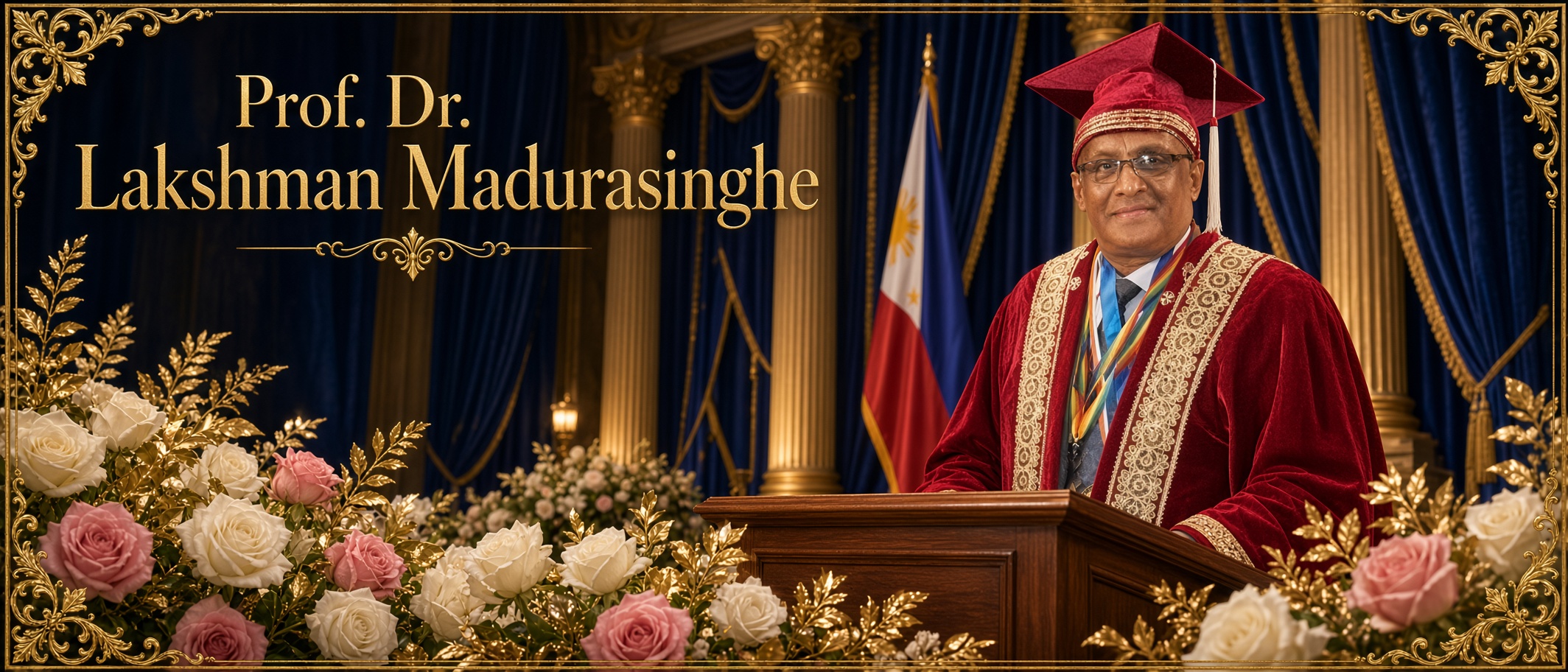
E-consciousness is a process or mindful, intentional framework or approach developed by Prof.Lakshman Madurasinghe that aligns thoughts, emotions, and actions with God’s will. It draws on emotional and spiritual intelligence to foster resilience and authenticity, countering superficial motivations like fame or approval. It was the result of long years of work and research that paved the way for the development and fine-tuning of instruments that resulted in e-Consciousness. By focusing on eight key principles—Eliminate, Exchange, Energize, Empathy, Encourage, Esteem, Endure, Eternal—e-consciousness equips leaders to serve with purpose. The practice of e-Consciousness elements leads to seven E-Consciousness states
These work together with 4C model covering Competence, Character, Commitment and Consciousness
The pursuit of human potential has long been a focus of philosophical, psychological, and spiritual inquiry. The 4 C Model—Competence (skill and ability), Character (moral integrity), Commitment (dedication), and Consciousness (awareness)—provides a structured approach to this endeavor. This article posits that an integrated application of these components, rather than isolated development, is essential for optimizing potential, aligning with holistic frameworks like the Eucharistic Consciousness model .
We often refer to our minds and to what we are thinking unselfconsciously, as though it was obvious what we were referring to. However, philosophers have generally found answering the most basic – and therefore the most fundamental – questions about the mind exceptionally challenging. To say what the mind is made up of, what we really mean by terms like ‘thoughts,’ ‘ideas,’ and so on, is extremely difficult. It stretches philosophical inquiry to the boundaries of sense and subjectivity.
Scientists discover what happens in our brain as we die
Are our dying moments a vivid reel of our life’s memories? Do we get to experience a grand curtain call before our mortal time comes to an end? If you have ever found yourself grappling with these existential questions, you are not alone. The mysteries of death and what transpires in our brains in our final moments have puzzled scientists and philosophers alike for centuries.
Recent groundbreaking research by a team led by neuroscientist Dr. Ajmal Zemmar from the University of Louisville and involving colleagues from around the globe might just bring us a step closer to understanding these enigmatic processes.
In 2017, I was grateful for the opportunity I received to lecture on “Science of God” in which I mentioned the first microsecond of the big bang (0.000001) which modern researchers believe contained plasma, the fourth state of matter.
In 2021, researchers said they used the Large Hadron Collider to investigate this plasma which was the first matter ever to be present in our universe. And, they said, it had liquid-like properties.
Medicina Alternativa which I am heading globally, had its founder Chairman Dr.Inyushin of Alma Ata Kazakhstan postulating that the Bioplasma field which is the 5th state of matter is that which organizes and orchestrates Neurology. Physiology and biochemistry of organisms.
Even today, I am more than ever fascinated by the General Theory of Relativity, Dark matter and the Block Universe theory which is a subject that takes a considerable amount of my time these days.
Going Beyond The Outer Show- Sunday Times An Interview with Prof.Madurasinghe
Prof. Lakshman, through his revolutionary philosophy, dares all of you to take the possibility of transformation and optimizing your true potential seriously, creating nothing less than a revolution in consciousness and culture. He is a scholar proposing the view that we live in a world of infinite possibilities.
He believes that even though humans are predominantly preoccupied with the development of the mind, the key to unleashing true potential lies in awakening the heart which is central to all living. With a shift from head to heart, it would weaken the hold of ” Ego” and have a puissant impact on the person to Live, Love, Learn and Laugh, which is the beginning of enlightened living. He is the pioneer of e-Consciousness – the eight-dimensional system of inner transformation and a strong proponent of total brain development.
When he was just a kid, Anil Seth wondered about big questions. Why am I me and not someone else? Where was I before I was born? He was consciousness-curious before he knew the name for it. This drew him initially to physics, which he thought had the ideas and tools to understand everything. Then experimental psychology seemed to promise a more direct route to understanding the nature of mind, but his attention would again shift elsewhere. “There was a very long diversion through computer science and AI,” Seth told me recently. “So my Ph.D., in fact, is in artificial intelligence.” Though it wasn’t like that was going to confine his curiosity: AI led him to neuroscience and back to consciousness, which has been his focus, he said, for “the best part of 20 years or so.”
Can human consciousness affect the physical world? Being able to reliably demonstrate that consciousness can directly interact and change the physical world would be a game-changer, especially for breaking out of the materialist paradigm, or the paradigm that believes only physical matter (and energy) makes up the world.
A potential target for testing this hypothesis is electrical plasma – an electrically conducting medium that is the so-called “fourth state of matter,” in addition to solid, liquid, and gas. Electrical plasma is now thought to make up about 99% of the visible matter in the universe and it is also associated with anomalous luminous effects reported throughout history, including phenomena called will-o’-wisps, ball lightning, and possibly with moving points of lights observed during seances, shimmering apparitions, and even unidentified flying objects.
Closely analyzing the global trends during recent months, it is evident how the human weakness of DIVISIVENESS has been exploited to bring about our own early demise: Socially, Economically, Politically, Racially, and Theologically, as we drift ignorantly toward a global catastrophe and an early extinction of human civilization.
A predominant role in the awakening of consciousness has much to do with heart intelligence, expanded consciousness and heart coherence which would be the norm during this 5th Industrial Revolution as we transcend boundaries moving through this uncertain post-covid era.
Forget About It: How We Purge Thoughts From Our Mind
If you have ever tried to erase that annoying earworm from your mind or stop thinking about whether you locked the door after leaving the house, you know how disruptive it can be to think about something irrelevant to the task at hand.
While much work in cognitive neuroscience focuses on how the human brain remembers and retains information, some cognitive neuroscientists have instead turned to forgetting – working to track exactly how we forget a piece of information and what it means for patients suffering from neurocognitive disorders.
“It may sound surprising that people can control what and how they forget,” says Marie Banich of the University of Colorado, Boulder, who is chairing a session about new research on forgetting at the Cognitive Neuroscience Society (CNS) annual meeting today in San Francisco.
“But control over working memory is critical for switching between and re-prioritizing tasks. So in many ways, it is not surprising that we have control over the ability to remove information from the focus of our thoughts.”
How to get smarter in six achievable, science-backed steps
There is no convincing evidence that brain-training apps can make you smarter.
However, one line of enquiry has compared brain-training games to run-of-the-mill video games, and this is where things get interesting. In a 2015 study comparing the brain-training game Lumosity with the first-person puzzle game Portal 2, researchers found that Lumosity players didn’t show boosts in problem-solving and spatial skills, but Portal 2 players did.
More recently, in 2020, researchers based at the Karolinska Institutet in Sweden looked at data from some 9,000 American children and found that kids aged 9 or 10 who played video games for above-average amounts of time didn’t show any differences in intelligence compared with those who played less.