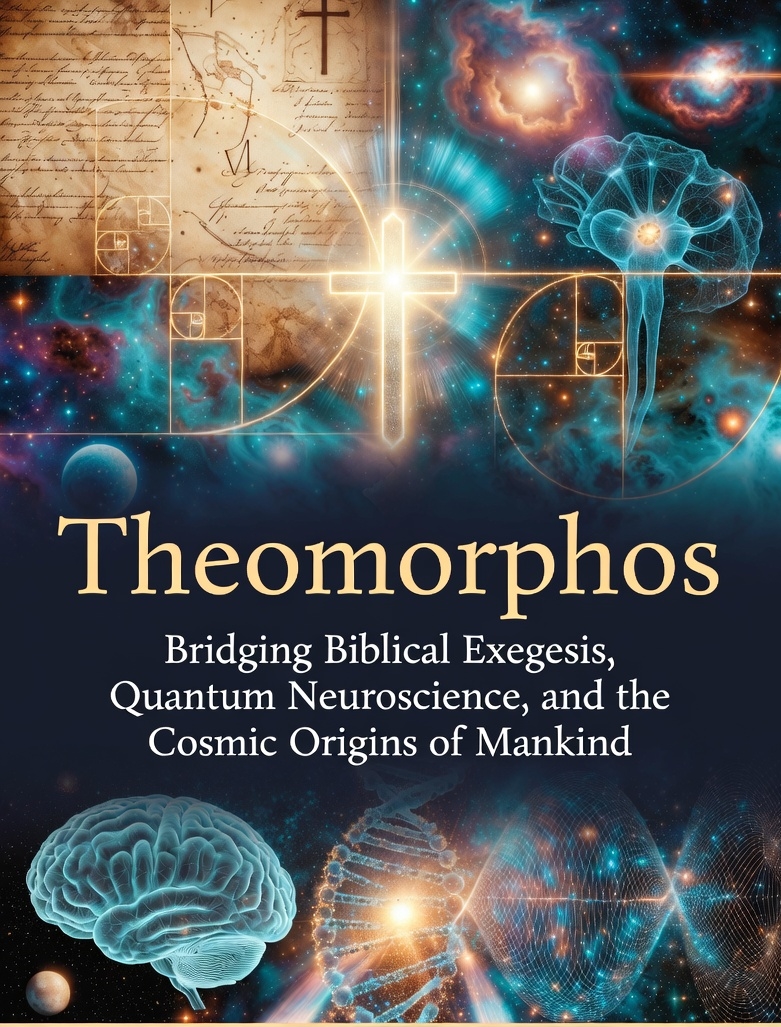

To ensure rigorous multidisciplinary development, comprehensive engagement with the e-Consciousness models and advanced articles curated here is a mandatory prerequisite for all Master’s and Doctoral candidates.

In an era defined by rapid advancements in the sciences, complex global philosophies, and a highly analytical public square, traditional theological education must expand its borders. For mature Christian leaders, pastors, and faculty, pastoral care and biblical exegesis remain foundational, but they are no longer sufficient on their own to address the intellectual and existential inquiries of the modern mind.
Engaging with multidisciplinary, “deep topics” that bridge theology, quantum physics, neurobiology, and forensic history is not a departure from orthodox faith; it is the necessary evolution of Christian scholarship. Exploring these intersections equips faculty to elevate advanced studies and empowers leaders to cultivate ministries defined by deep Competence, Character, Commitment, and Consciousness.
Here is why integrating these advanced fields into theological study is an urgent imperative.
1. The Intersection of Quantum Physics and Divine Reality
The traditional boundaries between the physical and metaphysical are dissolving. Topics such as the Block Universe, the Arrow of Time, Retrocausality, and the Big Bang challenge classical Newtonian perspectives, demanding a theology that can engage with quantum mechanics.
- Why it matters: When leaders grasp concepts like Triadic Consciousness or the non-local nature of time, they are better equipped to articulate the omniscience and omnipresence of God. Understanding time as a “block” where past, present, and future coexist offers profound new frameworks for explaining prophecy, predestination, and the pre-existence of Christ.
2. The Neurobiology of Sanctification and Conscience
Theology has long discussed the “heart” and “mind” in purely metaphorical terms. However, integrating the Ontology of New Birth with Spiritual Neuroplasticity and the Cardiology of Conscience anchors spiritual transformation in biological reality.
- Why it matters: Investigating the “cardiac brain” and the role of cellular structures like microtubules in processing consciousness moves sanctification from an abstract doctrine to a measurable reality. For pastors and counselors, understanding how the “Mind of Christ” and suneidesis (conscience) physiologically rewire the human mind provides powerful, scientifically grounded tools for behavioral transformation, trauma recovery, and spiritual formation.
3. Empirical Rigor: Forensic History and Anthropological Origins
Modern skepticism demands empirical evidence. Relying solely on circular reasoning (e.g., “the Bible is true because it says it is”) fails in advanced academic and secular environments.
- Why it matters: Leaders must be conversant in the Historical Bedrock, utilizing forensic pathophysiology to examine phenomena like the Digital Relic (the Shroud) or the Eucharistic miracle of Lanciano. Furthermore, precisely dating the Nativity (Late 5 BC) and the Crucifixion (3 April 33 AD) using astronomical and historical accounts (like the Sejanus Factor) arms faculty with unshakeable historicity. Exploring the Neanderthal connection, pre-Adamic humanity, and the Gap Theory (Asa and Bara) allows leaders to reconcile evolutionary history and the fossil record with the Genesis narrative without compromising biblical authority.
4. Robust Philosophical and Cosmological Apologetics
Pastors and faculty are actively competing against deeply entrenched secular worldviews. A mature leader must understand the mechanics of these opposing ideologies to dismantle them effectively.
- Why it matters: Studying Hegelian Dialectics and Marxist Materialism allows leaders to identify and critique the socio-political currents reshaping modern culture. Countering the question, “Why is there something instead of nothing?” requires mastery of advanced philosophical frameworks, from the Kalam Cosmological Argument to Alvin Plantinga’s Modal Ontological Argument. This intellectual rigor ensures that the church remains a bastion of elite philosophical thought.
5. Eschatology and the Theology of the Physical Body
Advanced theological study must address the ultimate physical destiny of humanity. Topics like the Necessity of Biological Death for Human Glorification, the Rapture (Converging Storm), and the nature of the Glorified Body bridge biology and eschatology.
- Why it matters: It contextualizes the fall of Adam and his priestly role in Eden not merely as an ancient tragedy, but as the initiation of a cosmic redemptive arc. Understanding why biological death is a necessary mechanism for the transition into a glorified, eternal state provides profound comfort in pastoral care and deepens the believer’s hope in the resurrection.
6. Navigating Comparative Global Thought
Christianity does not exist in a vacuum. Faculty and doctoral students must be prepared to engage respectfully and critically with the East and the Islamic world.
- Why it matters: Addressing questions for Buddhist doctoral students or navigating the intersections of Islamic Jurisprudence, Hinduism, and Philosophy ensures that Christian leaders are global statesmen. It prevents theological echo chambers and prepares scholars to articulate the uniqueness of the Gospel in highly pluralistic, multi-faith societies.
Conclusion: The Triad of Wisdom in Practical Leadership
For the mature Christian leader, the pursuit of these deep topics is an act of worship—the fulfillment of the command to love God with all one’s mind. However, the ultimate goal of this multidisciplinary study is not merely intellectual accumulation, but the practical, ethical transformation of the leader and their community. Balancing traditional theological studies with the frontiers of behavioral science, history, economics, and philosophy is essential for guiding leaders through the classical biblical triad of cognitive and spiritual development:
- Sophia (Transcendent Wisdom): Engaging with advanced physics, forensic history, and deep theology cultivates sophia—the apprehension of ultimate reality and divine truth. Exploring the macroscopic mechanics of cosmology, the ontology of the new birth, or the microscopic quantum orchestration within human biology (such as the mechanics underlying human cognition and awareness) expands a leader’s Consciousness. It allows them to grasp the profound majesty of the Creator’s design across both the vast physical universe and the intricate, unseen architecture of the mind.
- Sunesis (Critical Understanding): Leaders must then apply sunesis to connect the disparate dots. It is the analytical insight required to synthesize the mechanics of neuroplasticity with the theology of sanctification, or to reconcile ancient historical bedrock with modern skepticism and shifting global paradigms. This critical synthesis builds unshakeable Competence. It enables leaders to distill complex, interdisciplinary models—ranging from classical behavioral theories to the integration of advanced technologies in modern strategic environments—into coherent, orthodox theology that addresses the specific, sophisticated doubts of the modern mind.
- Phronesis (Practical & Moral Prudence): Finally, sophia and sunesis must culminate in phronesis—actionable, street-level wisdom driven by profound moral judgment. This is where high-level cosmology and theoretical theology meet daily pastoral care, ethical jurisprudence, and executive decision-making. By applying phronesis, leaders translate the “Mind of Christ” into deeply rooted Character and unwavering Commitment. It equips them to utilize their understanding of cardiac-driven cognitive processes (heart intelligence) and the human conscience to counsel the broken, ethically navigate complex ideological or organizational crises, and lead their congregations with lived, experiential truth.
By integrating these advanced studies, we do not merely educate intellects; we forge highly actualized leaders. We equip them to acquire sophia, synthesize it through sunesis, and deploy it daily via phronesis—ensuring that the deepest mysteries of the faith are actively used to heal, guide, and govern in everyday life.
Click for: Faculty of Philosophy, Religion and International Leadership
Doctoral Research Opportunities
1. The Metaphysics of Eternalism: Reconciling Triadic Consciousness and the Block Universe with Biblical Eschatology
- Core Focus: This study investigates how the B-theory of time (Block Universe), quantum retrocausality, and the concept of Triadic Consciousness intersect with Christian doctrines of divine foreknowledge, prophecy, and the intermediate state of the soul.
- Research Objective: To construct a robust metaphysical model demonstrating how a non-linear, non-local framework of time provides an analytical mechanism for understanding the simultaneous existence of historical, biological, and spiritual timelines, with specific application to the physics of a glorified body.
2. The Quantum Neurocardiology of Conscience: Synthesizing Suneidesis, Microtubular Processing, and the Intrinsic Cardiac Nervous System
- Core Focus: Bridging biblical anthropology, neuroscience, and quantum biology, this dissertation examines the physiological and metaphysical mechanics of the human conscience (suneidesis).
- Research Objective: To analyze the role of the “cardiac brain” and microtubular quantum coherence (allied with Orch-OR theory) in processing moral and spiritual consciousness. The project aims to provide an empirical and theological framework for spiritual neuroplasticity—mapping how the “Mind of Christ” physically alters human cognitive behavioral patterns.
3. Forensic Pathophysiology and Legal Hermeneutics: Constructing an Historical Bedrock Framework for Miraculous Relics and Eucharistic Phenomena
- Core Focus: A multidisciplinary approach utilizing forensic science, haematology, historical jurisprudence, and Christian apologetics.
- Research Objective: To evaluate the empirical data of specialized forensic case studies (such as the Lanciano Eucharistic miracle analysis and digital relational artifacts) through strict legal standards of evidence. The research will establish a standardized forensic-apologetic methodology for assessing high-attestation historical and physical claims within contemporary doctoral theology.
4. Ideological Deconstruction: Confronting Marxist Materialism and Hegelian Dialectics Through the Lens of Primordial Archetypes and the Fall
- Core Focus: This topic sits at the intersection of political philosophy, historical materialism, and dogmatic theology.
- Research Objective: To trace the secularization of the theological concepts of alienating sin and restoration within Hegelian and Marxist frameworks. The study will offer a critical theological alternative that addresses modern social and systemic crises by re-anchoring human alienation in the ontology of the Genesis narrative and the priestly role of Adam.
5. Anthropological Horizons: Reconciling Pre-Adamic Fossil Records and Hominid Antiquity with the Genesis Bara-Asa Paradigm
- Core Focus: An interdisciplinary inquiry involving South Asian archaeology, paleoanthropology, evolutionary biology, and Old Testament exegesis.
- Research Objective: To scrutinize the linguistic, theological, and scientific viability of the Gap Theory and the Bara (ex nihilo creation) versus Asa (fashioning) distinctions in Genesis. The research will investigate how the discovery of modern human connections to Neanderthals and ancient microlithic cultures aligns with the concept of Eden as a cosmic tabernacle and the introduction of a spiritually conscious humanity.