
The Ontology of Consciousness: A Comparative Analysis of Secular Theories of Mind and the Tetra-Cameral Model of Spiritual Cognition
Abstract The locus of human consciousness has been a historic battleground between neurobiology and theology. While modern secular paradigms predominantly argue that the mind is an emergent property of the cranial brain, this cerebro-centric view fails to account for the persistence of consciousness post-mortem and the biblical assertion of the heart as the cognitive center. This article compares classical and modern secular theories of the mind with the Tetra-Cameral Model of e-Consciousness. By applying this model, we differentiate the bio-spiritual mechanics of the unregenerate mind from the renewed mind of the believer (Romans 12:2), locate the subconscious, and demonstrate through biblical eschatology (Luke 16) that the mind is a frequency of the spirit that survives biological death.
I. Secular Theories of Mind: The Cranial Limitation
Before introducing the bio-spiritual framework, it is necessary to examine how secular philosophy and science have traditionally categorized the mind:
- Materialism / Physicalism (The Brain-Bound Mind): This is the dominant view in modern neuroscience. It posits that the mind is entirely synonymous with the brain. Consciousness, thoughts, and memories are merely the emergent byproducts of neurochemical reactions and synaptic firing in the cerebral cortex. In this view, when the brain dies, the mind is entirely extinguished.
- Cartesian Dualism: Pioneered by René Descartes, this theory argues that the mind (res cogitans) and the physical body (res extensa) are two distinct substances. While it acknowledges a non-physical mind, it traditionally isolates the interaction point to the pineal gland in the brain, divorcing it from the biblical concept of the heart.
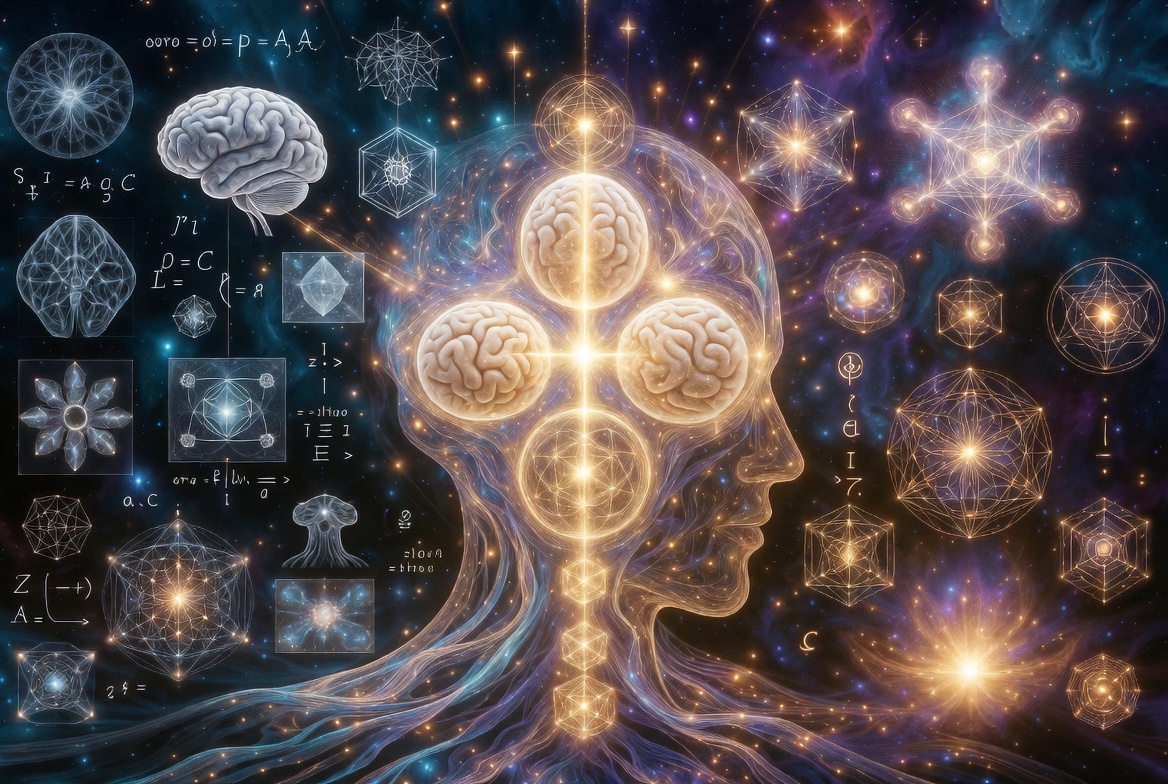
- Panpsychism / Quantum Consciousness: Modern frameworks like the Orchestrated Objective Reduction (Orch-OR) theory (Hameroff and Penrose) suggest that consciousness occurs at the quantum level within the brain’s microtubules. This moves closer to theology by treating consciousness as a fundamental property of the universe, but it still heavily relies on cranial architecture.
II. The Tetra-Cameral Model: The Heart as the Cognitive Engine
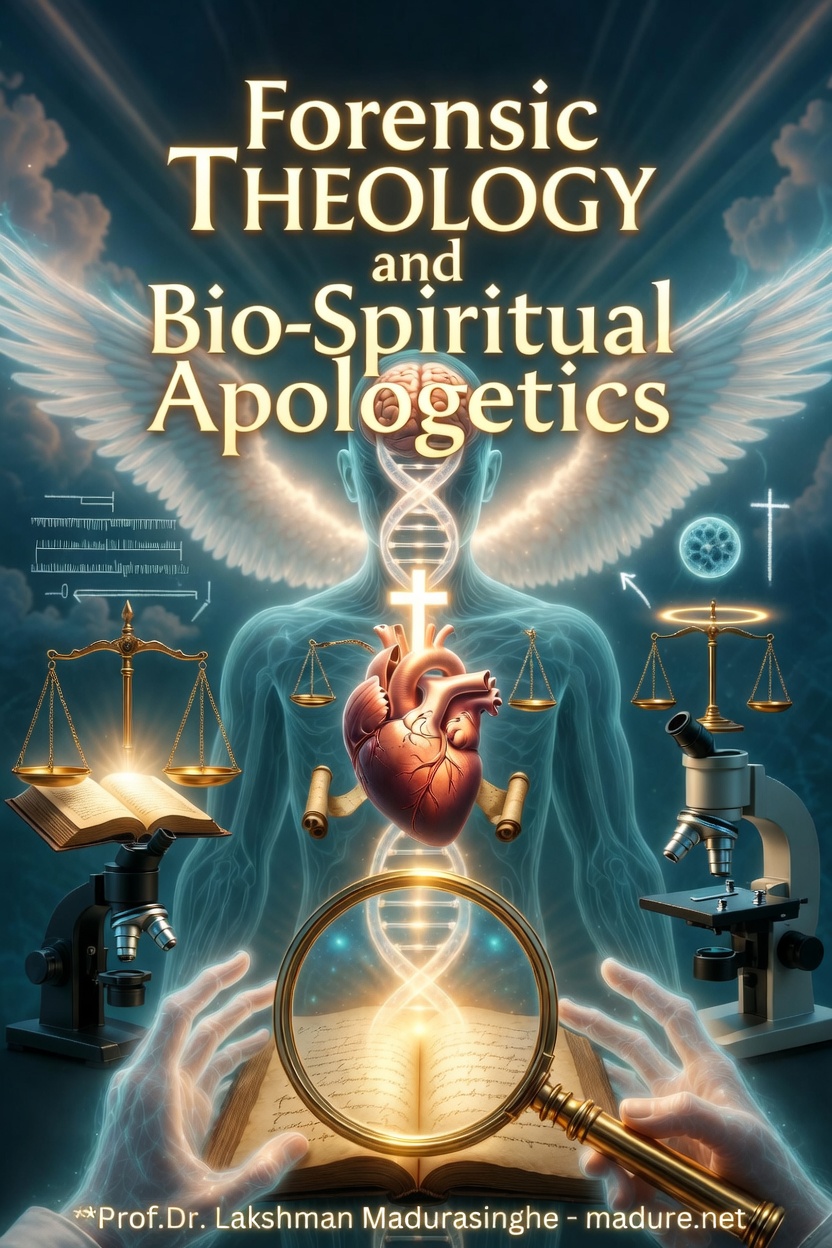
In stark contrast to cerebro-centric models, the Tetra-Cameral Model synthesizes neurocardiology (the 40,000 sensory neurites of the Intrinsic Cardiac Nervous System) with quantum biology and biblical anthropology. It posits that the true locus of human identity and ultimate consciousness is the heart, operating across four distinct chambers mapped to the 4C Model of leadership and spiritual development:
- Chamber I (Right Atrium): Competence – The reservoir of biological energy.
- Chamber II (Right Ventricle): Commitment – The seat of the Human Spirit and human will.
- Chamber III (Left Atrium): Character – The Mind of the Spirit; the filtration chamber of divine truth.
- Chamber IV (Left Ventricle): Consciousness – The dwelling place of the Holy Spirit.
III. The Locus of the Subconscious
In secular psychology, the subconscious is a repository of suppressed memories and automatic biological drives. In the Tetra-Cameral Model, the subconscious is mapped to the bio-quantum processing that occurs in the Right Atrium and the underlying microtubule networks before a quantum wave function collapses into a conscious thought (qualia). It is the ambient “noise” of the flesh, generational epigenetic memory, and latent survival instincts running in the background. If it is not filtered by the Word of God, this subconscious noise dictates conscious behavior.
IV. The Unregenerate Mind vs. The Mind of the Believer
The most profound application of the Tetra-Cameral Model is its ability to biologically and quantum-mechanically map the process of salvation and the mandate of Romans 12:2 (“Be transformed by the renewing of your mind”).
The Unregenerate Mind (The Natural State) In an unregenerate person, the spiritual circuit to the left side of the heart is dormant. Dark Energy (the universal spark of life) enters the Right Atrium, but the final collapse of the quantum wave function—the moment of conscious thought or qualia—occurs in the Right Ventricle (the seat of the Human Spirit). Because it is collapsed solely by the human ego, the output is restricted to the “eigenstates” of survival, pride, and fleshly desire. The unregenerate mind is fundamentally trapped in a biological survival loop.
The Mind of the Believer (The Regenerate State) When a person is “Born Again,” a quantum phase shift occurs. The signal crosses the “Spiritual Septum” (Hebrews 4:12) to the left side of the heart.
- The Process of Thinking: The signal enters the Left Atrium, which functions as the Mind of the Spirit (Character). Here, raw human drive is filtered and oxygenated by Divine Truth.
- The Thought-Event: The ultimate moment of qualia shifts to the Left Ventricle, where the Holy Spirit acts as the Supreme Observer. The wave function is collapsed not by ego, but by the frequency of the Glorified Christ.
To “renew the mind” (Romans 12:2) is the active, daily discipline of ensuring that the Left Atrium filters out the subconscious noise of the flesh, allowing the Left Ventricle to pump out “Christ-Conscious” actions (Divine Life or Zoë) to the rest of the body.
V. Post-Mortem Consciousness: The Evidence of Luke 16
If physicalism were true and the mind was merely the brain, biological death would equal total annihilation. However, biblical eschatology definitively refutes this.
In Luke 16:19-31 (the account of the Rich Man and Lazarus), we are given a profound glimpse into post-mortem consciousness. The Rich Man, though physically dead and buried, is in Hades. Yet, he exhibits full cognitive function:
- Memory: He remembers his five brothers and his past earthly life.
- Emotion/Empathy: He feels torment and expresses concern for his family.
- Reasoning: He argues with Abraham logically regarding the necessity of a miraculous sign (a resurrection) to warn his brothers.
Theological Conclusion: Luke 16 proves that the “Mind” is not a decaying biological byproduct of cranial tissue. In the Tetra-Cameral Model, the physical heart acts as a biological transducer (an antenna) that anchors the spirit to the space-time coordinate of the physical body. When the body dies, the physical “hardware” powers down, but the “software”—the frequency of the mind and spirit—persists in the spiritual dimension (the Dark Energy field/Block Universe).
For the saved believer, because their final conscious processing (qualia) was relocated to the Left Ventricle and orchestrated by the Holy Spirit during their earthly life, their “Mind of the Spirit” seamlessly transitions into the eternal presence of God upon physical death, fully retaining its identity, intellect, and awareness.
References for Further Study:
- Hameroff, S., & Penrose, R. (2014). Consciousness in the universe: A review of the ‘Orch OR’ theory. Physics of Life Reviews.
- Madurasinghe, L. The e-Consciousness Model: Integrating Theology, Physics, and Neurocardiology. (Specifically regarding the 4C Model and the Intrinsic Cardiac Ganglia).
- The Holy Bible. Romans 12:2; Luke 16:19-31; Hebrews 4:12.
 Azteca University NA Branch Campus SL