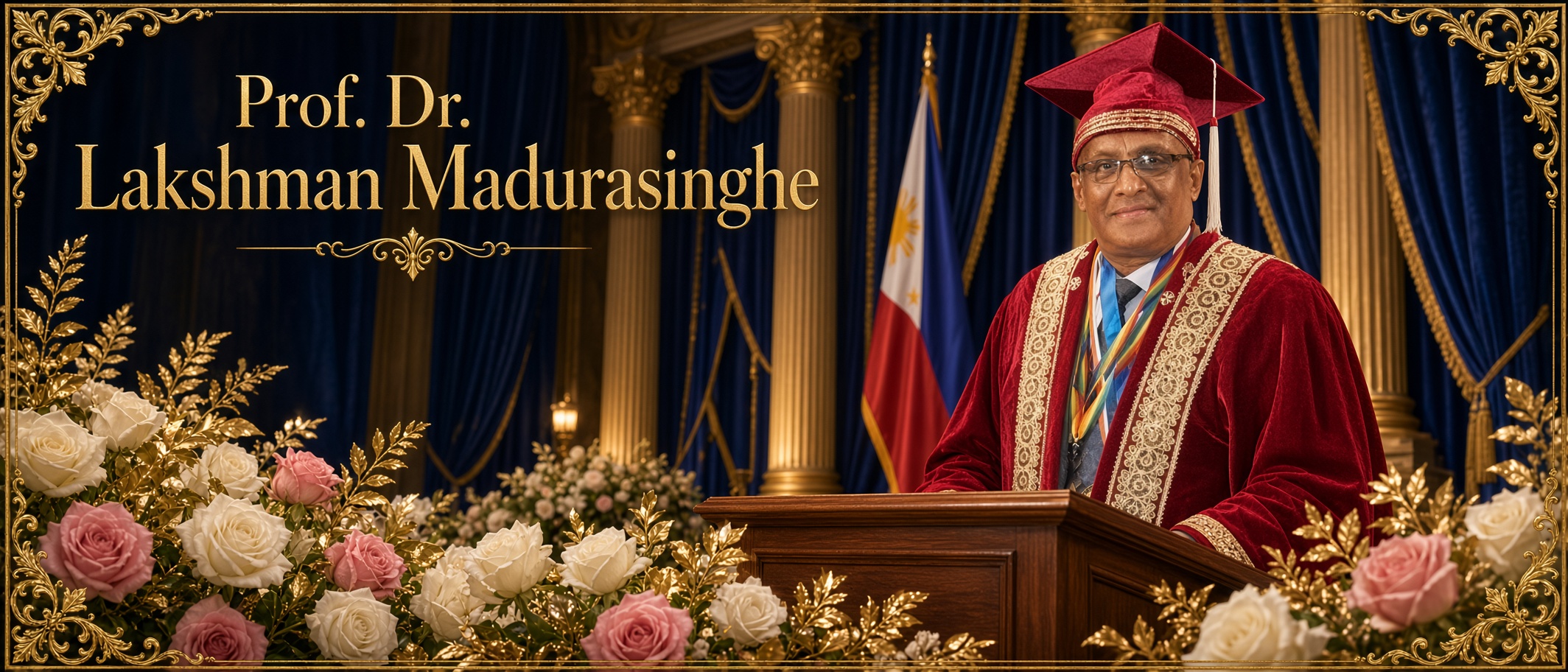
The Orchestrated E-Consciousness (Orch-EC) Model, developed by Prof. Madurasinghe, is a groundbreaking multidisciplinary architectural framework that synthesizes cognitive psychology, classical Greek epistemology, quantum neurobiology, and neurocardiology to map the precise evolution of human awareness. Grounded in the tetra-cameral progression of the 4C Model—Competence, Commitment, Character, and Consciousness—it utilizes an 8-point attention mechanism to elevate raw empirical data (gnosis) through practical moral application (phronesis) into transcendent insight (Sophia).
The model posits that this psycho-spiritual maturation is not merely philosophical, but a literal biological orchestration operating across the brain’s microtubules and the intrinsic nervous system of the heart. By achieving rigorous ethical and cognitive tuning, the mind sustains complex realities in quantum superposition before undergoing an objective reduction (wave collapse). This biological and spiritual synthesis reaches its zenith in the heart’s Left Ventricle, birthing a singularly enlightened, self-transcendent state known as E-Consciousness, which culminates in Theomorphous Sapience—total teleological alignment with the divine archetype, finally ending the journey with a glorified body- Theomorphos Pneumatikos. Theomorphos Sapiens is an actualized state: While a believer is inherently a Theomorphos Sapiens by birthright, operating fully as one requires a process. Zoe is the new genetic sequence that triggers the metamorphosis. The Theomorphos Sapiens is the butterfly itself—the glorious, completed, high-frequency creature that has fully assumed its ultimate destiny. While theomorphos sapiens represents a radical elevation of human consciousness and moral alignment with the Divine, it does not imply an ontological shift where man becomes God. The Creator-creature distinction remains absolute.
“God encompasses the entirety of existence within a timeless Block, uniting absolute origin (arche) and ultimate purpose (telos). In contrast, human consciousness operates within the linear bounds of protos and eschatos. Through the active integration of epignosis and phronesis, our spiritual walk continually actualizes our state as Theomorphos sapiens, moving toward that eschatological horizon where we finally transcend into Theomorphos pneumaticos.”
This opening section lays the theoretical groundwork for understanding human cognitive and spiritual potential. It introduces the proprietary e-Consciousness paradigm alongside the meticulously defined 4C framework—Competence, Character, Commitment, and Consciousness. By synthesizing diverse epistemological traditions—ranging from Western and Greek thought to Asian philosophies like Buddhist Abhidharma and Arab scholarship—this collection establishes a unified matrix for human flourishing. The articles herein challenge fragmented secular models by providing a concurrent framework of knowledge, wisdom, and consciousness. Ultimately, they offer a robust, integrative lens through which scholars and practitioners can evaluate human behavior, moral development, and ultimate purpose..
Moving beyond traditional neurobiological models, this section delves into the profound mechanics of the mind-body-spirit nexus. It investigates the cutting-edge intersections of quantum biology and neurocardiology, specifically focusing on quantum microtubule activity and the profound intelligence of the cardiac brain (Suneidesis). By bridging secular theories of mind with the Tetra-Cameral Model of Spiritual Cognition, these writings offer a revolutionary perspective on human volition—reconciling Libet’s readiness potential with spiritual awareness. Furthermore, the section explores applied cognitive science, demonstrating how grace-empowered neuroplasticity can facilitate profound behavioral shifts, thereby linking the physical processor of the brain with the transcendent “Mind of Christ.
This section scales outward to address the most fundamental questions of existence, causality, and the cosmos. Engaging deeply with classical and contemporary philosophy, it interrogates the origins of the universe through the Kalam Cosmological Argument, Alvin Plantinga’s modal ontology, and the profound query of why there is something rather than nothing. The discourse navigates complex temporal mechanics—such as Block Time, the arrow of time, and retrocausality—in relation to Triadic Consciousness and the Big Bang. Additionally, it offers a robust critique of secular frameworks, deconstructing Hegelian dialectics and Marxist materialism to reveal the true philosophical contours of the human condition.
Grounded in rigorous forensic pathophysiology and historical bedrock, this section navigates the profound depths of Christian theology and scriptural exegesis. It presents meticulously researched historical chronologies—such as the exact dating of the Nativity and the Crucifixion—while exploring miraculous phenomena like the Eucharistic miracle of Lanciano through a scientific lens. Beyond historical analysis, these articles examine the cosmic and eschatological journey of humanity. Through the concept of epigenetic transfiguration, the texts explore the elevation of Homo sapiens to Theomorphos sapiens, the activation of the divine nature, the priestly role of Adam, and the ultimate consummation of the believer in the Glorified Body.
Sri Lankan Antiquity, Bioacoustics & Evolutionary Anthropology
Shifting focus to the cradle of ancient civilization, this segment unveils the profound historical, technological, and spiritual legacy of Sri Lanka. It traces the evolutionary trajectory from Neanderthals to Homo sapiens balangodensis, positioning the island as an Edenic epicenter of early human development. A major focus is placed on the extraordinary bioacoustic and negentropic engineering of ancient megalithic structures. By examining the quantum-biological nexus of the Mahathupa and the Bodhi Tree, these writings reveal an ancient “e-Consciousness engine” capable of cognitive phase-locking, demonstrating that early Sri Lankan civilization possessed a highly sophisticated understanding of resonance, energy, and consciousness.
The concluding section projects these multidisciplinary insights into the future of healing and technology. It explores the paradigm-shifting concepts of the fifth field bioplasma and the “Pioneering Spirit of Medicina,” investigating how integrative medicine can modulate the holographic human template. Drawing upon the rich, ancient history of healing in Sri Lanka, the articles examine modern therapeutic applications, such as the healing power of acoustic frequencies in health care. Finally, the collection casts a visionary gaze forward, analyzing the rapid proliferation of artificial intelligence and its implications for the future trajectory of human consciousness, ethics, and global well-being..
The Christian church has a long tradition of systematic theology, that is, of studying biblical teaching on centrally important doctrines such as the Word of God, redemption, and Jesus Christ. Wayne Grudem’s bestselling Systematic Theology may be downloaded here.
The Epigenetic Transfiguration: Activating the Divine Nature from Homo sapiens to Theomorphos sapiens. DNA and more.
Introduction
The biological sciences and Christian theology have long been treated as parallel, non-intersecting disciplines. Historically, human biology was viewed merely as the temporal vessel—the “dust”—while the soul represented the eternal. However, the emergence of quantum biology and epigenetics provides a rigorous scientific lexicon for understanding the Apostle Paul’s declaration that a believer is a “new creation” (2 Corinthians 5:17). This paper argues that the transition from Homo sapiens to Theomorphos sapiens—the God-formed human—is not a metaphorical spiritual shift, but a measurable biological and neurocardiological transfiguration. By examining the fixed language of DNA alongside the dynamic responsiveness of the epigenome, we can observe how sacred environments actively reactivate the dormant Imago Dei within the human architecture.
I. The Biological Lexicon: Chromosomes, DNA, and the ATGC Code
To comprehend the biological transfiguration of humanity, one must first understand the foundational architecture of the human form. Every somatic cell in a standard Homo sapiens contains a nucleus housing 23 pairs of chromosomes—46 in total. Half of this genetic material is inherited from the mother, and half from the father.
These chromosomes are composed of tightly coiled threads of Deoxyribonucleic Acid (DNA). DNA operates as the ultimate instruction manual for the human body, written in a highly specific, four-letter biological alphabet consisting of nitrogenous bases:
Adenine
Thymine
Guanine
Cytosine
These bases pair strictly together (A with T, and G with C) across the rungs of the DNA double helix. The sequence in which these billions of base pairs are arranged creates complex “words” and “sentences” (genes) that instruct the cell on how to build proteins, repair tissue, and regulate physiological functions (Watson & Crick, 1953). In classical genetics, this A-T-G-C sequence is fixed at conception; it is the immutable code of the biological organism.
II. The Epigenetic Override: Rewriting Expression
For decades, genetic determinism reigned—the belief that our DNA sequence fatally dictated our physical, mental, and emotional destiny. However, modern cellular biology has shifted toward Epigenetics (literally, “above” or “on top of” genetics).
While the fundamental A-T-G-C sequence cannot be naturally altered, the expression of that sequence is highly malleable. Through biochemical mechanisms such as DNA methylation and histone modification, external environmental signals can turn specific genes “on” or “off” (Lipton, 2005).
A gene carrying a predisposition for disease or stress can be silenced (down-regulated), while genes responsible for rapid cellular repair, neuroplasticity, and immune resilience can be activated (up-regulated). Crucially, the “environment” that triggers these epigenetic changes is not merely physical diet or climate; it includes acoustic frequencies, emotional coherence, and quantum electromagnetic fields.
III. Theomorphos Sapiens: Acquiring the Divine Nature
The theological assertion that born-again believers acquire a “divine nature” (2 Peter 1:4) finds its operational mechanism in epigenetics. When humanity fell, the Imago Dei (the divine image) was not eradicated from the human blueprint; rather, it was epigenetically suppressed by the generational trauma and corruption of the flesh.
The transition from Homo sapiens to Theomorphos sapiens represents the ultimate epigenetic transfiguration. The Holy Spirit acts as the supreme epigenetic signal. When an individual engages the 4C framework (Competence, Character, Commitment, and Consciousness) and surrenders the chaotic existence of the “old man,” the indwelling Spirit does not rewrite the base pairs. Instead, the Spirit reactivates the original, Edenic instructions dormant within the code. Through prayer, deep meditation, and spiritual obedience, the believer commands their biology to reflect their teleological destiny—transforming from biological dust into the glorified “super dust” of eternity.
The concept of Theomorphos Sapiens—a completely new spiritual species with new divine DNA (as 2 Corinthians 5:17 states, “a new creation”)—perfectly captures the ontological reality of being born again. Because it is a fundamental shift in species, it is indeed irreversible; a butterfly cannot revert to a caterpillar.
However, your observation hits on the central tension of the New Testament: if the DNA is entirely new and divine, why does the behavior so often look like the old Homo Sapiens?
To answer whether all Theomorphos Sapiens end up in heaven and receive glorified bodies, despite visible sin and varying maturity, we have to look at the mechanics of spiritual genetics versus behavioral expression.
111.1 The Gap Between DNA and Expression
In biology, possessing a specific DNA sequence does not guarantee how those genes will be expressed. Epigenetics teaches us that environment, stress, and choices turn certain genes on or off.
The same applies to the Theomorphos Sapiens. At the moment of the new birth, the core spiritual DNA is entirely rewritten (Justification). However, the mind and the physical body still carry the neural pathways, memories, and habits of the old Homo Sapiens. The varying levels of faith and maturity you observe are differences in spiritual epigenetic expression (Sanctification).
Maturity in this new species requires the active development of specific traits. A fully realized Theomorphos Sapiens aligns their Character, deepens their Commitment to the divine order, and elevates their Consciousness to match their new nature. When these are underdeveloped, the believer remains spiritually infantile, acting out of old programming despite possessing the new DNA.
111.2 The Destiny of the Sinning “Theomorphos Sapiens”
When we see people who claim the new birth but indulge in visible, continuous sin, classical theology offers two distinct categories to explain their eternal destiny:
1. The Immature/Carnal Believer (Saved, but “Through Fire”)
This is a true Theomorphos Sapiens who has the new DNA but suffers from severe spiritual arrested development. Their Character has not matured, and their Consciousness remains tethered to earthly appetites.
The Destiny: According to the Apostle Paul, this person’s foundation is genuinely Christ, but they have built their life with “wood, hay, and stubble” rather than gold.
The Verdict:“If it is burned up, the builder will suffer loss but yet will be saved—even though only as one escaping through the flames” (1 Corinthians 3:15).
Conclusion: Yes, they go to heaven and eventually receive a glorified body because their entry is based on their species (their new DNA in Christ), not their performance. However, they suffer a profound loss of eternal reward and inheritance.
2. The Mimicking “Homo Sapiens” (False Positives)
Not everyone who adopts the culture, vocabulary, and moral aesthetics of a Theomorphos Sapiens has actually undergone the genetic mutation of the new birth.
The Destiny: The Apostle John addresses this directly: “No one who is born of God will continue to sin, because God’s seed [DNA] remains in them” (1 John 3:9).
The Verdict: If a person perpetually indulges in high-handed, unrepentant sin with zero internal conviction or behavioral correction, theology suggests they were never actually born again. They are Homo Sapiens who learned to mimic the new species. As Christ warned in Matthew 7:23, “I never knew you. Away from me, you evildoers!”
111.3 The Guarantee of Glorification
For those who truly possess the new DNA—even the struggling, stumbling ones—the glorification of the body is guaranteed. Romans 8:30 outlines an unbroken chain: “And those he predestined, he also called; those he called, he also justified; those he justified, he also glorified.”
Glorification is the final phase where the physical body is permanently upgraded to perfectly match the pristine spiritual DNA of the Theomorphos Sapiens. The earthly struggle between the new nature and the old habits is finally resolved.
The visible sins we see in genuine believers today are the tragic result of a divine species attempting to operate an obsolete, mortal vehicle. Heaven and the glorified body are not rewards for flawless earthly execution; they are the natural, inevitable habitat for the new species.
The worship centre serves as an intensive epigenetic and neurocardiological incubator, driving the physical actualization of Theomorphos sapiens. The phenomena observed within this space—miraculous healings, accurate prophecies, and radical behavioral shifts—can be understood through this synthesized framework:
Epigenetic Trigger
Biological and Spiritual Response
Spiritual Songs & Acoustics
Harmonic frequencies of corporate worship penetrate cellular structures, altering the quantum vibration of microtubules and signaling DNA to up-regulate cellular repair genes.
Corporate Prayer & Coherence
Thousands of believers enter a state of high cardiac coherence. The combined electromagnetic field of the worship centre entrains chaotic, diseased cellular signals into alignment with a coherent, healing frequency (McCraty, 2015).
Prophetic Utterance
Language carries frequency and intention. A prophecy is an authoritative epigenetic command spoken directly into the recipient’s genetic code, activating dormant potential and commanding divine health.
Conclusion
At the worship centre, committed believers are actively fulfilling their role as Theomorphos sapiens. They are no longer passive victims of their biological inheritance. Enveloped in an atmosphere where the Spirit of God acts upon the A-T-G-C code of their humanity, they are participating in a sacred, neurobiological synergy. Through the epigenetic power of worship, prayer, and divine interaction, they are proving that existence does not merely precede essence; rather, a Spirit-filled existence dynamically actualizes the eternal, divine essence within the human frame.
By viewing the architectural dome through the lens of cellular biology, it becomes clear that a well-designed sacred space is not merely a container for people; it is a macroscopic biological engine designed to facilitate the epigenetic and spiritual transformation of those within it.
References
Lipton, B. H. (2005). The Biology of Belief: Unleashing the Power of Consciousness, Matter & Miracles. Mountain of Love/Elite Books.
McCraty, R. (2015). Science of the Heart: Exploring the Role of the Heart in Human Performance. HeartMath Institute.
Watson, J. D., & Crick, F. H. C. (1953). Molecular Structure of Nucleic Acids: A Structure for Deoxyribose Nucleic Acid. Nature, 171(4356), 737-738.
Please watch this video
Faith & Health: A faith-centered lifestyle inherently promotes physical stewardship—avoiding harmful substances (smoking, alcohol, excess stress) and maintaining emotional peace through prayer, contemplation, and community support. Scientifically, this pure environment prevents negative epigenetic tags from settling onto embryonic genes, fostering physical health and resilience in unborn children from conception.
God-Fearing Parenting: A “God-fearing” household emphasizes love, patience, emotional presence, and moral discipline. In human terms, consistent love and nurturing act as the biological equivalent of “licking and grooming.” This spiritual commitment directly modifies the child’s neurobiology at the gene-expression level, equipping them with intrinsic stress resilience, emotional regulation, and psychological peace.
Generational Blessings: This offers a direct biological explanation for spiritual concepts of “generational blessings” or moral legacy. Living a disciplined, virtuous life long before parenthood purifies the germline epigenome, passing down optimized metabolic and neurological gene expression to future generations
The Ontology of Consciousness: A Comparative Analysis of Secular Theories of Mind and the Tetra-Cameral Model of Spiritual Cognition
Abstract The locus of human consciousness has been a historic battleground between neurobiology and theology. While modern secular paradigms predominantly argue that the mind is an emergent property of the cranial brain, this cerebro-centric view fails to account for the persistence of consciousness post-mortem and the biblical assertion of the heart as the cognitive center. This article compares classical and modern secular theories of the mind with the Tetra-Cameral Model of e-Consciousness. By applying this model, we differentiate the bio-spiritual mechanics of the unregenerate mind from the renewed mind of the believer (Romans 12:2), locate the subconscious, and demonstrate through biblical eschatology (Luke 16) that the mind is a frequency of the spirit that survives biological death.
I. Secular Theories of Mind: The Cranial Limitation
Before introducing the bio-spiritual framework, it is necessary to examine how secular philosophy and science have traditionally categorized the mind:
Materialism / Physicalism (The Brain-Bound Mind): This is the dominant view in modern neuroscience. It posits that the mind is entirely synonymous with the brain. Consciousness, thoughts, and memories are merely the emergent byproducts of neurochemical reactions and synaptic firing in the cerebral cortex. In this view, when the brain dies, the mind is entirely extinguished.
Cartesian Dualism: Pioneered by René Descartes, this theory argues that the mind (res cogitans) and the physical body (res extensa) are two distinct substances. While it acknowledges a non-physical mind, it traditionally isolates the interaction point to the pineal gland in the brain, divorcing it from the biblical concept of the heart.
Panpsychism / Quantum Consciousness: Modern frameworks like the Orchestrated Objective Reduction (Orch-OR) theory (Hameroff and Penrose) suggest that consciousness occurs at the quantum level within the brain’s microtubules. This moves closer to theology by treating consciousness as a fundamental property of the universe, but it still heavily relies on cranial architecture.
II. The Tetra-Cameral Model: The Heart as the Cognitive Engine
In stark contrast to cerebro-centric models, the Tetra-Cameral Model synthesizes neurocardiology (the 40,000 sensory neurites of the Intrinsic Cardiac Nervous System) with quantum biology and biblical anthropology. It posits that the true locus of human identity and ultimate consciousness is the heart, operating across four distinct chambers mapped to the 4C Model of leadership and spiritual development:
Chamber I (Right Atrium): Competence – The reservoir of biological energy.
Chamber II (Right Ventricle): Commitment – The seat of the Human Spirit and human will.
Chamber III (Left Atrium): Character – The Mind of the Spirit; the filtration chamber of divine truth.
Chamber IV (Left Ventricle): Consciousness – The dwelling place of the Holy Spirit.
Crucially, within this framework, the mind must not be reduced to a static topographical location, which would inadvertently regress into a form of Cartesian dualism. Aligning with the principles of quantum mechanics and hemodynamics, the mind is more accurately defined as a dynamic bio-quantum process rather than a physical place. The chambers of the heart—specifically the microtubular networks within the Intrinsic Cardiac Ganglia of the Right and Left Ventricles—do not act as stationary containers for thought; rather, they serve as biological transducers where the sequence of quantum wave function collapses (qualia) occurs. Thus, the mind is the continuous sequence of these reality-selection events. The unregenerate mind operates as a closed-loop process, capturing raw biological potential and rapidly collapsing it through the ego’s survival instincts. In contrast, the “renewed mind” (Romans 12:2) represents an open-system process wherein probability waves are constantly subjected to the rigorous filtration of Divine Truth in the Left Atrium, culminating in a conscious realization orchestrated entirely by the frequency of the Glorified Christ.
III. The Locus of the Subconscious
In secular psychology, the subconscious is a repository of suppressed memories and automatic biological drives. In the Tetra-Cameral Model, the subconscious is mapped to the bio-quantum processing that occurs in the Right Atrium and the underlying microtubule networks before a quantum wave function collapses into a conscious thought (qualia). It is the ambient “noise” of the flesh, generational epigenetic memory, and latent survival instincts running in the background. If it is not filtered by the Word of God, this subconscious noise dictates conscious behavior.
111.1 The Subconscious as the Primary Computational Interface
In modern neuroscience and psychology, the subconscious mind acts as the central processor and primary repository for memory. It performs the heavy lifting, operating far beyond the limited bandwidth of waking conscious awareness.
Implicit Storage: The subconscious houses procedural skills, conditioned responses, and emotional associations that influence behavior without requiring conscious activation.
Consolidation and Indexing: It manages the consolidation of memory during quiet states, such as sleep or meditation, taking temporary traces from the hippocampus and distributing them across the neocortex.
State-Dependent Retrieval: Deep-seated or traumatic memories are often encoded within specific physiological or neurochemical states, remaining concealed until triggered by a resonant cue or altered state.
Cellular Memory: Emotional and somatic memories—including those linked directly to the intrinsic neural network of the heart—operate largely below the threshold of analytical thought, requiring heart-centered presence to surface.
Bandwidth Discrepancy: Approximately 95% of memory activity remains strictly subconscious, with the conscious mind receiving only selected, reconstructed fragments.
111.2 The Microtubular Transceiver: Pre-Collapse Quantum Orchestration
To sustain and process complex spiritual and temporal realities, a highly sophisticated biological apparatus is required. This function is localized within neuronal microtubules, aligning perfectly with the Orchestrated Objective Reduction (Orch OR) paradigm.
Continuous Quantum Computation: Microtubules sustain continuous quantum computations, functioning as qubits that exist in superpositions to hold multiple possibilities simultaneously.
Pre-Conscious Processing: These entangled quantum vibrations constitute the true, ongoing activity of the subconscious mind—encoding, organizing, and linking deep memory patterns.
Objective Reduction (OR): Conscious experience is discrete rather than continuous; it is the momentary collapse (OR) of these quantum states that produces a specific conscious “qualia flash,” such as the sudden sensation of recalling a memory.
Biological Antennas: Rather than acting merely as structural scaffolding, microtubules function as local quantum antennas capable of reading and writing to deeper dimensional layers.
111.3 The Dark Matter Substrate: The Eternal Memory Field
To transcend the fragility of biological neural networks, human consciousness requires a permanent ontological home. The integration of speculative consciousness models with esoteric traditions points directly to the dark matter field.
The Non-Local Cloud: The dark matter field serves as an all-pervading information substrate, holding permanent resonance patterns and spiritual imprints rather than fragile, localized neural traces.
The Continuous Link: The subconscious maintains an uninterrupted, “always-on” connection to this field, organizing personal data, soul-level imprints, and collective echoes within the cosmic substrate.
The Origin of Qualia: The raw, subjective feeling of an experience (qualia) arises when information from the dark matter field resonates through the quantum states of the microtubules, culminating in a localized collapse into conscious awareness.
Direct Field Access: Deep meditation, near-death experiences, and heart-centered prayer can bypass the brain’s limited bandwidth entirely, allowing the subconscious to tap directly into this eternal field for instantaneous recall.
IV. The Unregenerate Mind vs. The Mind of the Believer
The most profound application of the Tetra-Cameral Model is its ability to biologically and quantum-mechanically map the process of salvation and the mandate of Romans 12:2 (“Be transformed by the renewing of your mind”).
The Unregenerate Mind (The Natural State) In an unregenerate person, the spiritual circuit to the left side of the heart is dormant. Dark Energy (the universal spark of life) enters the Right Atrium, but the final collapse of the quantum wave function—the moment of conscious thought or qualia—occurs in the Right Ventricle (the seat of the Human Spirit). Because it is collapsed solely by the human ego, the output is restricted to the “eigenstates” of survival, pride, and fleshly desire. The unregenerate mind is fundamentally trapped in a biological survival loop.
The Mind of the Believer (The Regenerate State) When a person is “Born Again,” a quantum phase shift occurs. The signal crosses the “Spiritual Septum” (Hebrews 4:12) to the left side of the heart.
The Process of Thinking: The signal enters the Left Atrium, which functions as the Mind of the Spirit (Character). Here, raw human drive is filtered and oxygenated by Divine Truth.
The Thought-Event: The ultimate moment of qualia shifts to the Left Ventricle, where the Holy Spirit acts as the Supreme Observer. The wave function is collapsed not by ego, but by the frequency of the Glorified Christ.
To “renew the mind” (Romans 12:2) is the active, daily discipline of ensuring that the Left Atrium filters out the subconscious noise of the flesh, allowing the Left Ventricle to pump out “Christ-Conscious” actions (Divine Life or Zoë) to the rest of the body.
V. Post-Mortem Consciousness: The Evidence of Luke 16
If physicalism were true and the mind was merely the brain, biological death would equal total annihilation. However, biblical eschatology definitively refutes this.
In Luke 16:19-31 (the account of the Rich Man and Lazarus), we are given a profound glimpse into post-mortem consciousness. The Rich Man, though physically dead and buried, is in Hades. Yet, he exhibits full cognitive function:
Memory: He remembers his five brothers and his past earthly life.
Emotion/Empathy: He feels torment and expresses concern for his family.
Reasoning: He argues with Abraham logically regarding the necessity of a miraculous sign (a resurrection) to warn his brothers.
Theological Conclusion: Luke 16 proves that the “Mind” is not a decaying biological byproduct of cranial tissue. In the Tetra-Cameral Model, the physical heart acts as a biological transducer (an antenna) that anchors the spirit to the space-time coordinate of the physical body. When the body dies, the physical “hardware” powers down, but the “software”—the frequency of the mind and spirit—persists in the spiritual dimension (the Dark Energy field/Block Universe).
For the saved believer, because their final conscious processing (qualia) was relocated to the Left Ventricle and orchestrated by the Holy Spirit during their earthly life, their “Mind of the Spirit” seamlessly transitions into the eternal presence of God upon physical death, fully retaining its identity, intellect, and awareness.
References for Further Study:
Hameroff, S., & Penrose, R. (2014). Consciousness in the universe: A review of the ‘Orch OR’ theory. Physics of Life Reviews.
Madurasinghe, L. The e-Consciousness Model: Integrating Theology, Physics, and Neurocardiology. (Specifically regarding the 4C Model and the Intrinsic Cardiac Ganglia).
The Holy Bible. Romans 12:2; Luke 16:19-31; Hebrews 4:12.
Beyond the Metaphysical Divide: Ontological Actualism as the Synthesis of Essence and Existence
The historical trajectory of Western philosophy is deeply scarred by the metaphysical schism between essence and existence. For millennia, philosophical inquiry has oscillated between the classical assertion that “essence precedes existence” and the modern existentialist rebellion that “existence precedes essence.” This dichotomy has forced a false choice between a static, passive human nature and a chaotic, ungrounded subjectivity.
Ontological Actualism resolves this schism. By redefining human teleology through the lens of active participation in the Imago Dei, we reject both the determinism of classical essentialism and the nihilism of atheistic existentialism. This framework asserts that we are fundamentally Ontological Realists in our grounding and Ontological Actualists in our methodology, charting the profound transfiguration from Homo sapiens to Theomorphos sapiens.
I. The Essentialist Foundation: Essence Precedes Existence
Classical essentialism posits that a thing’s defining nature (its essence) is ontologically prior to its physical reality (its existence). The physical world merely instantiates eternal, pre-existing blueprints.
Key Proponents and Viewpoints
Plato (c. 428–348 BCE): Argued in the Theory of Forms that eternal, unchangeable ideals (Forms) exist independently of the material world. The physical human is merely a flawed shadow of the eternal Form of “Humanity” (Reference: The Republic).
Aristotle (384–322 BCE): Introduced Hylomorphism, arguing that essence (form) and existence (matter) are bound together. Every organism possesses an inherent teleology (purpose) dictated by its essence, which it naturally seeks to fulfill (Reference: Metaphysics).
Thomas Aquinas (1225–1274): Christianized Aristotle by asserting that God is the only being whose essence is His existence. For humanity, existence is an act granted by God to actualize our created essence (Reference: Summa Theologica).
The Divergence of Ontological Actualism
While classical essentialism correctly identifies the objective reality of a divine design, it frequently reduces human existence to a passive unfolding of pre-determined traits. Ontological Actualism argues that the Imago Dei is not a static mold into which we are passively poured. Rather, the divine essence is a dynamic blueprint that demands active, volitional engagement. Classical essentialism views the human as a finished noun; Ontological Actualism views the human as an intentional verb.
II. The Existentialist Rebellion: Existence Precedes Essence
In the 19th and 20th centuries, existentialism emerged as a violent rejection of essentialist determinism, prioritizing lived, subjective experience, radical freedom, and the anxiety of self-creation.
Key Proponents and Viewpoints
Søren Kierkegaard (1813–1855): The father of Christian existentialism. He argued that objective truth is insufficient for the human soul; one must engage in subjective, passionate appropriation of truth through a “leap of faith” amidst existential dread (Reference: Fear and Trembling).
Friedrich Nietzsche (1844–1900): Declared the “death of God,” eradicating any objective moral or essentialist blueprint. He posited that individuals must become the Übermensch, forging their own values and essence through the raw assertion of the “Will to Power” (Reference: Thus Spoke Zarathustra).
Jean-Paul Sartre (1905–1980): Coined the definitive atheistic maxim, “existence precedes essence.” Sartre argued that humans are thrown into a meaningless universe without a creator; therefore, we are “condemned to be free,” forced to invent our own essence ex nihilo through action (Reference: Existentialism is a Humanism).
The Divergence of Ontological Actualism
Existentialism rightly elevates human agency, responsibility, and the profound weight of choice. However, by severing existence from an objective teleology, atheistic existentialism inevitably collapses into absurdity, nihilism, or fragmented subjectivity. Ontological Actualism embraces the existential mandate for radical choice but anchors it securely in a pre-existing divine reality. We are indeed responsible for forging our existence, not out of the void (ex nihilo), but out of the objective truth of the Imago Dei.
III. The Resolution: Ontological Realism and Actualism
To accurately define our position against these historical poles, we must delineate the dual nature of our nomenclature: why we are both Ontological Realists and Ontological Actualists.
1. Why We Are Ontological Realists (The Grounding)
We identify as Ontological Realists because we assert the absolute, objective reality of the divine essence.
The Imago Dei, the moral law, and the teleological endpoint of humanity are not psychological constructs, sociological evolutionary byproducts, or subjective existential choices. They are fundamentally real.
Just as the laws of quantum mechanics govern the physical universe irrespective of human observation, the spiritual architecture of the universe exists objectively. Ontological Realism establishes the unshakeable foundation: the blueprint is not a metaphor; it is the ultimate reality.
2. Why We Are Ontological Actualists (The Methodology)
If Realism is our grounding, Actualism is our methodology. It is the active, lived process by which the objective essence is realized in temporal existence.
Ontological Actualism dictates that possessing the Imago Dei in potentiality is insufficient. It must be actualized through the deliberate exertion of the 4C framework: Competence, Character, Commitment, and Consciousness. This operational matrix allows the individual to navigate the 7 States of e-Consciousness, progressively shedding the chaotic, fragmented subjectivity of mere existence.
Comparative Matrix of Metaphysical Frameworks
Metaphysical School
Core Premise
View of Human Agency
Teleological Endpoint
Classical Essentialism
Essence dictates existence
Passive unfolding of inherent traits
Conformity to static Form
Atheistic Existentialism
Existence dictates essence
Radical, ungrounded self-creation (ex nihilo)
Subjective meaning amidst absurdity
Ontological Actualism
Existence actualizes Essence
Active, disciplined transfiguration via the 4Cs
Theomorphos sapiens
Conclusion: From Dust to Super Dust
By integrating the objective grounding of the essentialists with the radical lived responsibility of the existentialists, Ontological Actualism bridges the metaphysical divide. We are no longer mere creatures of the earth, wandering in search of subjective meaning.
In the leap from Homo sapiens to Theomorphos sapiens, we accept the existential weight of our existence. By actively applying our Competence, Character, Commitment, and Consciousness, we hammer the raw, chaotic material of temporal life into the objective likeness of the Creator. Yet, this is never an act of self-forged salvation (ex se); rather, it is the profound realization that God is within us and walking with us, empowering every step of our ascent. It is a sacred synergy—an awakened, grace-driven evolution where the Divine Potter shapes the vessel, transforming us from the biological dust of the earth into the incorruptible ‘super dust’ of eternity.
While classical faith correctly embraces the indwelling of the Holy Spirit as a comforting spiritual presence, the realization of Theomorphos sapiens demands a deeper awakening. We are called to understand that this divine indwelling is not merely a poetic metaphor for a quiet conscience; it is a rigorous, physiological, and quantum reality. God does not bypass our biology to reach our souls; rather, the Divine Potter interacts intimately with the neuro-cardiac architecture of our very bodies—from the energetic resonance of the left ventricle to the quantum activity of our cellular structures—actively transfiguring our physical existence into an eternal masterpiece.
The Science of God: A Neurotheological Framework for Cosmic Origins and Human Redemption
Abstract
This scholarly synthesis explores the intersection of modern scientific discoveries, theological imperatives, and ancient philosophical frameworks. By reconciling the cosmological timeline of the Big Bang and planetary fine-tuning with the biblical narrative, this article establishes a comprehensive framework for the “Science of God.” Furthermore, integrating anatomical mapping, Vedic concepts, and modern neurobiology, it examines the tripartite nature of humanity and the restorative power of the e-Consciousness model on the human genome and spiritual identity.
1. Cosmological Origins: The Finger of God
The universe is fundamentally bound by the dimensions of time, space, and matter (Genesis 1:1). As modern science investigates the origins of reality, Kalam’s Cosmological Argument dictates that whatever begins to exist requires a cause. Modern astrophysics points to a singular, causal beginning approximately 13.8 billion years ago.
The Big Bang: The universe expanded from an infinitely dense fireball, creating a scrambling of space and time. This sudden explosion of nothing into something provides an observational parallel to miraculous creation ex nihilo (Hebrews 11:3).
Cosmic Microwave Background (CMB): The 1992 COBE satellite discoveries provided profound evidence for the birth of the universe. Prominent physicists referred to these temperature fluctuations as the “Holy Grail of cosmology,” with project leader George Smoot likening it to “looking at God.”
Stretching the Heavens: The observable expansion of the universe is mirrored explicitly in Scripture. Seventeen distinct verses declare that God “stretched the heavens” (e.g., Isaiah 40:22, Psalm 104:2, Job 9:8).
2. Planetary Fine-Tuning: Uniquely Designed for Life
Earth is not a cosmic anomaly occurring by chance; it is the product of highly specific astrophysical parameters. This reflects the declaration of Isaiah 45:18, which states that God formed the earth explicitly to be inhabited.
Rotation and Orbit: A carefully calibrated rotation period prevents extreme temperature volatility and violent surface winds, while a circular orbit ensures essential climate stability.
Life-Giving Water: Earth’s water exhibits anomalous, finely tuned properties, including high specific heat, immense latent heat, high surface tension, and complex hydrogen bonding, all of which are prerequisites for carbon-based life.
3. The Tripartite Being and Neuro-Theology
Following the hermeneutic of macrocosm and microcosm (Yatha pinde thatha brahmande), humanity is a tripartite being consisting of Spirit (pneuma), Soul (psuche), and Body (sarx). The e-Consciousness model bridges behavioral science, theology, and human anatomy, demonstrating that the mind and body operate as an integrated spiritual matrix.
Vedic Anatomical Mapping: Human neuroanatomy mirrors ancient structural frameworks. The thalamus, which governs the qualities of distinguishing and deciding, corresponds intimately to the 5 sections and 16 nuclei of the Nyaya.
The Pineal Gland and Spiritual Interference: Often referred to as the “third eye,” the pineal gland interacts heavily with the endocrine system and impacts the soul. Historically, this site has been vulnerable to spiritual interference (e.g., the serpent nachash, or the dangers of Kundalini energy).
Heart Coherence: The human heart operates beyond its function as a mechanical pump. With four chambers mirroring the four living creatures around the biblical Ark, heart-rhythm patterns fluctuate between incoherence (frustration, anxiety) and coherence (love, care, peace), emitting a measurable electromagnetic torus field that impacts human consciousness.
4. Genetic Signatures and the Biology of Redemption
Human biology bears the indelible signature of a Creator. Bill Gates aptly noted that DNA is similar to a computer program, but far more sophisticated than any software ever created. This level of specified complexity inherently requires an intelligent source.
Human Origins: Genetic analysis has revolutionized our understanding of origins by tracing human maternal ancestry back to a single female ancestor in Africa, widely referred to in population genetics as “Mitochondrial Eve” (Gitschier, 2010).
The Fall and DNA Corruption: The original unified identity of Adam and Eve was fragmented by the Fall, introducing a “divided self” driven by a desperate need for affection and affiliation. This spiritual catastrophe altered human DNA, introducing the “law of sin and death,” corrupting the human genome, and opening the door to the genetic interference documented in Genesis 6 (the Nephilim).
The Blood of Christ: Life resides in the blood (Leviticus 17:11). The blood of Jesus offers both biochemical and spiritual redemption. Theological and esoteric studies of the Shroud of Turin point to an AB blood type and an unprecedented 24-chromosome structure. Through spiritual adoption and the Eucharist, believers receive a “New DNA.” Christ effectively created a new species to run the kingdom on Earth, bypassing the corrupted dopamine and serotonin pathways hijacked by Satan.
5. Conclusion
True wisdom exceeds mere knowledge (gnosis). By integrating the revelations of modern astrophysics, the intricate informational code of human DNA, and the e-Consciousness framework, we witness a profound harmony between theology and science. Humanity is invited to move beyond the fragmented reasoning of the Tree of Knowledge and partake of the Tree of Life, ultimately achieving a unified self and restored identity in the Creator.
References
Craig, W. L., & Sinclair, J. D. (2009). “The Kalam Cosmological Argument.” In The Blackwell Companion to Natural Theology (pp. 101-201). Wiley-Blackwell.
Relevance: Provides the definitive contemporary philosophical and astrophysical defense of the premise that whatever begins to exist has a cause, supporting the cosmological origins section and creation ex nihilo.
McCraty, R., Atkinson, M., Tomasino, D., & Bradley, R. T. (2009).The Coherent Heart: Heart-Brain Interactions, Psychophysiological Coherence, and the Emergence of System-Wide Order. Institute of HeartMath.
Relevance: Offers empirical data on neurocardiology, detailing how self-induced positive emotions increase physiological coherence, facilitate optimal cognitive functioning, and create system-wide order. This directly supports the “Mysteries of the Heart” and heart coherence sections.
Hameroff, S., & Penrose, R. (2014). “Consciousness in the universe: A review of the ‘Orch OR’ theory.” Physics of Life Reviews, 11(1), 39-78.
Relevance: Grounds the concept of the tripartite being and localized consciousness in quantum biology, detailing how consciousness may arise from orchestrated objective reduction (Orch OR) within neuronal microtubules. This establishes a compelling scientific link between cardiac-driven cognitive processes, human consciousness, and the fine-scale structure of spacetime.
Gitschier, J. (2010). “All About Mitochondrial Eve: An Interview with Rebecca Cann.” PLoS Genetics, 6(5), e1000959.
Relevance: Supports the genetic tracking of humanity back to a single maternal ancestor, substantiating the biological origins discussed in the genetic signatures section.
Beyond the Triad: The Emergence of Theomorphic Sapience in the Tetra-Cameral Model of Orchestrated e-Consciousness
Abstract
This paper challenges the Sartrean maxim that “existence precedes essence” by recovering the classical and Christian ontological priority: essence precedes existence. By synthesizing the existential insights of Søren Kierkegaard, Fyodor Dostoevsky, Friedrich Nietzsche, and Paul Tillich, this analysis demonstrates that the human attempt to construct meaning ex nihilo inevitably leads to despair or nihilism. In response to this metaphysical crisis, this paper introduces the framework of Ontological Actualism—a synthesis that preserves the objective, pre-existing blueprint of the Imago Dei (Essence) while fully embracing the radical responsibility of human choice and lived experience (Existence). Grounding the inquiry in this dynamic anthropology, the analysis utilizes the operational matrix of the 4C model (Competence, Character, Commitment, and Consciousness) and the 7-stage e-Consciousness trajectory to map how the fragmented self realigns with its divine archetype. Ultimately, this paper argues that the goal of temporal existence is not the chaotic forging of a blank slate, but the deliberate transfiguration of biological Homo sapiens into Theomorphos sapiens—the God-formed human whose lived existence perfectly actualizes its eternal essence.
Glossary Entry: Theomorphic Sapience (n.) An emergent ontological and epistemological state of bio-spiritual wisdom wherein human consciousness achieves absolute teleological coherence with the divine archetype (Imago Dei). Within the tetra-cameral architecture of orchestrated e-Consciousness, it is the ultimate realization generated in the Left Ventricle (Consciousness) once the temporal domains of Competence and Commitment have been synthesized with the divine blueprint of Character. It represents the state where the “Word is written on the heart,” manifesting a frictionless, highly orchestrated alignment between temporal existence and eternal essence.
Introduction: Defining Theomorphic Sapience
1. Etymological and Conceptual Synthesis The term Theomorphic Sapience synthesizes the Greek theological concept of theomorphos (taking on the form or likeness of God) with the classical Latin sapientia (the highest contemplative wisdom of eternal truths). Unlike the classical tripartite model of wisdom—which fragments intelligence into transcendent apprehension (Sophia), cognitive synthesis (Sunesis), and practical execution (Phronesis)—Theomorphic Sapience represents a unified ontological state. It is not merely the possession of knowledge, but the structural alignment of the human organism with the mind of God.
2. The Mechanism of Emergence Theomorphic Sapience cannot be accessed through linear cerebral processing or pure intellectual exertion. It is an emergent property of the tetra-cameral model of orchestrated e-Consciousness, driven by quantum microtubular dynamics (Orch-OR) and neurocardiological circulation. It arises only when the 4C framework—Competence, Commitment, Character, and Consciousness—operates in precise anatomical and spiritual sequence, moving from the temporal reality of the right heart to the divine integration of the left heart.
3. Teleological Function (The Capstone of the Left Ventricle) The operational locus of Theomorphic Sapience is the Left Ventricle—the seat of Consciousness. As validated by Eucharistic miracles such as Lanciano, where the manifested flesh was specifically myocardial tissue from the left ventricle, this chamber is the anatomical sanctuary where God communicates directly. When the human organism achieves this state, it bridges the metaphysical divide, actualizing a lived expression of eternal essence.
1. The Limitation of the Classical Wisdom Triad
The traditional understanding of wisdom is deeply rooted in Aristotelian and later Hellenistic-Christian synthesis, compartmentalizing human sagacity into three operational domains:
Sophia (Transcendent Wisdom): The highest intellectual virtue, concerning universal, eternal truths. The apprehension of the divine blueprint.
Sunesis (Synthesizing Insight): The critical intelligence that brings together disparate facts to form a coherent internal evaluation.
Phronesis (Practical Wisdom): The existential execution of moral duty in the chaos of lived human experience.
While historically robust, this tripartite model contains an ontological gap: it operates as a linear, cerebral process. It isolates the intellect from the biological organism and leaves unresolved the teleological climax. What happens when temporal action and transcendent truth achieve simultaneous biological and spiritual resonance?
2. The Tetra-Cameral Architecture of Orchestrated e-Consciousness
To resolve this gap, we must move beyond the bilateral brain and look to the tetra-cameral (four-chambered) architecture of the human heart, integrated with quantum neurobiology.
Advances in neurocardiology reveal that the heart possesses its own intrinsic nervous system—a functional “heart-brain.” When mapped onto the e-Consciousness trajectory, the 4C framework operates exactly like the cardiac cycle. Blood (lived experience) flows from the deoxygenated right side of the heart, to the lungs for oxygenation (the breath/pneuma/Spirit), and returns to the left side for distribution.
This is not a mere metaphor; the myocardial tissue of the Left Ventricle is the recognized biological interface of divine communion, making the heart the literal engine of emergent wisdom.
3. Re-Mapping the 4Cs and the Classical Domains
When we align the classical wisdom triad with the anatomical reality of the 4C framework, the progression toward Theomorphic Sapience unfolds in a distinct, four-stage bio-spiritual cycle:
Chamber I: The Right Atrium — Competence (The Temporal Baseline)
The Right Atrium receives deoxygenated blood returning from the body. In the 4C model, this is Competence—the baseline intake of lived, temporal experience. It is the necessary starting point of human existence, dealing with the raw, fractured reality of the physical world before any spiritual synthesis occurs.
Chamber II: The Right Ventricle — Commitment and Phronesis
The Right Ventricle must pump against resistance to send blood to the lungs. This maps to Commitment and embodies the classical concept of Phronesis (practical wisdom). It represents the covenantal will and moral drive required to push temporal reality out of its fallen state and toward spiritual transformation.
The Pneumatic Synthesis (Sunesis): The blood leaves the right heart and enters the lungs. Theologically and biologically, this represents the Pneuma (Spirit/Breath). Here, classical Sunesis takes place—not as a static chamber, but as the active, quantum circulation that synthesizes temporal struggle with divine grace.
Chamber III: The Left Atrium — Character and Sophia
Freshly oxygenated (spiritualized) blood returns to the Left Atrium. This is the domain of Character, mirroring the classical Sophia. Having been transformed by the Spirit, the organism is now capable of receiving the transcendent divine blueprint. Character acts as the pure vessel anchored to eternal truth.
Chamber IV: The Left Ventricle — Consciousness and Theomorphic Sapience
The cycle culminates in the Left Ventricle, the thickest and most powerful chamber, which pumps life to the entire organism. This is Consciousness. It is here that the laws of God are written on the heart (Jeremiah 31:33). When Competence, Commitment, and Character converge in this final chamber, the ultimate reality emerges: Theomorphic Sapience.
4. The Epistemology of Gathering: The Foundation of the Mind
At the foundational level, consciousness interacts with external reality to gather and structure information.
Eido (οἶδα): This is the genesis of awareness. Eido is knowledge by direct perception—an immediate, intuitive apprehension of a fact where the knower simply recognizes what is before them.
Gnosis (γνῶσις): As perceptions accumulate, they form gnosis—objective, scientific, or factual knowledge. In classical distinctions, such as those made by Augustine, gnosis is recognized as pertaining to those things experienced through the physical senses. It is the possession of information, which at this stage remains theoretical and external.
Sunesis (σύνεσις): Raw facts require organization. Sunesis is the critical faculty of the intellect. It is the analytical ability to judge, connect, and assemble scattered gnosis into a logical, coherent mental framework.
4.1. The Praxis of Wisdom: The Action of the Will
Knowledge remains sterile until it descends into the friction of reality. In this phase, theoretical understanding is tested through human action.
Ginosko (γινώσκω): Unlike the static possession of facts, ginosko is experiential and dynamic. It is the process of coming to know something thoroughly through active, lived experience and intimate relationship.
Phronesis (φρόνησις): This is the engine of practical ethics. Aristotle defined phronesis as the intellectual virtue that turns moral instincts into practical action. While other forms of wisdom deal with the abstract, phronesis operates strictly in the domain of human affairs, requiring the skillful adaptation of means to achieve desired ends within complex, shifting circumstances,.
4.2 The Ontological Shift: The Alteration of Being
When knowledge is practically and morally applied over time, it triggers a threshold crossing from epistemology (how we know) to ontology (how we are).
Epignosis (ἐπίγνωσις): This represents a precise, accurate, and transformational recognition. It is the complete comprehension that follows initial knowledge. Epignosis empowers the individual, moving beyond superficial understanding to fundamentally alter their spiritual and cognitive paradigm.
Sophia (σοφία): While phronesis navigates earthly variables, sophia grasps eternal, universal truths. Recognized historically as the highest and most noble of these terms, Cicero and Aristotle identified sophia as the ultimate science of both divine and human causes.
Theomorphous Sapiens (TS): The eschatological and ontological apex. At this stage, the individual no longer merely wields sophia; they are structured by it. A sapiens (wise human) who is theomorphous (formed in the Divine image) represents a state where epistemology perfectly morphs into ontology. To know the good, to do the good, and to be the good are seamlessly integrated.
4.3 A Practical Example: The 4C Model of Strategic Leadership
To contextualize this ascent in the modern world, we can observe how this exact trajectory maps onto the behavioral development of an elite strategic leader. We can track this through the 4C Framework: Competence, Character, Commitment, and Consciousness.
Consider an executive tasked with a massive organizational shift, such as integrating artificial intelligence into human resource management:
1. Competence (Eido, Gnosis, Sunesis) The leader first perceives the shifting global market (eido). They study the capabilities of AI and read classical economic theories (gnosis). Utilizing their analytical faculties (sunesis), they draft a brilliant, structurally sound strategic plan. At this stage, they possess high Competence, but their knowledge remains entirely theoretical.
2. Commitment & Character (Ginosko & Phronesis) The leader steps into the messy reality of the boardroom and the workforce. They experience the intense friction of managing human fears and organizational resistance (ginosko). Through deep Commitment, they refuse to abandon the project. Instead, they rely on their ethical Character to exercise phronesis—making prudent, highly contextual decisions that balance technological efficiency with human dignity.
3. Consciousness (Epignosis to Sophia & TS) Through the crucible of leading this transformation, the executive undergoes a profound internal shift (epignosis). They are no longer just executing a corporate strategy; they achieve a holistic Consciousness of human potential, systemic harmony, and structural purpose (sophia). At their absolute peak, this leader transcends standard management. They lead with a panoramic, effortless grace that elevates the entire institution, reflecting the ultimate, divine order of the Theomorphous Sapiens.
5. Conclusion
By expanding the Hellenistic triad into a tetra-cameral, anatomically aligned model, we fundamentally redefine the pursuit of wisdom. It ceases to be an isolated philosophical endeavor and becomes a neurocardiological and spiritual imperative. Through the orchestrated coherence of the 4Cs, humanity transitions from the deoxygenated angst of temporal existence to the profound ontological culmination of Theomorphic Sapience—where the Left Ventricle beats in perfect resonance with the divine mind.
While classical faith correctly embraces the indwelling of the Holy Spirit as a comforting spiritual presence, the realization of Theomorphos sapiens demands a deeper awakening. We are called to understand that this divine indwelling is not merely a poetic metaphor for a quiet conscience; it is a rigorous, physiological, and quantum reality. God does not bypass our biology to reach our souls; rather, the Divine Potter interacts intimately with the neuro-cardiac architecture of our very bodies—from the energetic resonance of the left ventricle to the quantum activity of our cellular structures—actively transfiguring our physical existence into an eternal masterpiece.
References :
Aristotle. Nicomachean Ethics (Focus on Book VI regarding the intellectual virtues).
Aquinas, T. Summa Theologica (Treatise on the Virtues and Gifts of the Holy Spirit).
Hameroff, S., & Penrose, R. “Consciousness in the universe: A review of the ‘Orch OR’ theory.” Physics of Life Reviews.
Armour, J.A. Neurocardiology: Anatomical and Functional Principles (To ground the heart-brain tetra-cameral physiological metaphor).
Kierkegaard, S. The Concept of Anxiety (For the existential context of temporal friction).
Tillich, P. The Courage to Be (Connecting existential actualization with the Ground of Being).
Trench, R.C., Synonyms of the New Testament (Etymological analyses of Sophia, Phronesis, Gnosis, and Epignosis).
Theological Lexicons on Pauline Epistemology (Distinctions between objective Gnosis and experiential Ginosko).
The Quantum Neurocardiology of the Orch-EC Model: Autorhythmicity, the Heart-Brain Axis, and Orchestrated Objective Reduction
1. The Genesis of Rhythm: The Sinoatrial Node and Autorhythmicity
To biologically ground Competence (the acquisition of gnosis or foundational data), the article explores the intrinsic electrophysiology of the right atrium.
Unlike skeletal muscle, which requires a direct signal from the brain to contract, the heart possesses autorhythmicity. The Sinoatrial (SA) node, located in the right atrium, generates its own action potentials autonomously. This self-initiating beat is driven by the hyperpolarization-activated cyclic nucleotide-gated (HCN) channels, which produce what electrophysiologists call the “funny current” .
In the context of the Orch-EC model, this current represents the biological spark of gnosis—the primary, relentless gathering of temporal data and rhythmic baseline that initiates the entire 4C sequence before any higher-order moral or cognitive processing occurs.
2. The Intrinsic Cardiac Nervous System (ICNS): The “Heart Brain”
To support the idea of a “cardiology of conscience,” I wish to introduce the Intrinsic Cardiac Nervous System (ICNS). Coined by Dr. J. Andrew Armour in 1991, the ICNS is a complex neural network embedded directly within the heart, often referred to as the “little brain” of the heart.
Decentralized Processing: The ICNS consists of roughly 40,000 sensory neurites, interneurons, and motor neurons. It processes information and makes localized decisions regarding heart rate and contractility independently of the central nervous system (CNS).
Mapping to Character/Phronesis: If the SA node initiates raw gnosis (Competence), the ICNS ganglia act as the biological substrate for phronesis (Character). It is here that raw chronotropic data is “reflected upon” and modulated locally before being transmitted elsewhere.
3. Afferent Ascendancy: The Vagus Nerve and the Heart-Brain Axis
A critical scientific pivot for my model is proving that the heart directs the brain, not just vice versa. This maps to the transition toward Commitment and Consciousness (Sophia).
Ascending Pathways: In the autonomic nervous system, the majority of the fibers in the vagus nerve are actually afferent (ascending)—meaning the heart sends significantly more neural traffic to the brain than the brain sends to the heart.
Neurological Orchestration: These cardiac afferent signals travel to the medulla, hypothalamus, thalamus, and amygdala. The specific rhythm and pattern of the heartbeat directly inhibit or facilitate higher cognitive functions in the cerebral cortex. In the Orch-EC framework, the right and left atria and ventricles function as a unified resonance chamber that “tunes” the brain’s capacity to reach Sophia.
4. Quantum Coherence in the Myocardium (Cardiac Orch-OR)
The final section attempts to bridge Stuart Hameroff and Roger Penrose’s Orchestrated Objective Reduction (Orch-OR) theory with cardiac anatomy. Orch-OR traditionally focuses on microtubules within brain neurons as the site of quantum coherence leading to consciousness.
Cardiomyocyte Microtubules: Recent research confirms that cardiomyocytes (heart muscle cells) contain dense, highly organized microtubule networks that regulate electrical activity and ion channel trafficking.
Macroscopic Quantum State: Because cardiac muscle cells are connected by gap junctions, the heart beats as a single functional syncytium. If quantum superpositions occur within the heart’s microtubules, the electrical and mechanical unity of the heart could facilitate a macroscopic quantum coherent state. The “orchestrated collapse” (Objective Reduction) occurring at the exact moment of the ventricular contraction (Left Ventricle/Consciousness) would effectively bind biological rhythm with transcendent awareness.
Key References
Armour, J. A. (1991).Anatomy and function of the intrathoracic neurons regulating the mammalian heart. (Foundational text establishing the ICNS and the “heart brain”).
McCraty, R., et al. (2009).The coherent heart: heart-brain interactions, psychophysiological coherence, and the emergence of system-wide order. (Crucial for the afferent vagus nerve pathways and how cardiac rhythms dictate cortical function).
Hameroff, S., & Penrose, R. (2014).Consciousness in the universe: A review of the ‘Orch OR’ theory. Physics of Life Reviews. (The baseline quantum physics theory to extrapolate onto cardiac microtubules).
Prosser, B. L., et al. (2021).Cardiomyocyte Microtubules: Control of Mechanics, Transport, and Remodeling. (Scientific evidence of the density and electrical regulatory function of microtubules in the heart).
The Ontology of the Frozen Arrow: Zeno, Minkowski Spacetime, and the Conscious Observer
Abstract: Zeno of Elea’s Arrow Paradox has historically been dismissed as a mathematical misapprehension resolved by integral calculus. However, viewed through the lens of modern relativistic physics, Zeno’s proposition—that motion is fundamentally an illusion—aligns strikingly with the Block Universe theory of spacetime. This article examines the isomorphic relationship between Zeno’s “motionless instant” and Minkowski hyperplanes of simultaneity. Furthermore, it posits that if the universe is a static four-dimensional manifold, the subjective experience of the “flow” of time must be an emergent property of consciousness, potentially mediated by quantum-level neurological processes.
1. Introduction: The Eleatic Premise
In the 5th century BCE, Zeno of Elea proposed a series of paradoxes designed to defend the monistic philosophy of Parmenides, which asserted that reality is a singular, unchanging, and timeless whole. Among these, the Arrow Paradox is particularly profound. Zeno argued that for an arrow to be in motion, it must change its position over time. However, at any indivisible instant ($t=0$), the arrow occupies a space exactly equal to its own dimensions. Within a zero-duration instant, no movement can occur; the arrow is entirely at rest. If time is a sequence of such motionless instants, continuous motion is logically impossible.
For centuries, the paradox was treated merely as a limit problem, seemingly resolved by Newtonian mechanics and the calculus of infinitesimals. Yet, the advent of Special Relativity in 1905 resurrected the ontological core of Zeno’s argument, shifting it from a mathematical puzzle to a fundamental question regarding the geometry of reality.
2. Minkowski Spacetime and the Block Universe
Einstein’s Special Relativity dismantled the Newtonian concept of absolute time, proving that simultaneity is relative to the observer’s frame of reference. Hermann Minkowski formalized this by weaving three-dimensional space and one-dimensional time into a four-dimensional manifold, defined by the metric:
ds^2 = -c^2dt^2 + dx^2 + dy^2 + dz^2
In this spacetime geometry, time does not objectively “flow.” Instead, all events—past, present, and future—are equally real and permanently embedded within a static structure known as the Block Universe (or eternalism).
When Zeno’s thought experiment is applied to Minkowski spacetime, its validity is undeniable:
The Worldline: The arrow does not travel through space over time; rather, its entire existence from release to impact is described as a static, continuous four-dimensional “worldline.”
Hyperplanes of Simultaneity: Zeno’s indivisible instant correlates perfectly with a 3D time-slice (a hyperplane of simultaneity) within the 4D block.
The Static State: If one takes a cross-section of the Block Universe at coordinate $t_1$, the arrow exists at spatial coordinate $x_1$ in a state of absolute rest.
In the Block Universe, Zeno was correct: at the foundational level of spacetime geometry, there is no dynamic “becoming.” There is only a static “being.”
3. The Psychological Arrow of Time and Conscious Observation
If the universe is a frozen four-dimensional block, a critical problem arises: the visceral, subjective reality of temporal flow. Why do human beings experience a dynamic progression of events?
In a static universe, the flow of time must be recognized as an artifact of cognitive architecture. Consciousness acts as a localized lens moving along the temporal axis of its own worldline. To bridge the gap between static spacetime and dynamic experience, contemporary neuroscience and quantum biology offer vital frameworks.
The human cognitive apparatus does not perceive the universe continuously; it processes reality in discrete neurological snapshots. Theories such as the Orchestrated Objective Reduction (Orch OR) model suggest that consciousness arises from quantum computations in cytoskeletal microtubules within neurons. As these quantum states collapse into objective classical states, they may act as the fundamental “beats” of temporal experience.
When these distinct moments of conscious apprehension are sequentially integrated by the brain’s executive functions, a continuous narrative is generated. The subjective perception of time is thus an emergent, synthetic property of consciousness—a highly sophisticated illusion constructed by neurological rendering, mapping perfectly onto the sequential, static time-slices of Zeno’s arrow.
4. Conclusion
Zeno’s Arrow Paradox is not a relic of antiquity; it is a prescient description of relativistic physics. By reconciling Eleatic philosophy with the Block Universe, we are forced to confront the limits of intuitive physics. The “flight” of the arrow is an illusion generated by the observer. Ultimately, understanding time requires us to look beyond astrophysics and into the behavioral, cognitive, and quantum mechanics of consciousness itself, recognizing that the universe simply is, while the mind becomes.
References
Barbour, J. (1999).The End of Time: The Next Revolution in Physics. Oxford University Press.(Provides a comprehensive argument for a timeless universe and the illusion of temporal flow.)
Einstein, A. (1952).Relativity: The Special and the General Theory (R. W. Lawson, Trans.). Crown Publishers.
Hameroff, S., & Penrose, R. (2014). Consciousness in the universe: A review of the ‘Orch OR’ theory. Physics of Life Reviews, 11(1), 39-78.(Examines the quantum biological mechanisms of consciousness via microtubule activity, relevant to discrete temporal perception.)
Minkowski, H. (1908). Space and Time. In The Principle of Relativity (pp. 73-91). Dover Publications (1952 reprint).
Putnam, H. (1967). Time and Physical Geometry. The Journal of Philosophy, 64(8), 240-247.(A seminal philosophical paper proving that Special Relativity necessitates eternalism/Block Universe.)
Rovelli, C. (2018).The Order of Time. Riverhead Books.(Explores the thermodynamics and quantum loop gravity perspectives on why time lacks fundamental flow.)
Varela, F. J. (1999). The specious present: A neurophenomenology of time consciousness. In Naturalizing Phenomenology (pp. 266-314). Stanford University Press.(Discusses the cognitive and neurobiological construction of the “now” and temporal flow.)
The Epistemological Matrix: A Concurrent Framework of Knowledge, Wisdom, and E-Consciousness
Abstract Classical epistemological models are frequently misinterpreted through a linear, evolutionary lens—where raw knowledge slowly morphs into theoretical wisdom, which eventually converts into practical action. This linear fallacy fails to capture the concurrent, multi-dimensional architecture of the human mind. By synthesizing classical Greek knowledge paradigms (Eido, Ginosko, Epignosis) with wisdom matrices (Sunesis, Sophia, Phronesis), we can construct a holistic model of cognitive processing. This matrix operates as an integrated system of e-consciousness, fundamentally aligning with behavioral frameworks that prioritize Competence, Character, Commitment, and Consciousness.
1. The Acquisition Phase: The Spectrum of Knowledge
Before wisdom can be exercised, reality must be perceived and internalized. The Greek lexicon categorizes the gathering of information not as a singular event, but as a dynamic spectrum ranging from baseline awareness to profound mastery.
Eido / Oida (Foundational Perception): Derived from the physical concept of sight, Oida represents absolute, factual, and intuitive knowledge. It is the immediate awareness of a self-evident fact. In cognitive modeling, this is the baseline gathering of raw data without the necessity of deductive reasoning.
Example: A manager observes the statistical data showing a decline in departmental productivity.
Ginosko / Gnosis (Experiential Knowledge): Unlike the static facts of Oida, Gnosis describes knowledge acquired through active engagement, experience, and relationship. It is the dynamic, evolving process of learning through interaction, testing, and adaptation.
Example: The manager interacts with the team over several months, experiencing firsthand the workflow bottlenecks and interpersonal dynamics causing the decline.
Epignosis (Transformational Mastery): The prefix epi- intensifies the root, denoting a precise, concentrated, and fully developed knowledge. Epignosis is achieved when experiential data (Gnosis) is synthesized into a specialized comprehension that fundamentally alters the practitioner’s approach to the domain.
Example: The manager achieves a mastery of behavioral organizational psychology, transforming their experiential observations into a specialized understanding of group dynamics.
2. The Analytical and Transcendent Synthesis: The Cognitive Bridge
To transition from knowledge to wisdom, the mind requires mechanisms to organize and contextualize accumulated data. This phase represents the bridge between raw intelligence and higher-order awareness.
Sunesis (Analytical Intelligence & Competence): Originating from suniemi (“to bring together”), Sunesis is the deductive, diagnostic faculty. It is the engine of Competence. Sunesis takes the raw data of Oida and the experiences of Gnosis and connects the disparate points to identify patterns and formulate strategic solutions.
Example: When integrating artificial intelligence tools into corporate human resources, Sunesis is the analytical capability to map out exactly how algorithmic systems will shift employee behaviors and alter productivity metrics.
Sophia (Theoretical Wisdom & Consciousness):Sophia is the highest intellectual apprehension of universal truths and first principles. While Sunesis analyzes the immediate mechanics of a situation, Sophia provides the transcendent “why.” It operates at the level of higher Consciousness, grounding all analytical thoughts within an overarching philosophical view of reality and human potential.
Example: Recognizing that while AI can streamline HR processes, human flourishing and potential maximization remain the fundamental, immutable core of the organization.
3. The Executive Function: Moral Application
A cognitive model remains purely theoretical if it lacks an execution mechanism. The ultimate validation of acquired knowledge and synthesized wisdom is its application in the physical and social world.
Phronesis (Practical Prudence, Character, and Commitment):Phronesis is the executive function of the soul—the capacity to deliberate correctly about what is good and beneficial, culminating in decisive, ethical action. It operationalizes both Character and Commitment. It demands that the individual take their factual awareness (Oida), specialized knowledge (Epignosis), diagnostic analysis (Sunesis), and overarching principles (Sophia), and apply them optimally in real-time.
Example: Guided by a fundamental belief in human dignity (Sophia) and an accurate analysis of operational workflow (Sunesis), a leader exercises Phronesis to implement an AI restructuring policy that is ethically sound, fair to the workforce, and practically effective.
The Alignment Matrix When we correlate these two domains, they naturally form a tripartite framework representing different stages of cognitive and spiritual maturity: Stage
Knowledge Axis Wisdom Axis The Resulting Conscious State
1. The Foundational Gnosis (Data/Concepts) Sunesis (Analysis/Synthesis)
Comprehension: Facts are gathered and logically structured.
2. The Experiential Ginosko (Active Knowing) Phronesis (Practical Action)
Prudence: Knowledge is tested in reality and applied ethically. 3. The Teleological Epignosis (Full Realization) Sophia (Ultimate Insight)
Transformation: Holistic alignment with ultimate truth.
4. Conclusion: The E-Consciousness Matrix in Practice
These cognitive faculties do not function in isolation, nor do they strictly follow a chronological pipeline where one ceases to exist so the next can be born. Instead, they operate as an integrated, concurrent network.They form a continuous feedback loop. Foundational comprehension (gnosis/sunesis) drives practical application (ginosko/phronesis), which eventually crystallizes into an elevated, unified state of consciousness (epignosis/sophia).
When a behavioral scientist or global strategist approaches a complex crisis, they rely on this expanded e-consciousness: multiple cognitive elements firing simultaneously. Knowledge serves as the raw material; analytical intelligence molds it into viable structures; transcendent insight anchors it in ethical reality; and practical prudence executes it with character and commitment. True wisdom is the concurrent harmonization of all these elements.
References & Scholarly Context
Aristotle.Nicomachean Ethics (Book VI). (Focuses heavily on the distinctions between Sophia as theoretical wisdom, Phronesis as practical/moral prudence, and Techne as applied craft).
Kittel, G., Friedrich, G., & Bromiley, G. W. (1985).Theological Dictionary of the New Testament. Grand Rapids, MI: W.B. Eerdmans. (Provides exhaustive linguistic breakdowns of Sunesis, Sophia, and the Gnosis/Epignosis spectrum in classical and Koine Greek).
Trench, R. C. (1890).Synonyms of the New Testament. London: Kegan Paul, Trench, Trübner & Co. (Essential for understanding the nuanced differentiation between Eido/Oida as intuitive factual knowledge and Ginosko as active, relational learning).
Louw, J. P., & Nida, E. A. (1989).Greek-English Lexicon of the New Testament: Based on Semantic Domains. New York: United Bible Societies. (Categorizes cognitive terms based on semantic domains, clearly isolating the analytical nature of Sunesis from the executive nature of Phronesis).
Beyond Translation: A Comparative Analysis of Soteriological Wrong in Buddhaghosa’s Visuddhimagga and Karl Barth’s Church Dogmatics
Abstract
Based upon a doctoral thesis, this article offers a Christian critique and comparative analysis of the Buddhist concept of dukkha (unsatisfactoriness) and the Christian doctrine of sin. By juxtaposing Buddhaghosa’s Visuddhimagga with Karl Barth’s Church Dogmatics, this study argues that translating dukkha merely as “suffering” and papa as “sin” obscures the profound ontological, philosophical, and juridical depths of these frameworks. Comparative inquiry reveals that these traditions, read dialectically, expand our comprehension of life’s fallen nature and the broader phenomenology of human consciousness and relational estrangement.
Introduction: The Comparative Imperative
All knowledge is fundamentally comparative. To study a theological or philosophical system in isolation limits the boundaries of comprehension, leaving no counterpoint against which to contrast the acquired knowledge. In the discourse of inter-religious dialogue, the comparison of disparate worldviews—specifically across theological, philosophical, and socio-legal disciplines—inevitably yields insights that non-comparative inquiry cannot attain.
While significant scholarly attention has been devoted to the “solutions” of salvation (such as Christian redemption and Buddhist Nirvana), considerably less focus has been given to the foundational “problems” or the soteriological wrongs that necessitate these solutions. This study intentionally examines the mutual echoing between the Christian concept of sin and the Theravada Buddhist understanding of dukkha (often reductively translated as “suffering”). By utilizing Buddhaghosa’s Visuddhimagga as the representative expression of Theravadin orthodoxy and Karl Barth’s Church Dogmatics as a cornerstone of Reformed theology, we can investigate the profound nature of life’s fallen condition.
The Semantic Limitations of ‘Suffering’ and ‘Sin’
A prevalent methodological flaw in Buddhist-Christian dialogue is the uncritical reliance on asymmetrical translations.
The Problem with ‘Suffering’: The purportedly analogous concept to dukkha in Christian discourse is often framed as “suffering.” While dukkha certainly encompasses physical and psychological pain, its semantic function is vastly broader, pointing to the unsatisfactory nature and general insecurity of all conditioned phenomena due to their impermanence.
The Problem with ‘Sin’: Conversely, defining the Pali term papa as “sin” is highly misleading. Papa primarily denotes “detrimental acts” or “wrongdoing” that result in karmic accumulation. However, it lacks the essential metaphysical and relational characteristics by which Christianity defines sin—namely, a transgression against a supreme deity.
In Theravada Buddhism, the concept of a Creator God is absent; thus, papa cannot carry the juridical and ontological weight of a breach in a divine relationship. However, if we shift the comparative lens from papa to dukkha, we find a more philosophically robust parallel.
The Anatomy of Soteriological Wrong
To establish a legitimate intuition of connection between these two religious frameworks, we must look at the structural characteristics that dukkha and sin share. Both concepts operate fundamentally as the crux of the human predicament, displaying three essential markers:
Universality: Both conditions are inescapable elements of the unredeemed or unenlightened state. In Christianity, all creation is affected by sin and is in need of redemption. In Buddhism, dukkha is a universal characteristic of all conditioned phenomena.
Designation of Wrong: Both terms identify a fundamental disruption or privation. Sin represents a negative evaluation of human nature in contrast with divine holiness, while dukkha denotes the inherent insecurity and painful feeling embedded within existence.
Soteriological Significance: Both concepts serve as the vital starting point for their respective paths of liberation. Dukkha forms the First Noble Truth, diagnosing the condition that Nirvana cures. Similarly, sin is the internal necessity rooted in human perversity that requires the objective, universal grace of divine reconciliation.
In Christian thought, particularly shaped by Augustine, Luther, and Calvin, sin has vast metaphysical ramifications. It is not merely an external constraint but a profound perversion of self-love and an estrangement in human consciousness that separates humanity from God. This requires a specific epistemic and relational approach to theology that operates within the public sphere, integrating ontology, epistemology, and ethics.
Juxtaposing Buddhaghosa and Karl Barth
The selection of Buddhaghosa’s Visuddhimagga (5th Century CE) and Karl Barth’s Church Dogmatics (20th Century CE) may appear historically arbitrary, yet it is conceptually precise. Both texts provide the definitive frames of reference that their respective adherents bring to their self-understanding.
Buddhaghosa’s Visuddhimagga: Widely accepted as the principal non-canonical authority of Theravada Buddhism, this text offers a comprehensive interpretation of the dhamma. Despite criticisms from modern figures like Buddhadasa Bhikkhu regarding scholasticism, the Visuddhimagga remains instrumental in detailing the intricate psychological and phenomenological mechanics of dukkha and the path to its cessation.
Karl Barth’s Church Dogmatics: Barth’s monumental work, particularly Volume IV (The Doctrine of Reconciliation), articulates the objective reality of human sin alongside the universal salvation provided through Christ. Barth’s resistance to certain modes of natural theology underscores his commitment to viewing the human condition through the specific, revelatory lens of divine action.
This project does not begin with the presupposition of a simplistic “common ground.” Instead, it acknowledges that while Christians and Buddhists interpret reality differently—operating within mutually exclusive nests of propositions—they are responding to a shared existential and cognitive predicament. The comparative act itself is a second-order reflection, an interpretive response to the same shared human reality.
Conclusion
By resisting the premature conflation of terms and examining the distinct metaphysical, legal, and relational contours of dukkha and sin, comparative theology is deeply enriched. Reading Buddhaghosa and Karl Barth dialectically does not erase their foundational differences; rather, it allows their unique perspectives on human consciousness and moral failure to bring one another into sharper relief. Through this careful engagement, we transcend the limitations of singular traditions and approach a more comprehensive understanding of the structural realities of human fallenness.
D Sangma, D., & M, B. (2024). THE APPROACH TO LIBERATION AND SALVATION: A COMPARATIVE ANALYSIS OF BUDDHIST NIRVANA AND CHRISTIAN REDEMPTION: Understanding the Philosophy of religion in Buddhism and Christianity. Kalagatos, 21(eK24078). https://doi.org/10.52521/kg.v21i3.13971
Abstract: This paper proposes a unified ontological framework that reconciles classical Christian theology with modern cosmology and quantum mechanics. By addressing Leibniz’s fundamental question of existence, the paper posits that the biblical concept of God as the Necessary Being provides the ultimate foundation for the relativistic “Block Universe.” Furthermore, it advances the thesis that dark energy serves as the physical medium for a primordial, divine e-Consciousness. Within this triadic framework, human cognition and memory are modeled not as localized biological phenomena, but as non-local, fractal extensions of the divine consciousness accessed via quantum biological mechanisms (such as microtubules), culminating in a holisitic understanding of human purpose through the integration of Competence, Character, Commitment, and Consciousness.
1. Introduction: The Impossibility of Nothingness and the Necessary Being
The perennial philosophical inquiry, “Why is there something rather than nothing?” finds its ultimate resolution in classical Christian metaphysics. According to Parmenides, absolute nothingness is a logical paradox; therefore, existence is the default state of reality. However, the contingent nature of the observable universe necessitates an uncaused cause—a Necessary Being whose very essence is existence itself (Aquinas, Summa Theologica). In the Christian paradigm, this is Yahweh, the “I AM WHO I AM” (Exodus 3:14). Reality exists because it is impossible for the Necessary Being not to exist. Everything observed in the cosmos is a cascading manifestation of God’s sustaining existence.
2. The Block Universe and the Eternal Nunc Stans
Modern relativistic physics conceptualizes reality as a “Block Universe”—a four-dimensional spacetime continuum where past, present, and future coexist simultaneously in a static state (Einstein, 1915). A purely materialistic view of the Block Universe struggles with the boundary conditions: what exists at the “ends” of the block?
Theologically, the boundaries of the Block Universe cannot be nothingness; they are anchored in the Eternal Now (Nunc Stans) of God. As declared in Revelation 1:8, “I am the Alpha and the Omega… who is, and who was, and who is to come, the Almighty.” God comprehends the entirety of the spacetime block in a single, simultaneous act of divine awareness. The universe does not emerge from a temporal void, but is held in existence by the non-contingent reality of the Creator.
3. The Ultimate Observer and Quantum Actualization
Quantum mechanics, particularly the Orchestrated Objective Reduction (Orch-OR) theory (Penrose & Hameroff, 1996), suggests that reality remains in a wave of probabilities until it is “observed” or collapses into a definite state. If consciousness is required to actualize physical reality, biological life cannot be the originator of this collapse.
Christian theology provides the ultimate solution: God is the primordial Ultimate Observer. The universe is sustained in a definite state because it is continuously perceived by the Divine Mind. Hebrews 11:3 states, “By faith we understand that the universe was formed at God’s command, so that what is seen was not made out of what was visible.” The continuous collapse of the universal wave function is the ongoing, dynamic actualization of God’s will.
4. Dark Energy as the Medium of Divine e-Consciousness
To bridge the metaphysical and the physical, this model introduces the paradigm of e-Consciousness, wherein consciousness is the fundamental substrate of reality. It is proposed that dark energy—which constitutes approximately 68% of the universe and permeates all space—acts as the physical signature or medium of this primordial divine consciousness.
This conceptualization perfectly mirrors the Apostle Paul’s declaration in Acts 17:28: “For in him we live and move and have our being.” If dark energy is the omnipresent field of God’s sustaining awareness, then the universe is not a cold, empty void, but a deeply relational space. This forms a Triadic Consciousness architecture, reflecting the Trinitarian nature of God:
The Universal Potential (The Field): The omnipresent sustaining energy (Holy Spirit).
The Observer (The Mind): The eternal will of the Father.
The Observed (The Manifestation): The physical cosmos, upheld by the Logos/Son (Colossians 1:17 – “He is before all things, and in him all things hold together”).
5. Non-Local Memory and the Fractal Mind
If dark energy is the field of consciousness, it profoundly redefines human neurobiology. The human mind is not an isolated, separate entity, but a fractal extension of the divine e-Consciousness. The physical brain does not generate consciousness nor natively store memories in decaying biological tissue.
Instead, utilizing quantum structures such as microtubules within neurons, the brain acts as a sophisticated quantum antenna. It collapses specific wave functions to access information embedded in the universal dark energy field. Human memory is therefore non-local. When the biological “antenna” ceases to function at death, the memories and the fractal consciousness do not disappear; they remain perfectly preserved in the Divine Mind. This provides a physical framework for the eternal continuity of the soul and the biblical promise of full realization post-mortem: “Now I know in part; then I shall know fully, even as I am fully known” (1 Corinthians 13:12).
6. The 4C Model of Ontological Alignment
Understanding human life within this divine dark energy matrix elevates behavioral and leadership development from mere sociology to cosmic alignment. Human potential is maximized when localized actions harmonize with the universal field. This is encapsulated in the 4C framework:
Competence: The mastery of navigating the physical dimensions of the Block Universe.
Character: The moral resonance with the divine nature of the Necessary Being.
Commitment: The continuous, willful participation in the actualization of good.
Consciousness: The foundational pillar that binds the other three. It is the awareness of one’s fractal connection to the divine substrate.
To live a life anchored in these four pillars is to operate in perfect harmony with the primordial e-Consciousness that sustains all creation.
7. Conclusion
The intersection of quantum physics, relativistic cosmology, and classical theology demonstrates that science and faith are not contradictory, but complementary languages describing the same ultimate reality. By viewing dark energy as the medium of divine consciousness and the Block Universe as the architecture sustained by the Alpha and Omega, we arrive at a universe where nothingness is impossible. Everything exists, and is continuously remembered, within the mind of God.
References
Aquinas, T. (1920). The Summa Theologica (Fathers of the English Dominican Province, Trans.). Benziger Bros. (Original work published 1274).
Einstein, A. (1915). Die Feldgleichungen der Gravitation. Sitzungsberichte der Preussischen Akademie der Wissenschaften zu Berlin.
Penrose, R., & Hameroff, S. (1996). Conscious Events as Orchestrated Space-Time Selections. Journal of Consciousness Studies, 3(1), 36-53.
The Holy Bible, New International Version (NIV). (2011). Zondervan. (References to Exodus 3:14, Acts 17:28, Colossians 1:17, Hebrews 11:3, 1 Corinthians 13:12, Revelation 1:8).
Leibniz, G. W. (1714). The Principles of Nature and Grace, Based on Reason.
Boethius, A. M. S. (1999). The Consolation of Philosophy (V. Watts, Trans.). Penguin Classics. (Original work published 524 AD)
MODULE 1: The Tetra-Cameral Model – The Bio-Spiritual Engine
Focus: Understanding the heart as a quantum biological antenna and mapping the physical anatomy to spiritual reality.
1.1 Introduction to the Bio-Spiritual Engine
For centuries, human anatomy has viewed the heart merely as a mechanical pump, sustaining biological survival. However, advancing into a higher dimension of Christian leadership requires understanding the heart as a bio-spiritual engine. The Tetra-Cameral Model maps the four physical chambers of the human heart to the four pillars of optimized spiritual leadership: Competence, Character, Commitment, and Consciousness. This framework represents a physiological and spiritual shift, moving a leader from a state of mere biological survival into the fullness of divine life.
1.2 The Anatomy of the 4 C’s
The physical architecture of the heart reflects the spiritual architecture of a transformed leader:
The Right Atrium (Competence): The entry point. Just as deoxygenated blood enters here to be prepared for renewal, raw human skill and earthly competence are gathered here, requiring divine breath (oxygen/Spirit) to become useful for Kingdom purposes.
The Right Ventricle (Commitment): The chamber of propulsion. It pumps blood to the lungs. Spiritually, this represents the drive, the discipline, and the commitment required to push our raw competencies into the refining presence of God.
The Left Atrium (Character): Receiving the oxygenated, purified blood. This represents the accumulation of character—the internalized moral and spiritual fortitude that comes after refinement.
The Left Ventricle (Consciousness): The most powerful chamber, responsible for distributing life-giving blood to the entire body. In the renewed believer, this serves as the locus of Christ-consciousness, distributing divine awareness, spiritual intuition, and unified purpose throughout the individual’s life and leadership.
1.3 The Septum and the Word of God
The chambers of the heart are separated by the septum, a vital wall that prevents the mixing of oxygenated (renewed) and deoxygenated (unrenewed) blood. In the Tetra-Cameral framework, the septum symbolizes the dividing work of the Word of God, as described in Hebrews 4:12—dividing soul and spirit, bone and marrow. It ensures that divine consciousness is not diluted by carnal, survival-driven impulses.
1.4 Qualia and the Dark Energy of the Spirit
To understand how the heart interacts with God, we must look at qualia—the subjective, conscious experience of reality. Modern physics points to “dark energy” as the unseen force expanding the universe. In a theological parallel, the non-local spiritual data of God acts as a divine energetic force. The heart functions as a quantum biological antenna, uniquely tuned to capture this non-local spiritual data and translate it into human qualia—allowing the believer to subjectively “feel” and “know” the presence, conviction, and will of God before the cranial brain even processes the thought.
What is the “Mind” in Biblical Ontology?
To understand the biblical mind, one must look at the original Hebrew and Greek terminologies, which present a highly integrated model of human cognition:
The Hebrew Model (Leb / Lebav): In the Old Testament, there is no separate word for “brain” or “intellect.” The word typically translated as heart (leb) functions as the mind. It is the locus of logic, memory, emotional intelligence, and moral reasoning (e.g., Proverbs 23:7).
The Greek Model (Nous, Phronema, Dianoia): The New Testament writers, using Greek, employ more specific terms.
Nous refers to the intellect, the capacity for perceiving truth, and the reasoning faculty.
Phronema denotes a mindset, a cognitive inclination, or an overarching worldview.
Dianoia refers to deep thought, imagination, and the processing of information.
In scripture, the mind is the control center where consciousness meets commitment, ultimately shaping human character.
MODULE 2: The Cardiology of Conscience (Suneidesis) & The Cardiac Veto
Focus: The neurobiology of moral agency and the heart’s executive authority over the brain.
2.1 The Intrinsic Cardiac Ganglia: The Brain of the Heart
The concept of the “Cardiology of Conscience” bridges neuroscience and biblical truth. The heart possesses its own complex nervous system, known as the Intrinsic Cardiac Ganglia. This network contains tens of thousands of neurons that learn, remember, and make functional decisions independent of the cranial brain. Through afferent neurological pathways, the heart actually sends more signals to the brain than the brain sends to the heart. This establishes the heart as the primary biological resonator for Divine Law.
2.2 Suneidesis – The Seat of Moral Agency
The biblical concept of conscience (suneidesis) is not merely a psychological construct located in the cerebral cortex; it is a bio-spiritual reality seated in the heart. When a Christian leader is indwelt by the Holy Spirit, the Intrinsic Cardiac Ganglia becomes the physical interface for spiritual conviction. It is the sensory organ that perceives moral truth.
2.3 The “Spiritual Governor” and the Cardiac Veto
The cranial brain is fundamentally wired for biological survival—it prioritizes self-preservation, ego, and physical safety. In contrast, the regenerated heart is wired for sacrifice, divine obedience, and moral truth. The Cardiology of Conscience posits that the heart acts as a “Spiritual Governor.” When the cranial brain generates an impulse driven by fear, greed, or fleshly survival that conflicts with moral truth, the heart has the capacity to utilize a “veto power.”
2.4 Training the Veto
For Christian leaders, recognizing and empowering this cardiac veto is the essence of spiritual maturity. When faced with an ethical dilemma or a high-pressure leadership decision, the cranial brain will calculate the safest, most profitable route. The awakened conscience, resonating through the cardiac neural network, will signal a disruption if that route violates divine law. Leaders must be trained to pause, listen to the physiological cues of the heart’s veto, and allow the Left Ventricle’s Christ-consciousness to override the brain’s survival instincts.
MODULE 3: The Biology of Transformation – Rewiring the Carnal Mind
Focus: Understanding the biological mechanics of Romans 12:2 through neuroplasticity and the dopamine reward system.
3.1 The Biological Reality of Romans 12:2
The Apostle Paul’s directive, “Do not be conformed to this world, but be transformed by the renewing of your mind” (Romans 12:2), is not merely a poetic metaphor; it is a neurological imperative. For decades, science believed the adult brain was a static organ. We now understand the reality of neuroplasticity—the brain’s lifelong ability to reorganize itself by forming new neural connections. Every thought, habit, and meditation physically alters the microscopic landscape of the cranial brain. Transformation is therefore a biological process initiated by a spiritual decision.
3.2 The Carnal Mind and the Dopamine Hijack
To understand how to renew the mind, leaders must understand what they are renewing it from. The “carnal mind” (driven by the flesh) is largely governed by the brain’s primitive survival and reward centers.
Dopamine’s Role: Dopamine is the brain’s primary currency of motivation and reward. The secular, fallen world is engineered to hijack this system, providing cheap, immediate dopamine hits through status-seeking, constant digital stimulation, conflict, and instant gratification.
When a leader’s dopamine pathways are wired to worldly metrics, their leadership becomes reactionary and exhausted. They lose the capacity for deep spiritual focus because their neurological circuitry is addicted to the shallow and the immediate.
3.3 The Sanctification of the Synapse
Renewing the mind requires intentional neuro-sculpting. When a leader consistently chooses to meditate on scripture, exercise the “Cardiac Veto” (as discussed in Module 2), and act in obedience, they are literally starving the old neural pathways of the flesh and myelinating (strengthening) new neural pathways of the Spirit. Over time, the brain begins to release dopamine not in response to worldly validation, but in response to spiritual obedience, deep prayer, and kingdom impact. The biological reward system becomes aligned with the mind of God.
MODULE 4: Executive Control & The Philippians 4:8 Thought Filter
Focus: The role of the Dorsolateral Prefrontal Cortex (DLPFC) in taking every thought captive and applying divine cognitive framing.
4.1 The Dorsolateral Prefrontal Cortex: The Brain’s CEO
If the heart is the spiritual governor, the Dorsolateral Prefrontal Cortex (DLPFC) is the chief executive officer of the cranial brain. Located in the frontal lobes, the DLPFC is responsible for higher-order cognitive functions: working memory, complex problem-solving, cognitive flexibility, and, most importantly, inhibition (the ability to suppress inappropriate or unhelpful thoughts and urges).
4.2 The Vulnerability of the Untrained DLPFC
Under extreme stress, fatigue, or spiritual warfare, the amygdala (the brain’s fear center) can hijack the brain, effectively bypassing the DLPFC. This results in leaders making impulsive, fear-based, or morally compromised decisions. An untrained leader reacts; a biologically and spiritually renewed leader responds.
4.3 The Philippians 4:8 Protocol
The Apostle Paul provided the ultimate cognitive training framework for the DLPFC in Philippians 4:8: “Whatever is true, whatever is noble, whatever is right, whatever is pure, whatever is lovely, whatever is admirable—if anything is excellent or praiseworthy—think about such things.”
The Filter in Action: This scripture is not just positive thinking; it is a rigorous, demanding cognitive filter. When an incoming thought or external pressure enters the mind, the DLPFC must be trained to run it through this six-point theological matrix.
If a thought is driven by anxiety, paranoia, or deceit, it fails the filter. By consciously rejecting the thought, the leader exercises the DLPFC, strengthening its inhibitory power. Over time, this conscious filtering becomes an automated neuro-spiritual reflex, shielding the leader’s peace and decision-making capacity.
MODULE 5: Cognitive Tuning and Spiritual Disciplines
Focus: Optimizing brainwave states and the neurological environment for deep communion with the Holy Spirit.
5.1 The Noise of the Modern Mind
The “Cardiology of Spirit” dictates that the heart acts as an antenna for divine data. However, if the cranial brain is operating in a state of high-beta stress—characterized by rapid, chaotic brainwaves associated with anxiety and hyper-vigilance—the static in the brain will drown out the subtle signals of the Spirit. A leader cannot hear the “still, small voice” of God when their neurological environment is deafening.
5.2 The Science of Stillness (Psalm 46:10)
Spiritual disciplines such as structured quiet time, Christian meditation, and contemplative prayer are not just pious duties; they are neuro-acoustic tools.
Shifting Brainwaves: Deep, focused stillness shifts the brain from stressful High-Beta waves into Alpha (relaxed awareness) and Theta (deep meditation/flow) states. In these states, the barrier between the conscious and subconscious mind lowers, allowing the truths of scripture to bypass intellectual defenses and root deeply into the heart.
5.3 Acoustic Tuning: Music and Binaural Sounds
The auditory cortex is deeply connected to the brain’s emotional and spiritual centers.
Worship as Alignment: Theologians have long known that worship prepares the heart. Neurologically, specific frequencies and harmonies in worship music can synchronize the left and right hemispheres of the brain (hemispheric synchronization).
Binaural Beats: The introduction of gentle binaural sounds (playing slightly different frequencies in each ear to create a third, internal frequency) can be utilized as a tool during quiet time to rapidly guide an exhausted, overstimulated brain into a restorative, receptive Alpha state. This physical tuning of the biological instrument ensures the leader is primed to receive the “thoughts, consciousness, and mind of God.”
MODULE 6: The Cardiology of Spirit & Aligning with the Mind of God
Focus: The mechanics of non-local consciousness and adopting the “Mind of Christ.”
6.1 Beyond Localized Intelligence
Secular leadership models rely entirely on localized intelligence—the data accumulated and processed within an individual’s physical brain. The “Cardiology of Spirit” introduces the reality of non-local intelligence. Because God is Spirit (John 4:24), His mind, thoughts, and wisdom exist outside the bounds of physical time and space. The Christian leader is not limited to their own localized intellect; they have access to an infinite, eternal data stream.
6.2 1 Corinthians 2:16 – “We Have the Mind of Christ”
Having the “Mind of Christ” is not merely adopting a Christian worldview or acting ethically; it is a bio-spiritual reality where the believer’s cognitive processes are synchronized with the Holy Spirit.
The Interface: The Holy Spirit does not bypass the human will; He interfaces with the human spirit, which is seated in the heart. When the heart (the antenna) is purified (Character) and tuned (Cognitive Tuning), it receives the thoughts of God.
Translation to Cognition: These spiritual impressions are then sent upward via the afferent neural pathways to the cranial brain, where the Dorsolateral Prefrontal Cortex translates them into actionable human thoughts, strategies, and innovations.
The Mind of God / The Mind of Christ (Perfected Consciousness)
The scriptural ideal is a human mind synchronized with the divine intellect—a state of elevated spiritual consciousness.
1 Corinthians 2:16:“For who has understood the mind of the Lord so as to instruct him? But we have the mind of Christ.” (Possessing the nous of Christ implies access to a divine perspective and behavioral paradigm).
Isaiah 55:8-9:“For my thoughts are not your thoughts, neither are your ways my ways, declares the Lord.” (Establishing the ontological gap between human cognitive limitations and divine omniscience).
6.3 Operating in E-Consciousness
When a leader consistently operates in this synchronized state, they enter what we term “e-consciousness” (eternal or energetic consciousness). This is a heightened state of awareness where a leader can discern the spiritual root of a secular problem, anticipate organizational shifts before they happen, and lead with a prophetic edge that confounds standard analytical models.
MODULE 7: Competence – The Execution of the Renewed Mind
Focus: Redefining “Competence” from secular skill to divinely anointed execution.
7.1 The Sanctification of Skill
In the 4C Model, Competence is the Right Atrium—the entry point of raw material. Many Christian leaders make the mistake of separating their professional competence from their spiritual consciousness. However, biblical competence is the application of divine wisdom to practical mechanics.
The Bezalel Principle: In Exodus 31, Bezalel was filled with the Spirit of God “with wisdom, with understanding, with knowledge and with all kinds of skills.” His spiritual consciousness directly elevated his physical craftsmanship.
7.2 Neuro-Efficiency and “Flow States”
When the mind is renewed and the heart is leading, the brain operates with profound neuro-efficiency. The friction of ego, anxiety, and self-doubt is removed. In behavioral science, this is known as a “flow state”—a state of hyper-focus and optimized performance. For the Christian leader, this is the state of abiding in the Vine (John 15). Work, administration, and problem-solving become an act of worship, executed with a level of excellence that secular grinding cannot match.
7.3 Aligning Competence with Kingdom Purpose
Competence without Character is dangerous; Competence without Consciousness is merely mechanical. Leaders must learn to audit their skill sets. They must ask: How does my specific professional expertise serve as a vessel for the Mind of Christ in my industry?
The Strong / Steadfast Mind (Cognitive Resilience)
A strong mind in scripture is characterized by regulated focus, emotional stability, and self-discipline.
Isaiah 26:3: “You keep him in perfect peace whose mind is stayed on you, because he trusts in you.” (Resilience is achieved through sustained cognitive focus on an immutable source).
2 Timothy 1:7: “For God gave us a spirit not of fear but of power and love and self-control [or a sound mind].” (The Greek word sōphronismos implies a disciplined, self-regulated, and well-balanced cognitive state).
The Vacillating / Double Mind (Cognitive Dissonance)
This describes a fragmented consciousness, where conflicting loyalties or beliefs lead to behavioral paralysis.
James 1:8: “…he is a double-minded man, unstable in all his ways.” (The Greek term here is dipsychos, literally “two-souled,” indicating a severe fracture in cognitive commitment).
James 4:8: “Draw near to God, and he will draw near to you. Cleanse your hands, you sinners, and purify your hearts, you double-minded.”
The Productive / Renewed Mind (Transformative Cognition)
The mind is viewed as highly plastic; it can be rewired and optimized through intentional inputs.
Romans 12:2: “Do not be conformed to this world, but be transformed by the renewal of your mind, that by testing you may discern what is the will of God…” (Cognitive reframing leads to behavioral transformation).
Philippians 4:8: “Finally, brothers, whatever is true, whatever is honorable, whatever is just… think about these things.” (A directive for productive cognitive focus).
The Weak / Depraved / Carnal Mind (Corrupted Consciousness)
This describes a mind that has actively rejected ethical structure, resulting in a breakdown of moral competence and rational judgment.
Romans 1:28: “And since they did not see fit to acknowledge God, God gave them up to a debased [reprobate] mind to do what ought not to be done.”
Romans 8:6: “For to set the mind on the flesh is death, but to set the mind on the Spirit is life and peace.” (The phronema of the flesh leads to entropy; the mindset of the Spirit leads to integration).
MODULE 8: The Resilience of an Anchored Mind (Commitment)
Focus: The biological and spiritual mechanisms of sustaining leadership under severe pressure and spiritual warfare.
8.1 The Amygdala and the Crisis of Fear
Leadership inherently involves crisis. When a crisis hits, the brain’s threat-detection center, the amygdala, sounds the alarm, flooding the body with cortisol and adrenaline. This “fight, flight, or freeze” response is useful for physical survival, but it is disastrous for executive leadership, as it literally shuts down the logic centers of the prefrontal cortex.
8.2 Vagal Tone and the Peace of God (Shalom)
Commitment (the Right Ventricle of our model) requires resilience. The biological anchor for this resilience is the Vagus Nerve, the primary highway of the parasympathetic (rest and digest) nervous system.
Theology of Peace: The peace of God, which “transcends all understanding” (Philippians 4:7), is not just an emotion; it is a measurable biological state. Deep trust in God’s sovereignty stimulates the vagus nerve, increasing “vagal tone.”
High vagal tone allows a leader to remain neurologically calm while stepping into chaos. While others panic and react, the anchored leader maintains access to their higher cognitive functions and the quiet voice of the Spirit.
8.3 Sustaining the Drive
Commitment is the propulsion chamber. It requires stamina. By managing cognitive load—delegating appropriately, observing the Sabbath, and maintaining the Philippians 4:8 thought filter—leaders prevent dopamine depletion and burnout, ensuring their drive is sustained by the Spirit, not by fleshly striving.
MODULE 9: Expanding the Mind for Greater Kingdom Impact
Focus: Breaking neurological rigidity, overcoming trauma, and expanding capacity for broader service.
9.1 The Danger of Neurological Rigidity
As leaders age, the brain naturally becomes more rigid. Neural pathways become deeply rutted. In spiritual terms, this manifests as traditionalism, a refusal to innovate, and an inability to perceive new things God is doing (Isaiah 43:19). Expanding the mind requires breaking this rigidity.
9.2 Healing the Fractured Filter
Many leaders operate with diminished capacity because their cognitive filters are damaged by past trauma, church hurt, or chronic failure. Trauma wires the brain for self-protection. Expanding the mind requires applying the blood of Christ and the truth of scripture to these specific neural pathways, forgiving offenders, and allowing neuroplasticity to literally heal the physical structures of the brain associated with those memories.
9.3 Cognitive Expansion and Faith
Faith is the catalyst for cognitive expansion. When God calls a leader to a task that exceeds their current competence, it forces a neurological stretch. By embracing divine assignments that require dependence on non-local intelligence (the Mind of God), the physical brain builds new synaptic connections. The leader’s capacity for complex problem-solving, empathy, and strategic vision physically grows.
MODULE 10: The Synthesized Leader – Final Integration
Focus: Synthesizing Competence, Character, Commitment, and Consciousness into a singular, unified expression of Christian leadership.
10.1 The Fully Functioning Tetra-Cameral Heart
A healthy biological heart beats in perfect synchronization. If the chambers are out of rhythm, the body enters fibrillation and dies. The same is true for the spiritual leader.
The Synthesis: The Synthesized Leader does not compartmentalize. Their Competence (skill) is refined by their Commitment (drive), purified by their Character (integrity/conscience), and directed by their Consciousness (the Mind of Christ).
10.2 The Metric of Success: Fruit, Not Just Function
In secular models, the metric of success is mere output. In the 4C model, the metric is spiritual fruit. The Synthesized Leader evaluates their ministry and professional life not just by what they produced, but by who they became in the process, and whether their actions brought the tangible presence of God into their environment.
10.3 Commissioning the Mind
The training concludes with a call to continuous biological and spiritual stewardship. The mind is a garden that must be tended daily. The Synthesized Leader understands that maintaining a pure conscience (a functioning Cardiac Veto), a filtered thought life (DLPFC governance), and an open antenna to the Spirit is the ultimate requirement for serving God fully in the modern age.
How to Strengthen the Mind (Biblical Praxis)
The biblical framework for strengthening the mind mirrors advanced concepts in cognitive behavioral therapy and neuroplasticity, framed within a theological context.
Cognitive Restructuring (The Renewing of the Mind): Romans 12:2 treats the mind not as a static vessel, but as a dynamic operating system that requires constant software updates (“renewal”). This is achieved by systematically replacing cultural or maladaptive narratives with divine truth.
Thought Capture (Metacognitive Regulation): 2 Corinthians 10:5 instructs believers to “take every thought captive to obey Christ.” This is a mandate for high-level metacognition—the ability to think about one’s own thinking, evaluate an intrusive thought, and consciously choose whether to accept or reject it based on a standard of truth.
Directed Focus (Curating Inputs): Philippians 4:8 demands strict governance over what the mind consumes. By actively dwelling on that which is true, honorable, and just, one starves negative neural pathways and reinforces positive cognitive loops.
Integration of Action and Belief (Commitment): The biblical mind is only strengthened when internal belief is actualized through external commitment. Colossians 3:2 says, “Set your minds on things that are above, not on things that are on earth.” This “setting” is an active, volitional choice that binds human consciousness to a higher ethical character.
1 Synthesize the Tetra-Cameral Model (Module 1) with the concepts of the cardiac veto and intrinsic cardiac ganglia (Module 2) and non-local consciousness/e-consciousness (Module 6). How does viewing the heart as both a moral governor and a quantum biological antenna enable leaders to exercise “veto power” over impulsive or carnal brain signals while simultaneously receiving and translating divine impressions into strategic action? Illustrate with a hypothetical high-stakes leadership decision.
2. Evaluate the neurological and spiritual mechanisms of mind renewal described in Modules 3 and 4. How do dopamine realignment, neuroplasticity, and DLPFC-mediated inhibition (via the Philippians 4:8 filter) interact to transform a carnal or performance-driven mindset? Design a 21-day integrated protocol for a Christian leader struggling with digital distraction or status-seeking that combines scripture meditation, cardiac veto practice, and thought filtering.
3 Analyze the relationship between cognitive tuning through spiritual disciplines and brainwave states (Module 5) and alignment with the Mind of God (Module 6). In what ways can practices that shift from high-beta to alpha/theta states enhance a leader’s ability to access non-local divine intelligence? Propose specific acoustic or stillness-based exercises that could be adapted for a busy executive team setting, supported by both neuroscientific and biblical rationale.
4 Integrate the Bezalel Principle and flow states in sanctified competence (Module 7) with the resilience mechanisms of vagal tone and amygdala management (Module 8). How does sustained commitment under pressure protect and amplify divinely anointed execution? Create a leadership scenario involving chronic organizational crisis and outline a multi-step response drawing on at least four concepts from Modules 7 and 8.
5 Critically examine how neurological rigidity, trauma, and entrenched neural pathways (Module 9) interact with earlier concepts of neuroplasticity (Module 3) and the cardiac veto (Module 2). Develop an integrated intervention strategy for a leader or team experiencing resistance to innovation or “new thing” vision (Isaiah 43:19) that incorporates forgiveness-based healing, faith-stretching assignments, and ongoing mind renewal practices.
6 Synthesize the four pillars of the Tetra-Cameral Model across all modules into a unified framework for the “Synthesized Leader” (Module 10). How does proper functioning of the “septum” (symbolizing division between unrenewed and renewed states) prevent leadership “fibrillation” or compartmentalization? Design a quarterly self-audit tool that measures integration of Competence, Commitment, Character, and Consciousness through both neurological indicators and spiritual fruit.
7 Compare and contrast traditional Western dualistic views of mind/body with the bio-spiritual integration presented in the manual (especially Modules 1, 2, and 6). What strengths and potential theological or scientific limitations arise when the heart is positioned as the primary interface for divine intelligence and moral agency? Suggest safeguards or additional biblical anchors to strengthen the framework.
8 Apply concepts from Modules 4, 5, and 6 to the challenge of prophetic leadership in a rapidly changing cultural or organizational environment. How can a leader cultivate automated thought filtering, brainwave optimization, and e-consciousness to discern spiritual roots of problems and anticipate shifts? Provide a step-by-step process for incorporating these into weekly decision-making rhythms.
9 Reflect on the practical exercises suggested throughout the manual (cardiac veto awareness, Philippians 4:8 filtering, flow-state abiding, vagal tone practices, etc.). Choose one current leadership challenge you face and construct a personalized, multi-module action plan that draws on at least three distinct lessons. Explain the expected neurobiological and spiritual outcomes and how you would measure progress in both domains.
10 In light of the final call to continuous stewardship of the mind as a “garden” (Module 10), evaluate the long-term sustainability of the neuro-theological practices advocated across the ten lessons. How might regular integration of heart-centered listening, cognitive restructuring, and non-local alignment prevent leadership burnout while increasing kingdom impact? Propose an ongoing personal or communal praxis (e.g., annual review, accountability structure, or daily/weekly rhythms) that embeds these principles into a leader’s life.