This devotional stands apart from traditional devotionals by weaving together a diverse tapestry of 22 New Testament books with insights from 20 modern disciplines—ranging from science and medicine to philosophy and maritime science—to make spiritual truths relatable to contemporary life.
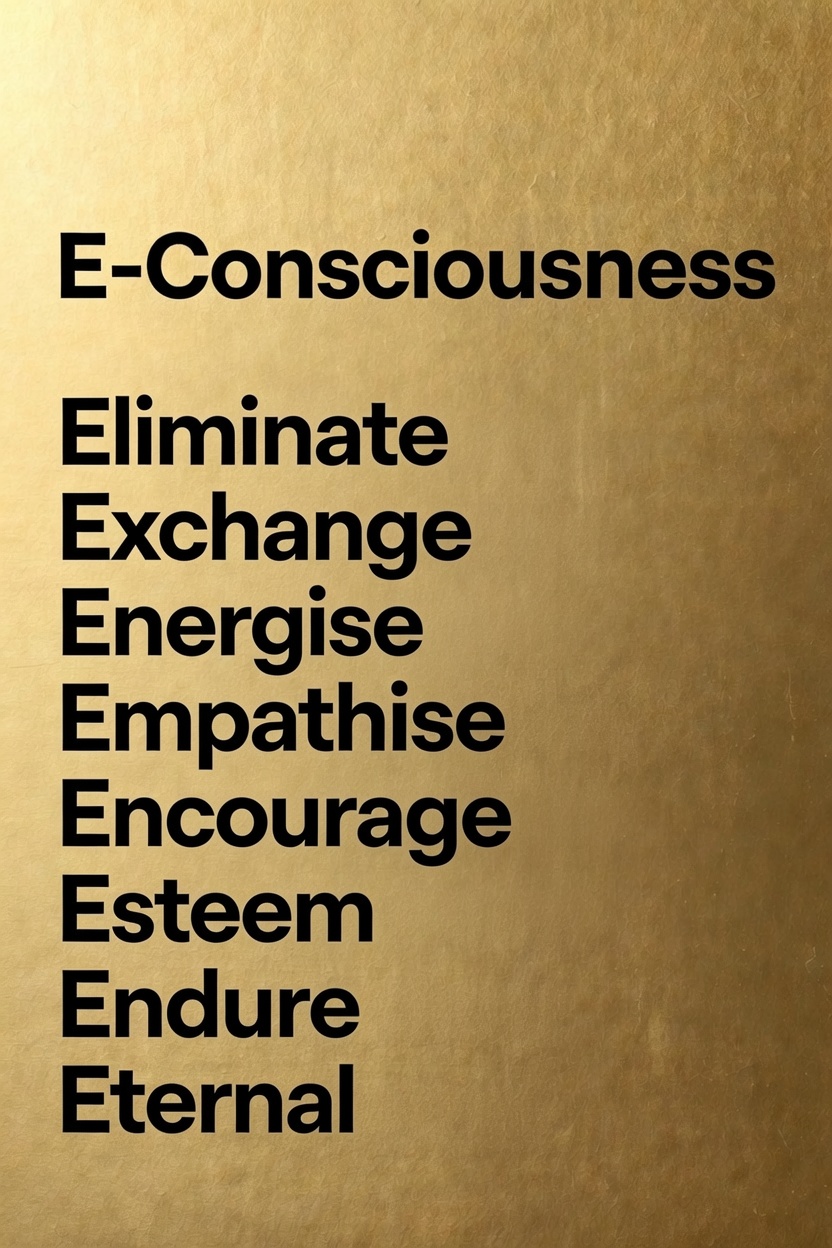
Unlike conventional devotionals that often focus solely on scripture or personal reflection, it integrates the 8 e-consciousness areas (eliminate, exchange, energize, etc.) to offer a practical, transformative framework for daily living.
With 52 unique Sunday reflections, its timeless structure and emphasis on community impact, eternal hope, and actionable faith distinguish it as a dynamic, year-long journey tailored for today’s diverse readers.
It is a carefully structured transformational journey designed to change our lives and draw us closer to God, fostering a more authentic divine journey with renewed commitment.
Introduction to the Devotional
A Journey of Faith Through the New Testament. This devotional is a thoughtfully crafted resource designed to guide readers through a year-long spiritual journey, offering reflections for each Sunday of every month—four Sundays for February, April, June, September, and November, and five Sundays for January, March, May, July, August, October, and December.
Structured to be timeless, each entry is labeled as “First Sunday of [Month],” “Second Sunday of [Month],” and so forth, allowing it to be used in any year without specific dates. Rooted in the 27 books of the New Testament, this devotional draws on a diverse array of disciplines and the 8 e-consciousness areas developed by Prof.Lakshman Madurasinghe (eliminate, exchange, energize, empathy, encourage, esteem, endure, eternal) to provide meaningful, relatable, and transformative insights for readers seeking to deepen their faith.
New Testament Books Quoted
The devotional features verses from 22 of the 27 New Testament books, ensuring a broad representation of biblical wisdom. The books quoted are:
- Matthew (2 entries), Luke (2 entries), John (4 entries), Acts (2 entries), Romans (5 entries), 1 Corinthians (2 entries), 2 Corinthians (3 entries), Galatians (2 entries), Ephesians (2 entries), Philippians (4 entries), Colossians (2 entries), 1 Thessalonians (1 entry), 2 Thessalonians (1 entry), 1 Timothy (1 entry), 2 Timothy (2 entries), Titus (2 entries), Hebrews (3 entries), James (2 entries), 1 Peter (1 entry), 2 Peter (1 entry), 1 John (2 entries), and Revelation (2 entries). Five shorter books—Mark, Philemon, 2 John, 3 John, and Jude—are not quoted, as only 52 verses were needed to cover the Sundays of the year. The verses were selected randomly to ensure variety while maintaining relevance to the devotional themes, offering readers a comprehensive exploration of New Testament teachings.
20 Disciplines Covered
To make the reflections relatable and grounded in everyday life, the devotional incorporates illustrations from 20 distinct disciplines, drawing parallels between spiritual truths and contemporary knowledge:
- Science: Includes physics (light and darkness), biology (synchronized rhythms, ecosystems, resurrection), astronomy (cosmic observation), environmental science (ecosystem restoration), sports science (endurance training), and reliability engineering (consistent performance).
- Psychology: Explores cognitive behavioral therapy, forgiveness, mindfulness, gratitude, contentment, and secure attachment to illustrate mental and emotional parallels to faith.
- Medicine: References diagnosis, muscle growth, rest, universal treatments, and proactive care to highlight healing and restoration in spiritual contexts.
- Philosophy: Uses concepts of truth, purpose, and happiness to connect with existential questions of faith.
- Law: Draws on advocacy, leniency, witness testimony, mediation, and contracts to reflect justice, mercy, and reconciliation.
- Sociology: Highlights community dynamics, humble leadership, and shared values to emphasize fellowship.
- Economics: Incorporates reciprocity, generosity, and priceless gifts to illustrate giving and abundance.
- Education: Uses curricula and teaching to reflect spiritual growth and guidance.
- Maritime Science: Employs the anchor analogy for hope and stability.
- Military Strategy: Highlights preparation for spiritual resilience.
- Agriculture: Uses harvest imagery for perseverance.
- Finance: References stewardship for managing God’s gifts.
- Music Therapy: Connects worship to emotional uplift.
- Futurism: Links hope in God’s kingdom to innovation.
- History: Uses sacrifice to inspire change.
- Navigation: Reflects guidance through the Holy Spirit.
- Leadership Studies: Emphasizes humility in leadership.
- Public Speaking: Illustrates boldness in sharing faith.
- Conflict Resolution: Highlights reconciliation in relationships.
- Strategic Planning: Connects trust in God’s plan to reliable blueprints.
God is the ultimate author of both the scriptures and the human mind. The integration of modern behavioral science, clinical psychology, and theology is not a departure from biblical truth, but a deeper exploration of its mechanics. When the Apostle Paul urges believers to be “transformed by the renewing of your mind” (Romans 12:2), he is describing a process that modern science recognizes as cognitive restructuring and neuroplasticity. By utilizing the 8 E-Consciousness framework alongside scripture, this devotional provides the practical psychological scaffolding necessary to turn theological concepts into tangible, daily behavioral change.
These disciplines provide accessible analogies, making the devotional relevant to readers from various walks of life, whether they are scientists, educators, professionals, or laypeople.
Integration of the 8 E-Consciousness Areas
Each devotional weaves in the 8 e-consciousness areas—eliminate, exchange, energize, empathy, encourage, esteem, endure, and eternal—to guide readers toward practical and transformative faith.
To fully engage with the transformative process of this devotional, it is helpful to understand the specific cognitive and spiritual action required for each of the 8 E-Consciousness areas:
- Eliminate: Consciously identifying and removing maladaptive thoughts, toxic habits, or spiritual hindrances that block growth.
- Exchange: Actively replacing negative cognitive patterns and behaviors with scriptural truths and constructive, Christ-centered actions.
- Energize: Fueling the mind and spirit through deliberate engagement with God’s Word, resulting in renewed vitality and purpose.
- Empathy: Developing a deep, compassionate understanding of others’ experiences, mirroring the relational heart of Christ.
- Encourage: Providing intentional uplift and support to those around us, fostering a resilient and action-oriented faith community.
- Esteem: Cultivating a profound respect for God, oneself, and others as bearers of the divine image, recognizing inherent worth.
- Endure: Building the psychological and spiritual resilience necessary to persevere through trials with steadfast faith.
- Eternal: Anchoring daily decisions, mindset, and behavioral responses in the enduring promises and ultimate reality of God’s Kingdom.
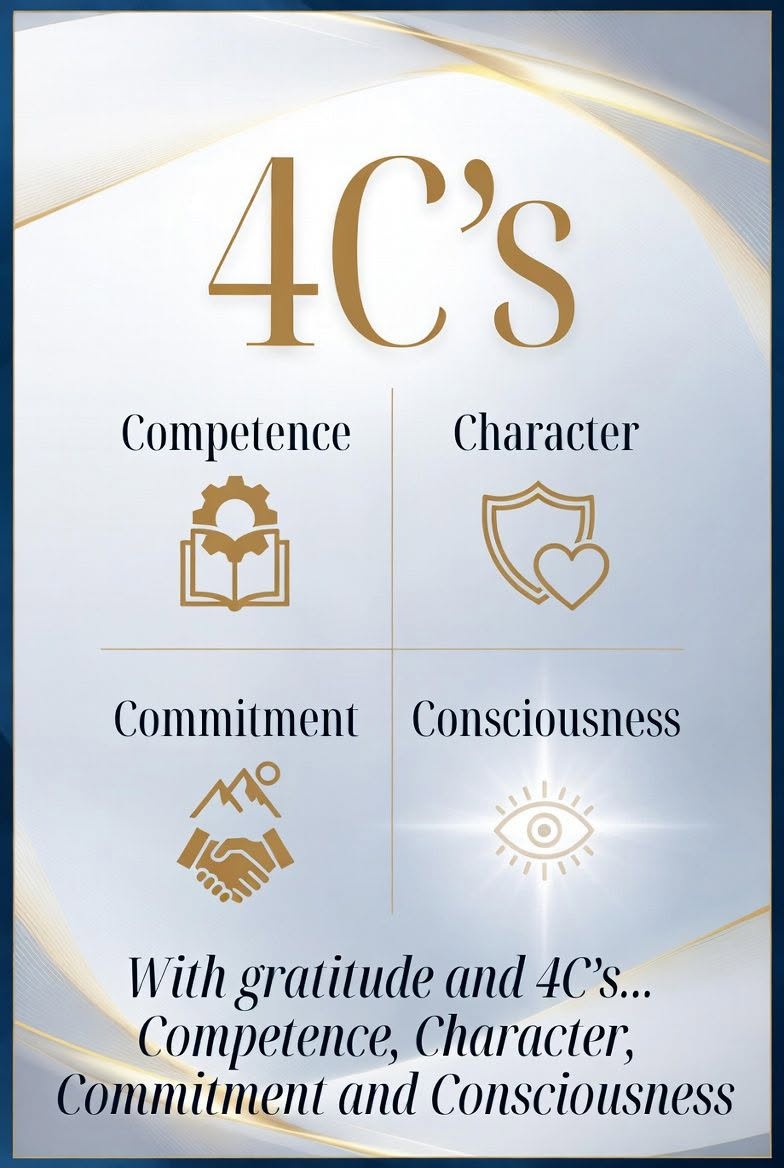
As you engage with the 8 e-consciousness areas, you will find they are much more than concepts—they are your daily tools for inner transformation. To help you anchor these internal shifts into the everyday life of a serious disciple, this devotional challenges you to continually build upon the 4C Model: Competence, Character, Commitment, and Consciousness.
You will put this into action through the Weekly Praxis, which gives you a specific, actionable step each week to translate Sunday’s interdisciplinary insights into your relationships, work, and faith. Then, when you reach the End-of-the-Month Reflection, you are invited to pause for a personal spiritual audit. This is your dedicated time to review your journey and honestly measure your growth—asking yourself how your character has deepened, your commitment has strengthened, and your divine consciousness has expanded over the past four weeks.
The Interdependence of the 4 C Components
Character, the cornerstone of moral identity, is vital but insufficient without Competence. A person of strong character—eliminating vices and cultivating virtues—may possess noble intentions, yet without the skills to act, their potential remains unrealized. Historical examples abound of well-meaning individuals faltering due to lack of ability, underscoring that Character alone cannot achieve tangible outcomes.
Conversely, Competence without Character poses a significant risk. Individuals with advanced skills but devoid of ethical grounding may exploit their abilities for personal gain, producing “thieves and other evil men” (e.g., corrupt leaders or fraudulent professionals). This misalignment highlights the necessity of integrating moral integrity with practical capability to ensure constructive impact.
Commitment emerges as the catalyst that propels Competence and Character forward. Without dedication to identified goals and active participation, even the most skilled and virtuous individuals stagnate. Commitment, exemplified through selfless service, transforms potential into action, driving progress toward personal and communal flourishing.
Finally, Consciousness serves as the integrative force, weaving together Competence, Character, and Commitment. Progressing from waking awareness to a boundless, spiritually unified state (e.g., E Consciousness), it fosters self-reflection, empathy, and a transcendent purpose. This culminates in an optimized potential that transcends individual achievement, aligning with the eternal dimension of human existence.
For example, readers are encouraged to eliminate negative habits like pride or fear, exchange them for virtues like humility or trust, and energize their spiritual growth through God’s truth. Empathy fosters connection with others, while encouraging actions inspire hope. Esteem honors God and others, endurance strengthens perseverance, and an eternal perspective anchors every reflection in God’s everlasting promises.
These themes ensure that each devotional is not only inspirational but also actionable, encouraging readers to apply biblical principles in their daily lives.
Value to the Reader
This devotional offers profound value to readers seeking to grow in their faith and live with purpose:
- Spiritual Growth: By engaging with a new New Testament verse each Sunday, readers deepen their understanding of Scripture, exploring themes like hope, love, forgiveness, and perseverance. The reflections encourage personal application, making faith practical and relevant.
- Relatable Insights: The use of diverse disciplines ensures that the devotionals resonate with modern life, bridging ancient biblical truths with contemporary experiences. Whether through a scientific analogy or a psychological insight, readers find entry points to connect with God’s Word.
- Holistic Transformation: The 8 e-consciousness areas provide a framework for personal and relational growth. Readers are guided to eliminate destructive patterns, embrace godly virtues, and energize their faith, fostering a holistic approach to spiritual maturity.
- Community Impact: By emphasizing empathy and encouragement, the devotionals inspire readers to support others, building stronger faith communities. Practical suggestions, like sharing a kind word or forgiving a fault, empower readers to live out their faith in relationships.
- Eternal Perspective: Each reflection points to the eternal hope of God’s kingdom, helping readers navigate life’s challenges with confidence in His promises. This focus provides peace and purpose, especially in difficult seasons.
- Timeless Flexibility: The absence of specific dates or years makes the devotional reusable, allowing readers to return to it annually or adapt it to their personal study rhythm.
A Recommended Weekly Praxis
This devotional is designed for active behavioral and spiritual restructuring. To gain the maximum benefit, consider adopting the following weekly rhythm:
- Sunday: Read the designated weekly entry. Focus on understanding the central scripture, the interdisciplinary analogy, and the featured E-Consciousness area.
- Daily Meditation: Dedicate 15 to 20 minutes each day to deep, focused reflection on the week’s theme.
- Mid-Week Application: Identify one specific, measurable way to apply the week’s “E” (e.g., actively exchanging a specific anxious thought for a verse of truth, or deliberately offering empathy in a difficult conversation).
- Saturday Review: Briefly reflect on your cognitive and behavioral progress before transitioning to the next Sunday’s theme.
Whether you are a new believer or a seasoned Christian, this devotional invites you to embark on a year-long journey of reflection, growth, and action. Each Sunday, you’ll encounter a fresh perspective on God’s Word, enriched by insights from everyday disciplines and guided by the transformative principles of the 8 e-consciousness areas. As you engage with these reflections, you’ll find encouragement to live out your faith boldly, love others deeply, and anchor your life in the eternal hope of Christ. May this devotional be a faithful companion, inspiring you to grow closer to God and shine His light in the world.
End of [Month] Reflection
Take 20–30 minutes to prayerfully review the past month. You can journal your answers or simply reflect quietly.
- Overall Theme Review
What was the main theme of this month? Which Sunday reflection impacted you the most and why? - E-Consciousness Progress
Looking at the 8 e-consciousness areas, which 1 or 2 areas did you grow in the most this month?
Which area still needs more attention? - Key Takeaway & Application
What is one specific change (in thinking, attitude, or behavior) you noticed in yourself this month because of these reflections? - Gratitude & Challenges
What are you most grateful for from this month’s journey?
What challenge or struggle did you face while trying to apply the reflections? - Looking Ahead
What is one thing you want to carry forward into next month?
Is there a specific e-consciousness area you want to focus on more intentionally?
Closing Prayer
Write a short prayer thanking God for what He has done in you this month and asking for His help in the month ahead.
 Azteca University NA Branch Campus SL
You must be logged in to post a comment.