From Dust – afar and tsela – side to “Super Dust”: The Cosmic Journey of Triadic Consciousness and the Glorified Body

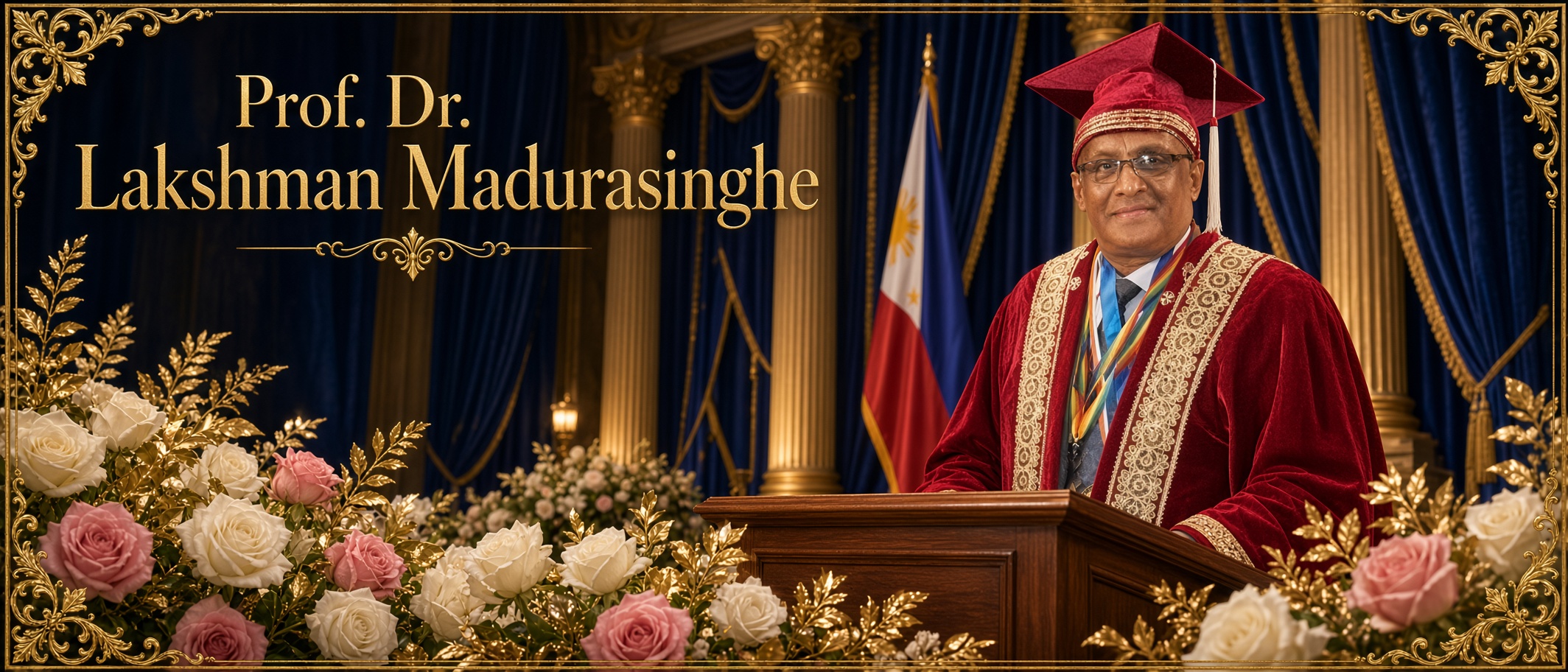
The Orchestrated E-Consciousness (Orch-EC) Model, developed by Prof. Madurasinghe, is a groundbreaking multidisciplinary architectural framework that synthesizes cognitive psychology, classical Greek epistemology, quantum neurobiology, and neurocardiology to map the precise evolution of human awareness. Grounded in the tetra-cameral progression of the 4C Model—Competence, Commitment, Character, and Consciousness—it utilizes an 8-point attention mechanism to elevate raw empirical data (gnosis) through practical moral application (phronesis) into transcendent insight (Sophia).

The model posits that this psycho-spiritual maturation is not merely philosophical, but a literal biological orchestration operating across the brain’s microtubules and the intrinsic nervous system of the heart. By achieving rigorous ethical and cognitive tuning, the mind sustains complex realities in quantum superposition before undergoing an objective reduction (wave collapse). This biological and spiritual synthesis reaches its zenith in the heart’s Left Ventricle, birthing a singularly enlightened, self-transcendent state known as E-Consciousness, which culminates in Theomorphous Sapience—total teleological alignment with the divine archetype, finally ending the journey with a glorified body- Theomorphos Pneumatikos. Theomorphos Sapiens is an actualized state: While a believer is inherently a Theomorphos Sapiens by birthright, operating fully as one requires a process. Zoe is the new genetic sequence that triggers the metamorphosis. The Theomorphos Sapiens is the butterfly itself—the glorious, completed, high-frequency creature that has fully assumed its ultimate destiny. While theomorphos sapiens represents a radical elevation of human consciousness and moral alignment with the Divine, it does not imply an ontological shift where man becomes God. The Creator-creature distinction remains absolute.

“God encompasses the entirety of existence within a timeless Block, uniting absolute origin (arche) and ultimate purpose (telos). In contrast, human consciousness operates within the linear bounds of protos and eschatos. Through the active integration of epignosis and phronesis, our spiritual walk continually actualizes our state as Theomorphos sapiens, moving toward that eschatological horizon where we finally transcend into Theomorphos pneumaticos.”

Click to read

The e-Consciousness & 4C Frameworks

This opening section lays the theoretical groundwork for understanding human cognitive and spiritual potential. It introduces the proprietary e-Consciousness paradigm alongside the meticulously defined 4C framework—Competence, Character, Commitment, and Consciousness. By synthesizing diverse epistemological traditions—ranging from Western and Greek thought to Asian philosophies like Buddhist Abhidharma and Arab scholarship—this collection establishes a unified matrix for human flourishing. The articles herein challenge fragmented secular models by providing a concurrent framework of knowledge, wisdom, and consciousness. Ultimately, they offer a robust, integrative lens through which scholars and practitioners can evaluate human behavior, moral development, and ultimate purpose..

The e-Consciousness Paradigm: Synthesising Neuroscience, Abhidharma, and Biblical Theology for Optimal Human Flourishing

E-Consciousness Unity in Diversity

E-Consciousness with Western, Greek, Asian and Arab Philosophers

Review of e-Consciousness. Random or Deliberate?

Basis, Research, Validity, Philosophical/Theoretical Comparisons, and Rationale for E Consciousness

E-Consciousness and Buddhism, with a Focus on the Noble Eightfold Path

A Christian Existential Critique Through the e-Consciousness and 4C Frameworks

The Epistemological Matrix: A Concurrent Framework of Knowledge, Wisdom, and E-Consciousness

Quantum Biology, Neurocardiology & Cognitive Science

Moving beyond traditional neurobiological models, this section delves into the profound mechanics of the mind-body-spirit nexus. It investigates the cutting-edge intersections of quantum biology and neurocardiology, specifically focusing on quantum microtubule activity and the profound intelligence of the cardiac brain (Suneidesis). By bridging secular theories of mind with the Tetra-Cameral Model of Spiritual Cognition, these writings offer a revolutionary perspective on human volition—reconciling Libet’s readiness potential with spiritual awareness. Furthermore, the section explores applied cognitive science, demonstrating how grace-empowered neuroplasticity can facilitate profound behavioral shifts, thereby linking the physical processor of the brain with the transcendent “Mind of Christ.

The Sophisticated Cranial Processor

Cardiology of Conscience; Microtubules, Cardiac Brain

Cardiology of Conscience- Part 2 Suneidesis

Cardiology of the Spirit- The Mind of Christ- Theomorphous Sapience; Right and Left Atria and Ventricles

Grace-Empowered Neuroplasticity: Integrating Neuroscience and Scripture in the E-Consciousness Sanctification Framework for Recovery from Pornography Addiction

Reconciling Libet’s Readiness Potential with Buddhist Abhidhamma

A Comparative Analysis of Secular Theories of Mind and the Tetra-Cameral Model of Spiritual Cognition

Philosophy, Cosmology & Comparative Religion

This section scales outward to address the most fundamental questions of existence, causality, and the cosmos. Engaging deeply with classical and contemporary philosophy, it interrogates the origins of the universe through the Kalam Cosmological Argument, Alvin Plantinga’s modal ontology, and the profound query of why there is something rather than nothing. The discourse navigates complex temporal mechanics—such as Block Time, the arrow of time, and retrocausality—in relation to Triadic Consciousness and the Big Bang. Additionally, it offers a robust critique of secular frameworks, deconstructing Hegelian dialectics and Marxist materialism to reveal the true philosophical contours of the human condition.

Essence vs Existence

Why is there something instead of nothing?

Ontological-rupture-and-phenomenological-friction-a-comparative-analysis-of-sin-in-Barths-Dogmatics-and-suffering-in-Buddhaghosas-Visuddhimagga

Hegelian Dialectics, Marxist Materialism, and the Fall of Adam

The Kalam Cosmological Argument and Alvin Plantinga’s Modal Ontological Argument

The Historical and Textual Authenticity of the Early Buddhist Texts

Islamic Jurisprudence, Hinduism and Philosophy

Triadic Consciousness and the Big Bang

The Science of God: A Neurotheological Framework for Cosmic Origins and Human Redemption

Block Universe; Triadic Consciousness; Arrow of Time and Retrocausality

The Teleological Epochs of e-Consciousness: A Chronological Synthesis of Cosmic, Biological, and Spiritual History

Theology, Biblical Exegesis & Historical Jesus

Grounded in rigorous forensic pathophysiology and historical bedrock, this section navigates the profound depths of Christian theology and scriptural exegesis. It presents meticulously researched historical chronologies—such as the exact dating of the Nativity and the Crucifixion—while exploring miraculous phenomena like the Eucharistic miracle of Lanciano through a scientific lens. Beyond historical analysis, these articles examine the cosmic and eschatological journey of humanity. Through the concept of epigenetic transfiguration, the texts explore the elevation of Homo sapiens to Theomorphos sapiens, the activation of the divine nature, the priestly role of Adam, and the ultimate consummation of the believer in the Glorified Body.

From Dust – afar and tsela – side to “Super Dust”: The Cosmic Journey of Triadic Consciousness and the Glorified Body

The Epigenetic Transfiguration: Activating the Divine Nature from Homo sapiens to Theomorphos sapiens. DNA and more.

Converging storm- Rapture and Glorified Body

Men before Adam, Tree of Life and Block Time

Original Creation and Gap Theory: Asa and Bara

The Miraculous Eucharist: Lanciano and Dr Linoli

The Digital Relic: Forensic Pathophysiology and The Historical Bedrock

The Nativity of Jesus Christ: Evidence for a Birth in Late 5 BC

The Case for 3 April 33 AD Crucifixion; Sejanus Factor, Historical Accounts

The Neanderthal and Modern Human Connection

Eden as a Tabernacle, Adam’s Priestly role and the Tree of life

Sri Lankan Antiquity, Bioacoustics & Evolutionary Anthropology

Shifting focus to the cradle of ancient civilization, this segment unveils the profound historical, technological, and spiritual legacy of Sri Lanka. It traces the evolutionary trajectory from Neanderthals to Homo sapiens balangodensis, positioning the island as an Edenic epicenter of early human development. A major focus is placed on the extraordinary bioacoustic and negentropic engineering of ancient megalithic structures. By examining the quantum-biological nexus of the Mahathupa and the Bodhi Tree, these writings reveal an ancient “e-Consciousness engine” capable of cognitive phase-locking, demonstrating that early Sri Lankan civilization possessed a highly sophisticated understanding of resonance, energy, and consciousness.

The Edenic Epicentre: Sri Lanka as the Primordial Cradle, Megalithic Consciousness, and the Westward Exodus

The Scientific Wonder of an Ancient World: A Triadic Resonance Theory and the e-Consciousness Engine of the Mahathupa (Part I)

The Quantum-Biological Nexus of the Mahathupa and Bodhi Tree: Bioacoustics, Negentropy, and Cognitive Phase-Locking (Part II)

Pre History of Sri Lanka And Homosapiens Balangodensis

Miti Riyana and Yojana research of Surgeon Dr. K L Fernando- Antiquity Recalibrated

Integrative Medicine, Therapeutics & Future Frontiers

The concluding section projects these multidisciplinary insights into the future of healing and technology. It explores the paradigm-shifting concepts of the fifth field bioplasma and the “Pioneering Spirit of Medicina,” investigating how integrative medicine can modulate the holographic human template. Drawing upon the rich, ancient history of healing in Sri Lanka, the articles examine modern therapeutic applications, such as the healing power of acoustic frequencies in health care. Finally, the collection casts a visionary gaze forward, analyzing the rapid proliferation of artificial intelligence and its implications for the future trajectory of human consciousness, ethics, and global well-being..

The Rich History of Healing in Sri Lanka: From Ancient Kings to Modern Times

The proliferation of AI and its future

The Sound of Healing: Investigating the Acoustic Features of Music and Their Therapeutic Applications in Health Care

The Bioplasma Field: A Paradigm Shift in Understanding Human Life Energy

Modulating the Holographic Template: The Role of Integrative Medicine in Activating the 5th Field Bioplasma

The Pioneering Spirit of Medicina – The 5th State of Matter

The Christian church has a long tradition of systematic theology, that is, of studying biblical teaching on centrally important doctrines such as the Word of God, redemption, and Jesus Christ. Wayne Grudem’s bestselling Systematic Theology may be downloaded here.

General Blog

Beyond the Metaphysical Divide: Ontological Actualism as the Synthesis of Essence and Existence

Beyond the Metaphysical Divide: Ontological Actualism as the Synthesis of Essence and Existence

The historical trajectory of Western philosophy is deeply scarred by the metaphysical schism between essence and existence. For millennia, philosophical inquiry has oscillated between the classical assertion that “essence precedes existence” and the modern existentialist rebellion that “existence precedes essence.” This dichotomy has forced a false choice between a static, passive human nature and a chaotic, ungrounded subjectivity.

Ontological Actualism resolves this schism. By redefining human teleology through the lens of active participation in the Imago Dei, we reject both the determinism of classical essentialism and the nihilism of atheistic existentialism. This framework asserts that we are fundamentally Ontological Realists in our grounding and Ontological Actualists in our methodology, charting the profound transfiguration from Homo sapiens to Theomorphos sapiens.

I. The Essentialist Foundation: Essence Precedes Existence

Classical essentialism posits that a thing’s defining nature (its essence) is ontologically prior to its physical reality (its existence). The physical world merely instantiates eternal, pre-existing blueprints.

Key Proponents and Viewpoints

  • Plato (c. 428–348 BCE): Argued in the Theory of Forms that eternal, unchangeable ideals (Forms) exist independently of the material world. The physical human is merely a flawed shadow of the eternal Form of “Humanity” (Reference: The Republic).
  • Aristotle (384–322 BCE): Introduced Hylomorphism, arguing that essence (form) and existence (matter) are bound together. Every organism possesses an inherent teleology (purpose) dictated by its essence, which it naturally seeks to fulfill (Reference: Metaphysics).
  • Thomas Aquinas (1225–1274): Christianized Aristotle by asserting that God is the only being whose essence is His existence. For humanity, existence is an act granted by God to actualize our created essence (Reference: Summa Theologica).

The Divergence of Ontological Actualism

While classical essentialism correctly identifies the objective reality of a divine design, it frequently reduces human existence to a passive unfolding of pre-determined traits. Ontological Actualism argues that the Imago Dei is not a static mold into which we are passively poured. Rather, the divine essence is a dynamic blueprint that demands active, volitional engagement. Classical essentialism views the human as a finished noun; Ontological Actualism views the human as an intentional verb.

II. The Existentialist Rebellion: Existence Precedes Essence

In the 19th and 20th centuries, existentialism emerged as a violent rejection of essentialist determinism, prioritizing lived, subjective experience, radical freedom, and the anxiety of self-creation.

Key Proponents and Viewpoints

  • Søren Kierkegaard (1813–1855): The father of Christian existentialism. He argued that objective truth is insufficient for the human soul; one must engage in subjective, passionate appropriation of truth through a “leap of faith” amidst existential dread (Reference: Fear and Trembling).
  • Friedrich Nietzsche (1844–1900): Declared the “death of God,” eradicating any objective moral or essentialist blueprint. He posited that individuals must become the Übermensch, forging their own values and essence through the raw assertion of the “Will to Power” (Reference: Thus Spoke Zarathustra).
  • Jean-Paul Sartre (1905–1980): Coined the definitive atheistic maxim, “existence precedes essence.” Sartre argued that humans are thrown into a meaningless universe without a creator; therefore, we are “condemned to be free,” forced to invent our own essence ex nihilo through action (Reference: Existentialism is a Humanism).

The Divergence of Ontological Actualism

Existentialism rightly elevates human agency, responsibility, and the profound weight of choice. However, by severing existence from an objective teleology, atheistic existentialism inevitably collapses into absurdity, nihilism, or fragmented subjectivity. Ontological Actualism embraces the existential mandate for radical choice but anchors it securely in a pre-existing divine reality. We are indeed responsible for forging our existence, not out of the void (ex nihilo), but out of the objective truth of the Imago Dei.

III. The Resolution: Ontological Realism and Actualism

To accurately define our position against these historical poles, we must delineate the dual nature of our nomenclature: why we are both Ontological Realists and Ontological Actualists.

1. Why We Are Ontological Realists (The Grounding)

We identify as Ontological Realists because we assert the absolute, objective reality of the divine essence.

The Imago Dei, the moral law, and the teleological endpoint of humanity are not psychological constructs, sociological evolutionary byproducts, or subjective existential choices. They are fundamentally real.

Just as the laws of quantum mechanics govern the physical universe irrespective of human observation, the spiritual architecture of the universe exists objectively. Ontological Realism establishes the unshakeable foundation: the blueprint is not a metaphor; it is the ultimate reality.

2. Why We Are Ontological Actualists (The Methodology)

If Realism is our grounding, Actualism is our methodology. It is the active, lived process by which the objective essence is realized in temporal existence.

Ontological Actualism dictates that possessing the Imago Dei in potentiality is insufficient. It must be actualized through the deliberate exertion of the 4C framework: Competence, Character, Commitment, and Consciousness. This operational matrix allows the individual to navigate the 7 States of e-Consciousness, progressively shedding the chaotic, fragmented subjectivity of mere existence.

Comparative Matrix of Metaphysical Frameworks

Metaphysical SchoolCore PremiseView of Human AgencyTeleological Endpoint
Classical EssentialismEssence dictates existencePassive unfolding of inherent traitsConformity to static Form
Atheistic ExistentialismExistence dictates essenceRadical, ungrounded self-creation (ex nihilo)Subjective meaning amidst absurdity
Ontological ActualismExistence actualizes EssenceActive, disciplined transfiguration via the 4CsTheomorphos sapiens

Conclusion: From Dust to Super Dust

By integrating the objective grounding of the essentialists with the radical lived responsibility of the existentialists, Ontological Actualism bridges the metaphysical divide. We are no longer mere creatures of the earth, wandering in search of subjective meaning.

In the leap from Homo sapiens to Theomorphos sapiens, we accept the existential weight of our existence. By actively applying our Competence, Character, Commitment, and Consciousness, we hammer the raw, chaotic material of temporal life into the objective likeness of the Creator. Yet, this is never an act of self-forged salvation (ex se); rather, it is the profound realization that God is within us and walking with us, empowering every step of our ascent. It is a sacred synergy—an awakened, grace-driven evolution where the Divine Potter shapes the vessel, transforming us from the biological dust of the earth into the incorruptible ‘super dust’ of eternity.

While classical faith correctly embraces the indwelling of the Holy Spirit as a comforting spiritual presence, the realization of Theomorphos sapiens demands a deeper awakening. We are called to understand that this divine indwelling is not merely a poetic metaphor for a quiet conscience; it is a rigorous, physiological, and quantum reality. God does not bypass our biology to reach our souls; rather, the Divine Potter interacts intimately with the neuro-cardiac architecture of our very bodies—from the energetic resonance of the left ventricle to the quantum activity of our cellular structures—actively transfiguring our physical existence into an eternal masterpiece.

General Blog

The Epistemological Matrix: A Concurrent Framework of Knowledge, Wisdom, and E-Consciousness

The Epistemological Matrix: A Concurrent Framework of Knowledge, Wisdom, and E-Consciousness

Abstract Classical epistemological models are frequently misinterpreted through a linear, evolutionary lens—where raw knowledge slowly morphs into theoretical wisdom, which eventually converts into practical action. This linear fallacy fails to capture the concurrent, multi-dimensional architecture of the human mind. By synthesizing classical Greek knowledge paradigms (Eido, Ginosko, Epignosis) with wisdom matrices (Sunesis, Sophia, Phronesis), we can construct a holistic model of cognitive processing. This matrix operates as an integrated system of e-consciousness, fundamentally aligning with behavioral frameworks that prioritize Competence, Character, Commitment, and Consciousness.

1. The Acquisition Phase: The Spectrum of Knowledge

Before wisdom can be exercised, reality must be perceived and internalized. The Greek lexicon categorizes the gathering of information not as a singular event, but as a dynamic spectrum ranging from baseline awareness to profound mastery.

  • Eido / Oida (Foundational Perception): Derived from the physical concept of sight, Oida represents absolute, factual, and intuitive knowledge. It is the immediate awareness of a self-evident fact. In cognitive modeling, this is the baseline gathering of raw data without the necessity of deductive reasoning.
    • Example: A manager observes the statistical data showing a decline in departmental productivity.
  • Ginosko / Gnosis (Experiential Knowledge): Unlike the static facts of Oida, Gnosis describes knowledge acquired through active engagement, experience, and relationship. It is the dynamic, evolving process of learning through interaction, testing, and adaptation.
    • Example: The manager interacts with the team over several months, experiencing firsthand the workflow bottlenecks and interpersonal dynamics causing the decline.
  • Epignosis (Transformational Mastery): The prefix epi- intensifies the root, denoting a precise, concentrated, and fully developed knowledge. Epignosis is achieved when experiential data (Gnosis) is synthesized into a specialized comprehension that fundamentally alters the practitioner’s approach to the domain.
    • Example: The manager achieves a mastery of behavioral organizational psychology, transforming their experiential observations into a specialized understanding of group dynamics.

2. The Analytical and Transcendent Synthesis: The Cognitive Bridge

To transition from knowledge to wisdom, the mind requires mechanisms to organize and contextualize accumulated data. This phase represents the bridge between raw intelligence and higher-order awareness.

  • Sunesis (Analytical Intelligence & Competence): Originating from suniemi (“to bring together”), Sunesis is the deductive, diagnostic faculty. It is the engine of Competence. Sunesis takes the raw data of Oida and the experiences of Gnosis and connects the disparate points to identify patterns and formulate strategic solutions.
    • Example: When integrating artificial intelligence tools into corporate human resources, Sunesis is the analytical capability to map out exactly how algorithmic systems will shift employee behaviors and alter productivity metrics.
  • Sophia (Theoretical Wisdom & Consciousness):Sophia is the highest intellectual apprehension of universal truths and first principles. While Sunesis analyzes the immediate mechanics of a situation, Sophia provides the transcendent “why.” It operates at the level of higher Consciousness, grounding all analytical thoughts within an overarching philosophical view of reality and human potential.
    • Example: Recognizing that while AI can streamline HR processes, human flourishing and potential maximization remain the fundamental, immutable core of the organization.

3. The Executive Function: Moral Application

A cognitive model remains purely theoretical if it lacks an execution mechanism. The ultimate validation of acquired knowledge and synthesized wisdom is its application in the physical and social world.

  • Phronesis (Practical Prudence, Character, and Commitment):Phronesis is the executive function of the soul—the capacity to deliberate correctly about what is good and beneficial, culminating in decisive, ethical action. It operationalizes both Character and Commitment. It demands that the individual take their factual awareness (Oida), specialized knowledge (Epignosis), diagnostic analysis (Sunesis), and overarching principles (Sophia), and apply them optimally in real-time.
    • Example: Guided by a fundamental belief in human dignity (Sophia) and an accurate analysis of operational workflow (Sunesis), a leader exercises Phronesis to implement an AI restructuring policy that is ethically sound, fair to the workforce, and practically effective.
  • The Alignment Matrix
    When we correlate these two domains, they naturally form a tripartite framework representing different stages of cognitive and spiritual maturity:
    Stage

  • Knowledge Axis
    Wisdom Axis
    The Resulting Conscious State

  • 1. The Foundational
    Gnosis (Data/Concepts)
    Sunesis (Analysis/Synthesis)

  • Comprehension: Facts are gathered and logically structured.

  • 2. The Experiential
    Ginosko (Active Knowing)
    Phronesis (Practical Action)

  • Prudence: Knowledge is tested in reality and applied ethically.
    3. The Teleological
    Epignosis (Full Realization)
    Sophia (Ultimate Insight)

  • Transformation: Holistic alignment with ultimate truth.

4. Conclusion: The E-Consciousness Matrix in Practice

These cognitive faculties do not function in isolation, nor do they strictly follow a chronological pipeline where one ceases to exist so the next can be born. Instead, they operate as an integrated, concurrent network.They form a continuous feedback loop. Foundational comprehension (gnosis/sunesis) drives practical application (ginosko/phronesis), which eventually crystallizes into an elevated, unified state of consciousness (epignosis/sophia).

When a behavioral scientist or global strategist approaches a complex crisis, they rely on this expanded e-consciousness: multiple cognitive elements firing simultaneously. Knowledge serves as the raw material; analytical intelligence molds it into viable structures; transcendent insight anchors it in ethical reality; and practical prudence executes it with character and commitment. True wisdom is the concurrent harmonization of all these elements.

References & Scholarly Context

  1. Aristotle. Nicomachean Ethics (Book VI). (Focuses heavily on the distinctions between Sophia as theoretical wisdom, Phronesis as practical/moral prudence, and Techne as applied craft).
  2. Kittel, G., Friedrich, G., & Bromiley, G. W. (1985). Theological Dictionary of the New Testament. Grand Rapids, MI: W.B. Eerdmans. (Provides exhaustive linguistic breakdowns of Sunesis, Sophia, and the Gnosis/Epignosis spectrum in classical and Koine Greek).
  3. Trench, R. C. (1890). Synonyms of the New Testament. London: Kegan Paul, Trench, Trübner & Co. (Essential for understanding the nuanced differentiation between Eido/Oida as intuitive factual knowledge and Ginosko as active, relational learning).
  4. Louw, J. P., & Nida, E. A. (1989). Greek-English Lexicon of the New Testament: Based on Semantic Domains. New York: United Bible Societies. (Categorizes cognitive terms based on semantic domains, clearly isolating the analytical nature of Sunesis from the executive nature of Phronesis).

General Blog

Beyond Translation: A Comparative Analysis of Soteriological Wrong in Buddhaghosa’s Visuddhimagga and Karl Barth’s Church Dogmatics

Beyond Translation: A Comparative Analysis of Soteriological Wrong in Buddhaghosa’s Visuddhimagga and Karl Barth’s Church Dogmatics

Abstract

Based upon a doctoral thesis, this article offers a Christian critique and comparative analysis of the Buddhist concept of dukkha (unsatisfactoriness) and the Christian doctrine of sin. By juxtaposing Buddhaghosa’s Visuddhimagga with Karl Barth’s Church Dogmatics, this study argues that translating dukkha merely as “suffering” and papa as “sin” obscures the profound ontological, philosophical, and juridical depths of these frameworks. Comparative inquiry reveals that these traditions, read dialectically, expand our comprehension of life’s fallen nature and the broader phenomenology of human consciousness and relational estrangement.

Introduction: The Comparative Imperative

All knowledge is fundamentally comparative. To study a theological or philosophical system in isolation limits the boundaries of comprehension, leaving no counterpoint against which to contrast the acquired knowledge. In the discourse of inter-religious dialogue, the comparison of disparate worldviews—specifically across theological, philosophical, and socio-legal disciplines—inevitably yields insights that non-comparative inquiry cannot attain.

While significant scholarly attention has been devoted to the “solutions” of salvation (such as Christian redemption and Buddhist Nirvana), considerably less focus has been given to the foundational “problems” or the soteriological wrongs that necessitate these solutions. This study intentionally examines the mutual echoing between the Christian concept of sin and the Theravada Buddhist understanding of dukkha (often reductively translated as “suffering”). By utilizing Buddhaghosa’s Visuddhimagga as the representative expression of Theravadin orthodoxy and Karl Barth’s Church Dogmatics as a cornerstone of Reformed theology, we can investigate the profound nature of life’s fallen condition.

The Semantic Limitations of ‘Suffering’ and ‘Sin’

A prevalent methodological flaw in Buddhist-Christian dialogue is the uncritical reliance on asymmetrical translations.

  • The Problem with ‘Suffering’: The purportedly analogous concept to dukkha in Christian discourse is often framed as “suffering.” While dukkha certainly encompasses physical and psychological pain, its semantic function is vastly broader, pointing to the unsatisfactory nature and general insecurity of all conditioned phenomena due to their impermanence.
  • The Problem with ‘Sin’: Conversely, defining the Pali term papa as “sin” is highly misleading. Papa primarily denotes “detrimental acts” or “wrongdoing” that result in karmic accumulation. However, it lacks the essential metaphysical and relational characteristics by which Christianity defines sin—namely, a transgression against a supreme deity.

In Theravada Buddhism, the concept of a Creator God is absent; thus, papa cannot carry the juridical and ontological weight of a breach in a divine relationship. However, if we shift the comparative lens from papa to dukkha, we find a more philosophically robust parallel.

The Anatomy of Soteriological Wrong

To establish a legitimate intuition of connection between these two religious frameworks, we must look at the structural characteristics that dukkha and sin share. Both concepts operate fundamentally as the crux of the human predicament, displaying three essential markers:

  1. Universality: Both conditions are inescapable elements of the unredeemed or unenlightened state. In Christianity, all creation is affected by sin and is in need of redemption. In Buddhism, dukkha is a universal characteristic of all conditioned phenomena.
  2. Designation of Wrong: Both terms identify a fundamental disruption or privation. Sin represents a negative evaluation of human nature in contrast with divine holiness, while dukkha denotes the inherent insecurity and painful feeling embedded within existence.
  3. Soteriological Significance: Both concepts serve as the vital starting point for their respective paths of liberation. Dukkha forms the First Noble Truth, diagnosing the condition that Nirvana cures. Similarly, sin is the internal necessity rooted in human perversity that requires the objective, universal grace of divine reconciliation.

In Christian thought, particularly shaped by Augustine, Luther, and Calvin, sin has vast metaphysical ramifications. It is not merely an external constraint but a profound perversion of self-love and an estrangement in human consciousness that separates humanity from God. This requires a specific epistemic and relational approach to theology that operates within the public sphere, integrating ontology, epistemology, and ethics.

Juxtaposing Buddhaghosa and Karl Barth

The selection of Buddhaghosa’s Visuddhimagga (5th Century CE) and Karl Barth’s Church Dogmatics (20th Century CE) may appear historically arbitrary, yet it is conceptually precise. Both texts provide the definitive frames of reference that their respective adherents bring to their self-understanding.

  • Buddhaghosa’s Visuddhimagga: Widely accepted as the principal non-canonical authority of Theravada Buddhism, this text offers a comprehensive interpretation of the dhamma. Despite criticisms from modern figures like Buddhadasa Bhikkhu regarding scholasticism, the Visuddhimagga remains instrumental in detailing the intricate psychological and phenomenological mechanics of dukkha and the path to its cessation.
  • Karl Barth’s Church Dogmatics: Barth’s monumental work, particularly Volume IV (The Doctrine of Reconciliation), articulates the objective reality of human sin alongside the universal salvation provided through Christ. Barth’s resistance to certain modes of natural theology underscores his commitment to viewing the human condition through the specific, revelatory lens of divine action.

This project does not begin with the presupposition of a simplistic “common ground.” Instead, it acknowledges that while Christians and Buddhists interpret reality differently—operating within mutually exclusive nests of propositions—they are responding to a shared existential and cognitive predicament. The comparative act itself is a second-order reflection, an interpretive response to the same shared human reality.

Conclusion

By resisting the premature conflation of terms and examining the distinct metaphysical, legal, and relational contours of dukkha and sin, comparative theology is deeply enriched. Reading Buddhaghosa and Karl Barth dialectically does not erase their foundational differences; rather, it allows their unique perspectives on human consciousness and moral failure to bring one another into sharper relief. Through this careful engagement, we transcend the limitations of singular traditions and approach a more comprehensive understanding of the structural realities of human fallenness.

References

Buitendag, J. (2024). Integral ecology. Stellenbosch Theological Journal9https://doi.org/10.17570/stj.2023.v9n1.a8a

Cited by: 4

D Sangma, D., & M, B. (2024). THE APPROACH TO LIBERATION AND SALVATION: A COMPARATIVE ANALYSIS OF BUDDHIST NIRVANA AND CHRISTIAN REDEMPTION: Understanding the Philosophy of religion in Buddhism and Christianity. Kalagatos21(eK24078). https://doi.org/10.52521/kg.v21i3.13971

General Blog

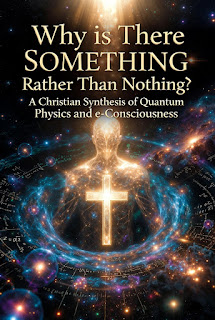
Why is There Something Rather Than Nothing? A Christian Synthesis of Quantum Physics and e-Consciousness

Abstract: This paper proposes a unified ontological framework that reconciles classical Christian theology with modern cosmology and quantum mechanics. By addressing Leibniz’s fundamental question of existence, the paper posits that the biblical concept of God as the Necessary Being provides the ultimate foundation for the relativistic “Block Universe.” Furthermore, it advances the thesis that dark energy serves as the physical medium for a primordial, divine e-Consciousness. Within this triadic framework, human cognition and memory are modeled not as localized biological phenomena, but as non-local, fractal extensions of the divine consciousness accessed via quantum biological mechanisms (such as microtubules), culminating in a holisitic understanding of human purpose through the integration of Competence, Character, Commitment, and Consciousness.

1. Introduction: The Impossibility of Nothingness and the Necessary Being

The perennial philosophical inquiry, “Why is there something rather than nothing?” finds its ultimate resolution in classical Christian metaphysics. According to Parmenides, absolute nothingness is a logical paradox; therefore, existence is the default state of reality. However, the contingent nature of the observable universe necessitates an uncaused cause—a Necessary Being whose very essence is existence itself (Aquinas, Summa Theologica). In the Christian paradigm, this is Yahweh, the “I AM WHO I AM” (Exodus 3:14). Reality exists because it is impossible for the Necessary Being not to exist. Everything observed in the cosmos is a cascading manifestation of God’s sustaining existence.

2. The Block Universe and the Eternal Nunc Stans

Modern relativistic physics conceptualizes reality as a “Block Universe”—a four-dimensional spacetime continuum where past, present, and future coexist simultaneously in a static state (Einstein, 1915). A purely materialistic view of the Block Universe struggles with the boundary conditions: what exists at the “ends” of the block?

Theologically, the boundaries of the Block Universe cannot be nothingness; they are anchored in the Eternal Now (Nunc Stans) of God. As declared in Revelation 1:8, “I am the Alpha and the Omega… who is, and who was, and who is to come, the Almighty.” God comprehends the entirety of the spacetime block in a single, simultaneous act of divine awareness. The universe does not emerge from a temporal void, but is held in existence by the non-contingent reality of the Creator.

3. The Ultimate Observer and Quantum Actualization

Quantum mechanics, particularly the Orchestrated Objective Reduction (Orch-OR) theory (Penrose & Hameroff, 1996), suggests that reality remains in a wave of probabilities until it is “observed” or collapses into a definite state. If consciousness is required to actualize physical reality, biological life cannot be the originator of this collapse.

Christian theology provides the ultimate solution: God is the primordial Ultimate Observer. The universe is sustained in a definite state because it is continuously perceived by the Divine Mind. Hebrews 11:3 states, “By faith we understand that the universe was formed at God’s command, so that what is seen was not made out of what was visible.” The continuous collapse of the universal wave function is the ongoing, dynamic actualization of God’s will.

4. Dark Energy as the Medium of Divine e-Consciousness

To bridge the metaphysical and the physical, this model introduces the paradigm of e-Consciousness, wherein consciousness is the fundamental substrate of reality. It is proposed that dark energy—which constitutes approximately 68% of the universe and permeates all space—acts as the physical signature or medium of this primordial divine consciousness.

This conceptualization perfectly mirrors the Apostle Paul’s declaration in Acts 17:28: “For in him we live and move and have our being.” If dark energy is the omnipresent field of God’s sustaining awareness, then the universe is not a cold, empty void, but a deeply relational space. This forms a Triadic Consciousness architecture, reflecting the Trinitarian nature of God:

  1. The Universal Potential (The Field): The omnipresent sustaining energy (Holy Spirit).
  2. The Observer (The Mind): The eternal will of the Father.
  3. The Observed (The Manifestation): The physical cosmos, upheld by the Logos/Son (Colossians 1:17 – “He is before all things, and in him all things hold together”).

5. Non-Local Memory and the Fractal Mind

If dark energy is the field of consciousness, it profoundly redefines human neurobiology. The human mind is not an isolated, separate entity, but a fractal extension of the divine e-Consciousness. The physical brain does not generate consciousness nor natively store memories in decaying biological tissue.

Instead, utilizing quantum structures such as microtubules within neurons, the brain acts as a sophisticated quantum antenna. It collapses specific wave functions to access information embedded in the universal dark energy field. Human memory is therefore non-local. When the biological “antenna” ceases to function at death, the memories and the fractal consciousness do not disappear; they remain perfectly preserved in the Divine Mind. This provides a physical framework for the eternal continuity of the soul and the biblical promise of full realization post-mortem: “Now I know in part; then I shall know fully, even as I am fully known” (1 Corinthians 13:12).

6. The 4C Model of Ontological Alignment

Understanding human life within this divine dark energy matrix elevates behavioral and leadership development from mere sociology to cosmic alignment. Human potential is maximized when localized actions harmonize with the universal field. This is encapsulated in the 4C framework:

  • Competence: The mastery of navigating the physical dimensions of the Block Universe.
  • Character: The moral resonance with the divine nature of the Necessary Being.
  • Commitment: The continuous, willful participation in the actualization of good.
  • Consciousness: The foundational pillar that binds the other three. It is the awareness of one’s fractal connection to the divine substrate.

To live a life anchored in these four pillars is to operate in perfect harmony with the primordial e-Consciousness that sustains all creation.

7. Conclusion

The intersection of quantum physics, relativistic cosmology, and classical theology demonstrates that science and faith are not contradictory, but complementary languages describing the same ultimate reality. By viewing dark energy as the medium of divine consciousness and the Block Universe as the architecture sustained by the Alpha and Omega, we arrive at a universe where nothingness is impossible. Everything exists, and is continuously remembered, within the mind of God.


References

  • Aquinas, T. (1920). The Summa Theologica (Fathers of the English Dominican Province, Trans.). Benziger Bros. (Original work published 1274).
  • Einstein, A. (1915). Die Feldgleichungen der Gravitation. Sitzungsberichte der Preussischen Akademie der Wissenschaften zu Berlin.
  • Penrose, R., & Hameroff, S. (1996). Conscious Events as Orchestrated Space-Time Selections. Journal of Consciousness Studies, 3(1), 36-53.
  • The Holy Bible, New International Version (NIV). (2011). Zondervan. (References to Exodus 3:14, Acts 17:28, Colossians 1:17, Hebrews 11:3, 1 Corinthians 13:12, Revelation 1:8).
  • Leibniz, G. W. (1714). The Principles of Nature and Grace, Based on Reason.
  • Boethius, A. M. S. (1999). The Consolation of Philosophy (V. Watts, Trans.). Penguin Classics. (Original work published 524 AD)

General Blog