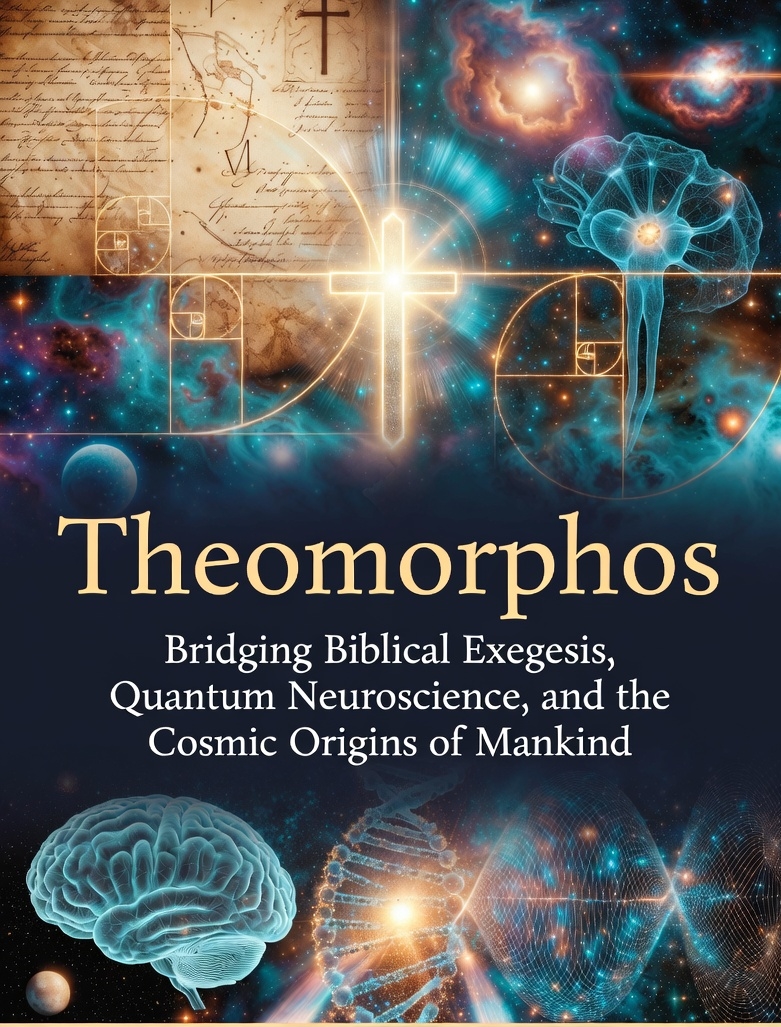

The Science of God: A Neurotheological Framework for Cosmic Origins and Human Redemption
Abstract
This scholarly synthesis explores the intersection of modern scientific discoveries, theological imperatives, and ancient philosophical frameworks. By reconciling the cosmological timeline of the Big Bang and planetary fine-tuning with the biblical narrative, this article establishes a comprehensive framework for the “Science of God.” Furthermore, integrating anatomical mapping, Vedic concepts, and modern neurobiology, it examines the tripartite nature of humanity and the restorative power of the e-Consciousness model on the human genome and spiritual identity.
1. Cosmological Origins: The Finger of God
The universe is fundamentally bound by the dimensions of time, space, and matter (Genesis 1:1). As modern science investigates the origins of reality, Kalam’s Cosmological Argument dictates that whatever begins to exist requires a cause. Modern astrophysics points to a singular, causal beginning approximately 13.8 billion years ago.
- The Big Bang: The universe expanded from an infinitely dense fireball, creating a scrambling of space and time. This sudden explosion of nothing into something provides an observational parallel to miraculous creation ex nihilo (Hebrews 11:3).
- Cosmic Microwave Background (CMB): The 1992 COBE satellite discoveries provided profound evidence for the birth of the universe. Prominent physicists referred to these temperature fluctuations as the “Holy Grail of cosmology,” with project leader George Smoot likening it to “looking at God.”
- Stretching the Heavens: The observable expansion of the universe is mirrored explicitly in Scripture. Seventeen distinct verses declare that God “stretched the heavens” (e.g., Isaiah 40:22, Psalm 104:2, Job 9:8).
2. Planetary Fine-Tuning: Uniquely Designed for Life
Earth is not a cosmic anomaly occurring by chance; it is the product of highly specific astrophysical parameters. This reflects the declaration of Isaiah 45:18, which states that God formed the earth explicitly to be inhabited.
- Axial Tilt: Earth’s precise $23.5^\circ$ tilt establishes moderate, life-sustaining seasons.
- Rotation and Orbit: A carefully calibrated rotation period prevents extreme temperature volatility and violent surface winds, while a circular orbit ensures essential climate stability.
- Life-Giving Water: Earth’s water exhibits anomalous, finely tuned properties, including high specific heat, immense latent heat, high surface tension, and complex hydrogen bonding, all of which are prerequisites for carbon-based life.
3. The Tripartite Being and Neuro-Theology
Following the hermeneutic of macrocosm and microcosm (Yatha pinde thatha brahmande), humanity is a tripartite being consisting of Spirit (pneuma), Soul (psuche), and Body (sarx). The e-Consciousness model bridges behavioral science, theology, and human anatomy, demonstrating that the mind and body operate as an integrated spiritual matrix.
- Vedic Anatomical Mapping: Human neuroanatomy mirrors ancient structural frameworks. The thalamus, which governs the qualities of distinguishing and deciding, corresponds intimately to the 5 sections and 16 nuclei of the Nyaya.
- The Pineal Gland and Spiritual Interference: Often referred to as the “third eye,” the pineal gland interacts heavily with the endocrine system and impacts the soul. Historically, this site has been vulnerable to spiritual interference (e.g., the serpent nachash, or the dangers of Kundalini energy).
- Heart Coherence: The human heart operates beyond its function as a mechanical pump. With four chambers mirroring the four living creatures around the biblical Ark, heart-rhythm patterns fluctuate between incoherence (frustration, anxiety) and coherence (love, care, peace), emitting a measurable electromagnetic torus field that impacts human consciousness.
4. Genetic Signatures and the Biology of Redemption
Human biology bears the indelible signature of a Creator. Bill Gates aptly noted that DNA is similar to a computer program, but far more sophisticated than any software ever created. This level of specified complexity inherently requires an intelligent source.
- Human Origins: Genetic analysis has revolutionized our understanding of origins by tracing human maternal ancestry back to a single female ancestor in Africa, widely referred to in population genetics as “Mitochondrial Eve” (Gitschier, 2010).
- The Fall and DNA Corruption: The original unified identity of Adam and Eve was fragmented by the Fall, introducing a “divided self” driven by a desperate need for affection and affiliation. This spiritual catastrophe altered human DNA, introducing the “law of sin and death,” corrupting the human genome, and opening the door to the genetic interference documented in Genesis 6 (the Nephilim).
- The Blood of Christ: Life resides in the blood (Leviticus 17:11). The blood of Jesus offers both biochemical and spiritual redemption. Theological and esoteric studies of the Shroud of Turin point to an AB blood type and an unprecedented 24-chromosome structure. Through spiritual adoption and the Eucharist, believers receive a “New DNA.” Christ effectively created a new species to run the kingdom on Earth, bypassing the corrupted dopamine and serotonin pathways hijacked by Satan.
5. Conclusion
True wisdom exceeds mere knowledge (gnosis). By integrating the revelations of modern astrophysics, the intricate informational code of human DNA, and the e-Consciousness framework, we witness a profound harmony between theology and science. Humanity is invited to move beyond the fragmented reasoning of the Tree of Knowledge and partake of the Tree of Life, ultimately achieving a unified self and restored identity in the Creator.
References
Craig, W. L., & Sinclair, J. D. (2009). “The Kalam Cosmological Argument.” In The Blackwell Companion to Natural Theology (pp. 101-201). Wiley-Blackwell.
- Relevance: Provides the definitive contemporary philosophical and astrophysical defense of the premise that whatever begins to exist has a cause, supporting the cosmological origins section and creation ex nihilo.
McCraty, R., Atkinson, M., Tomasino, D., & Bradley, R. T. (2009). The Coherent Heart: Heart-Brain Interactions, Psychophysiological Coherence, and the Emergence of System-Wide Order. Institute of HeartMath.
- Relevance: Offers empirical data on neurocardiology, detailing how self-induced positive emotions increase physiological coherence, facilitate optimal cognitive functioning, and create system-wide order. This directly supports the “Mysteries of the Heart” and heart coherence sections.
Hameroff, S., & Penrose, R. (2014). “Consciousness in the universe: A review of the ‘Orch OR’ theory.” Physics of Life Reviews, 11(1), 39-78.
- Relevance: Grounds the concept of the tripartite being and localized consciousness in quantum biology, detailing how consciousness may arise from orchestrated objective reduction (Orch OR) within neuronal microtubules. This establishes a compelling scientific link between cardiac-driven cognitive processes, human consciousness, and the fine-scale structure of spacetime.
Gitschier, J. (2010). “All About Mitochondrial Eve: An Interview with Rebecca Cann.” PLoS Genetics, 6(5), e1000959.
- Relevance: Supports the genetic tracking of humanity back to a single maternal ancestor, substantiating the biological origins discussed in the genetic signatures section.
