How To Quickly Turn Your Emotions Up or Down

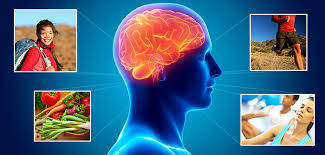
Whether you are feeling really good or really bad, emotions are felt more intensely when the ambient lighting is brighter, according to recent research.

Since many decisions are made under strong lighting conditions, turning down the lights may help you make less emotional decisions.

The study, published in the Journal of Consumer Psychology, also has implications for those experiencing depression, as Alison Jing Xu, the study’s lead author explained:

Click to read


General Blog

Sleep Disorders Widely Undiagnosed in Individuals with Multiple Sclerosis


In what may be the largest study of sleep problems among individuals with multiple sclerosis (MS), researchers at UC Davis have found that widely undiagnosed sleep disorders may be at the root of the most common and disabling symptom of the disease: fatigue.

Conducted in over 2,300 individuals in Northern California with multiple sclerosis, the large, population-based study found that, overall, more than 70 percent of participants screened positive for one or more sleep disorders.

The research highlights the importance of diagnosing the root causes of fatigue among individuals with MS, as sleep disorders may affect the course of the disease as well as the overall health and well-being of sufferers, the authors said.

General Blog

Zebrafish Model of a Learning and Memory Disorder Shows Better Way to Target Treatment

Using a zebrafish model of a human genetic disease called neurofibromatosis (NF1), a team from the Perelman School of Medicine at the University of Pennsylvania has found that the learning and memory components of the disorder are distinct features that will likely need different treatment approaches. They published their results this month in Cell Reports.

NF1 is one of the most common inherited neurological disorders, affecting about one in 3,000 people. It is characterized by tumors, attention deficits, and learning problems. Most people with NF1 have symptoms before the age of 10. Therapies target Ras, a protein family that guides cell proliferation. The NF1 gene encodes neurofibromin, a very large protein with a small domain involved in Ras regulation.

​Click to read​

General Blog

Where Original Ideas Come From

Revolutions are seldom solo efforts.  Isaac Newton was the greatest scientist of his age and not one known for his false modesty, but even he had to admit, “If I have seen further it is by standing on the shoulders of giants.”

Thomas Kuhn made a related point in his classic, The Structure of Scientific Revolutions.  He argued that precedence in science is somewhat arbitrary—a matter of perspective rather than fact—because new discoveries are rarely tied to the work of just one person or team.

Yet, while very few ideas are truly original, there are exceptions.  Sometimes an important new idea seems to have no precursor or precedent, but springs forth whole from a single mind and completely alters our perception of how the world works.  Although these are rare, they have a lot to teach us about how to become more creative ourselves.

General Blog

Researchers Demonstrate Direct Brain-to-Brain Communication in Human Subjects

Advanced neuro-technologies including wireless EEG and robotized TMS enable first successful transmission.

In a first-of-its-kind study, an international team of neuroscientists and robotics engineers have demonstrated the viability of direct brain-to-brain communication in humans. Recently published in PLOS ONE the highly novel findings describe the successful transmission of information via the internet between the intact scalps of two human subjects – located 5,000 miles apart.

“We wanted to find out if one could communicate directly between two people by reading out the brain activity from one person and injecting brain activity into the second person, and do so across great physical distances by leveraging existing communication pathways,” explains coauthor Alvaro Pascual-Leone, MD, PhD, Director of the Berenson-Allen Center for Noninvasive Brain Stimulation at Beth Israel Deaconess Medical Center (BIDMC) and Professor of Neurology at Harvard Medical School. “One such pathway is, of course, the internet, so our question became, ‘Could we develop an experiment that would bypass the talking or typing part of internet and establish direct brain-to-brain communication between subjects located far away from each other in India and France ?’”

Click to read

General Blog

The Will to Bear Discomfort: A Key Character Trait

I’ve come to believe that one of the most important aspects of developing a sound character is learning to endure the unpleasant and deal with it in an adaptive manner. Unfortunately, I’ve known far too many individuals who failed to acquire the skills to do so during their formative years. Some were diagnosed with Attention Deficit Disorder because of their apparent inability to sustain their attention, most especially on tasks they didn’t find sufficiently stimulating. Others were diagnosed with various disorders of impulse control, largely because they couldn’t tolerate a moment of boredom.

I’ve also known many — both children and adults — who unfortunately fell into problematic patterns of substance use, many of whom were attracted to the substances as a means of escape. When I looked carefully beyond both the symptoms they presented and the various diagnoses that could rightfully be conferred upon these folks, one thing appeared disturbingly common: an intolerance of feelings or circumstances that distressed them in some way, and an excessive readiness to alter their mood swiftly and surely.

General Blog

You Can Increase Your Intelligence: 5 ways to Maximize Your Cognitive Potential

While Einstein was not a neuroscientist, he sure knew what he was talking about in regards to the human capacity to achieve. He knew intuitively what we can now show with data—what it takes to function at your cognitive best. In essence: What doesn’t kill you makes you smarter.

Not so many years ago, I was told by a professor of mine that you didn’t have much control over your intelligence. It was genetic—determined at birth. He explained that efforts made to raise the intelligence of children (through programs like Head Start, for example) had limited success while they were in practice, and furthermore, once the “training” stopped, they went right back to their previously low cognitive levels. Indeed, the data did show that [pdf], and he (along with many other intelligence researchers) concluded that intelligence could not be improved—at least not to create a lasting change.

Click to read


General Blog

The Most Productive People Know Who to Ignore

A coaching client of mine is managing partner at a very large law firm, and one of the issues we’ve been working on is how to cope more effectively with the intense demands on his time—clients who expect him to be available, firm partners and other employees who want him to address their concerns and resolve disputes, an inbox overflowing with messages from these same (and still other!) people, and an endless to-do list. Compounding this challenge, of course, is the importance of making time for loved ones and friends, exercise, and other personal needs.

​Click to read​

General Blog

The Best Leaders “Talk the Walk”

One of the most ubiquitous aphorisms in business is that the best leaders understand the need to “walk the talk” — that is, their behavior and day-to-day actions have to match the aspirations they have for their colleagues and organization. But the more time I spend with game-changing innovators and high-performing companies, the more I appreciate the need for leaders to “talk the walk” — that is, to be able to explain, in language that is unique to their field and compelling to their colleagues and customers, why what they do matters and how they expect to win. The only sustainable form of business leadership is thought leadership. And leaders that think differently about their business invariably talk about it differently as well.

​Click to read

General Blog

8 Ways to Live With a Chronic Illness

“Life isn’t about waiting for the storm to pass…It’s about learning to dance in the rain,” wrote Vivian Greene.

“Courage doesn’t always roar. Sometimes courage is the quiet voice at the end of the day saying, ‘I will try again tomorrow,'” wrote Mary Anne Radmacher.

These are two of my favorite quotes about living with a chronic illness, about the quiet conviction required from someone with a lasting condition to live gracefully, without getting bitter. I have, for the last six years, lived with treatment-resistant depression, fighting death thoughts (“I wish I were dead”) throughout my day. Although I haven’t stopped trying new drugs and alternative therapies, I am finally accepting the possibility that I may never get “well” or as well as I was in my twenties and early thirties.

So I’m shifting my energy from finding a cure to learning how to “live around” the illness, turning to people with debilitating conditions like fibromyalgia, lupus, and chronic fatigue syndrome–as well as to scientists, meditation teachers, and great thinkers–for instructions on how to manage painful symptoms. Here are a few gems I have picked up, tips on how to dance in the rain … and where to find the courage to try again tomorrow.

General Blog

Understanding Consciousness

Researchers advocate for more scientific research on consciousness.

Why does a relentless stream of subjective experiences normally fill your mind? Maybe that’s just one of those mysteries that will always elude us.

Yet, research from Northwestern University suggests that consciousness lies well within the realm of scientific inquiry — as impossible as that may currently seem. Although scientists have yet to agree on an objective measure to index consciousness, progress has been made with this agenda in several labs around the world.

General Blog