Intrusive Thoughts: When Having a Great Imagination Seems Like a Curse

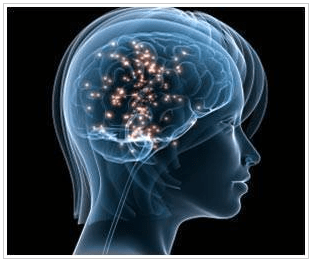
At any given time I can bring to mind a fatal accident. Something violent and tragic is upon me, and it’s going to happen any second.

Riding in the car — a vehicle will suddenly crash into the back of us and send us careening off the freeway. Walking the dog — a larger animal will come out of nowhere and eviscerate my pet. Blowing out the candles on my birthday cake — a gas line will explode. Sitting in front of an open window — someone will reach inside and hit me over the head.

I don’t know what came first, my anxiety or my vivid imagination. Certain unthinkable things have happened that seem to substantiate my anxiety. It has gotten worse since I put my home back together after Hurricane Katrina in 2005, the same year my brother suffered the onset of schizophrenia. The following year my parents divorced, the recession left me unemployed, and my brother relapsed into active psychosis.


General Blog

Men , women and memory

The study, published in JAMA Neurology, measured memory performance, brain structure according to lower hippocampal volume and the presence of amyloid – brain plaques associated with Alzheimer’s disease.

“Our objectives were to compare age, sex and APOE ε4 effects on memory performance, hippocampal volume and amyloid positron emission tomography (PET) across the adult lifespan,” write the authors.

APOE ε4 is a gene that is consistently identified as a risk factor for late-onset Alzheimer’s disease and has been found to significantly lower the age of onset for this condition. It is also recognized as a risk factor for early-onset Alzheimer’s disease as well.

Click to read

Neuroscience & Psychology

No Big Bang? No beginning?

The widely accepted age of the universe, as estimated by general relativity, is 13.8 billion years. In the beginning, everything in existence is thought to have occupied a single infinitely dense point, or singularity. Only after this point began to expand in a “Big Bang” did the universe officially begin.

Although the Big Bang singularity arises directly and unavoidably from the mathematics of general relativity, some scientists see it as problematic because the math can explain only what happened immediately after—not at or before—the singularity.

“The Big Bang singularity is the most serious problem of general relativity because the laws of physics appear to break down there,” Ahmed Farag Ali at Benha University and the Zewail City of Science and Technology, both in Egypt, told Phys.org.

Click to read

Research

High Levels of Formaldehyde in E-Cigarette Vapor

Researchers found that e-cigarettes operated at high voltages produce vapor with large amounts of formaldehyde-containing chemical compounds.

This could pose a risk to users who increase the voltage on their e-cigarette to increase the delivery of vaporized nicotine, said study co-author James Pankow, a professor of chemistry and civil and environmental engineering at Portland State University in Oregon.

“We've found there is a hidden form of formaldehyde in e-cigarette vapor that has not typically been measured. It's a chemical that contains formaldehyde in it, and that formaldehyde can be released after inhalation,” Pankow said. “People shouldn't assume these e-cigarettes are completely safe.”

The findings appear in a letter published Jan. 22 in the New England Journal of Medicine.

Health experts have long known that formaldehyde and other toxic chemicals are present in cigarette smoke. Initially, e-cigarettes were hoped to be without such dangers because they lack fire to cause combustion and release toxic chemicals, a Portland State news release said.

Click to read


General Blog

Revolution in South Asian history

It is an amazing ‘message’ that has lain buried in the sands of time in the ancient city of Anuradhapura. First brought to light in the late 1980s by Dr. Siran Deraniyagala of the Archaeological Department that early settlers in Anuradhapura communicated through the use of the Brahmi script long before the Ashokan period in India (during which time this script was earlier believed to have come into use), parallel evidence has now emerged in South India.

Dr. Siran Deraniyagala. Pic by Nilan Maligaspe

This changes the history of South Asia and is considered “momentous” since the discovery of the Mahavamsa.

Transfer of information depends on writing and here the Sunday Times details how this information technology revolution was unearthed in the 1980s in Sri Lanka and confirmed in research publications last year in India.

Archaeological research excavations were conducted in the ancient administrative centre, the ‘Citadel’, of Anuradhapura by Dr. Siran Deraniyagala of the Archaeological Department in 1988. They probed the origins of the settlement at Anuradhapura, at depths of nearly 30 feet below present ground level. Contrary to hitherto held belief, these beginnings were scientifically (radiocarbon) dated to around 900 BC, with a settlement area of as much as 35-65 acres, representing a large village. The associated cultural material comprised the use of iron tools, paddy cultivation, high grade pottery and the rearing of horses and cattle (Deraniyagala 1990, 1992; Deraniyagala & Abeyratne 2000).

By 700 BC the settlement covered over 125 acres, and by 500 BC a city of around 180 acres. Subsequently, in the 3rd century BC during the reigns of King Devanampiya Tissa and Emperor Asoka of India, the Citadel had reached its peak of over 250 acres.

​Click to read​

Religion & Philosophy

Why Greece’s Spillover Across Euro Area Will Probably Be Contained This Time

Greece‘s flirtation with an exit from the euro in 2011 and two cliffhanger elections in 2012 prompted the darkest days of the debt crisis, halted only by the European Central Bank‘s pledge to save the currency come what may.

Now, with the collapse of another Greek government, Europe’s leaders, its more vulnerable economies and financial markets are better prepared. While euro in-or-out threats will echo through the Greek election campaign, the spillover across Europe this time is likely to be contained.

“We’re looking at a Greece problem — the euro crisis is over,” Holger Schmieding, chief economist at Berenberg Bank inLondon, said by phone. “The euro crisis was all about contagion risk. I do not expect markets to seriously contest the contagion defenses of Europe.”

Click to read

General Blog

It’s on the Tip of My Tongue

It just happened to me the other day: I was watchingMarvel’s Agents of S.H.I.E.L.D. and there was a new guest star; I turned to my husband and said – “Oh I remember her – she was in ‘Angel’ and the new ‘Much Ado About Nothing’…Amy something or other….” And then I drove myself crazy trying to remember her name before giving up and searching it on IMDB (It’s Amy Acker).

We’ve all experienced moments like that before – what scientists call the “tip-of-the-tongue” phenomenon, or TOT – where we remember all sorts of things about something or someone but can’t seem to get the name out. Understanding how and why this happens is more than just a matter of helping us access random celebrity names: TOT opens a window into aphasia, a language disorder caused by stroke and other brain injuries in which people have a hard time remembering words and generating speech.

Click to read

Neuroscience & Psychology

World economy: Past and future tense

A FINANCIAL crash in Russia; falling oil prices and a strong dollar; a new gold rush in Silicon Valley and a resurgent American economy; weakness in Germany and Japan; tumbling currencies in emerging markets from Brazil to Indonesia; an embattled Democrat in the White House. Is that a forecast of the world in 2015 or a portrait of the late 1990s?  

Recent economic history has been so dominated by the credit crunch of 2008-09 that it is easy to forget what happened in the decades before. But looking back 15 years or so is instructive—in terms of both what to do and what to avoid.

Click to read

General Blog

Mind Controlled Robot Arm Project

Using mind control, woman with quadriplegia moves robot arm and hand in ’10D’.

In another demonstration that brain-computer interface technology has the potential to improve the function and quality of life of those unable to use their own arms, a woman with quadriplegia shaped the almost human hand of a robot arm with just her thoughts to pick up big and small boxes, a ball, an oddly shaped rock, and fat and skinny tubes.

The findings by researchers at the University of Pittsburgh School of Medicine, published online today in the Journal of Neural Engineering, describe, for the first time, 10-degree brain control of a prosthetic device in which the trial participant used the arm and hand to reach, grasp, and place a variety of objects.

Click to read

General Blog

The Economics of Brains

The idea that understanding the brain can inform economics is controversial but not new; for 20 years, behavioral economists have argued that psychology should have a greater influence on the development of economic models. What is new is the use of technology: economists, like other researchers, now have at their disposal powerful tools for observing the brain at work. The most popular tool, functional magnetic resonance imaging (fMRI), has been around since the late 1980s; but only in the past few years has it been used to study decision-making, which is the crux of economic theory.

General Blog

UNDERSTANDING OF BASIC BRAIN PROCESSES

In Experimental Psychology, emotions and economic behaviour are being investigated in the context of gambling tasks, using lesion studies to identify links between pre-frontal cortical lesion damage and decision-making impairments. This research is being complemented by fMRI studies of temporal discounting and impulsivity, identifying different neural correlates for early versus delayed rewards. Researchers in Physiology, Development & Neuroscience (PDN) are analysing, under real conditions, the steroid responses of male traders in the City of London, identifying a link between heightened testosterone levels and risky behaviour, and between cortisol levels and adverse memories of trading performance.

Click to read

General Blog

The 17 most corrupt countries in the world

Transparency International has published its 2014 Corruption Perceptions Index (CPI), which ranked 175 countries and territories based on how corrupt their administrative and political institutions are perceived to be on a scale from 0 (highly corrupt) to a 100 (very clean).

Compiled from a combination of surveys and assessments of “the abuse of entrusted power for private gain,” the CPI is the most widely used indicator of corruption worldwide.

Here are the 17 most corrupt countries, according to the index:

Click to read

General Blog

Kofi Annan calls for the tackling of depression to be made a global priority

The former UN secretary general, Kofi Annan has called for the tackling of depression to be made a global priority, with mental health incorporated into a new UN Millennium Development Goal after the deadline for achieving the current goals passes in 2015.

“The failure to tackle depression undermines the fundamental human rights of millions and millions of people,” he said. “This begins with the denial of even the most basic levels of treatment and support.”

Annan said the collective failure to confront the condition, which affects almost 7% of the world’s population – 400 million people – was not a result of a lack of knowledge about treatment, but a failure to recognise the scale of the problem and put in place resources to overcome it.

Click to read

General Blog

What Peter Drucker Knew About 2020

When PwC released its annual survey of corporate chief executives for 2014, it was immediately obvious that change is on leaders’ brains: “As CEOs plan their strategies to take advantage of transformational shifts,” the consultancy reported, “they are also assessing their current capabilities – and finding that everything is fair game for reinvention.”
It’s no wonder why.

“Every few hundred years throughout Western history, a sharp transformation has occurred,” Peter Drucker observed in a 1992 essay for Harvard Business Review. “In a matter of decades, society altogether rearranges itself – its worldview, its basic values, its social and political structures, its arts, its key institutions. Fifty years later a new world exists. And the people born into that world cannot even imagine the world in which their grandparents lived and into which their own parents were born. Our age is such a period of transformation.”

--

General Blog

What Alzheimer’s Patients Feel After Their Memories Have Vanished

While patients with Alzheimer’s might not remember when their loved ones visit, it has a profound effect on how they feel, a new study finds.

The study showed both happy and sad video clips lasting around 20 minutes to people with Alzheimer’s disease and observed their emotional states (Guzmán-Vélez et al., 2014).

They did the same for a group of healthy adults.

Five minutes afterwards, all the participants were given a memory test to see if they could remember the video they had just seen.

As you’d expect, Alzheimer’s patients remembered significantly less about the clips they’d just seen than the healthy group

Click to read

Neuroscience & Psychology