Vatican welcome to Anglicans boldest move since Reformation

The Vatican launched an historic initiative Tuesday to make it easier for disgruntled Anglicans worldwide to join the Roman Catholic Church. The church said the move was not a swipe at the Anglicans but it could nevertheless result in hundreds of thousands of churchgoers unhappy with openly gay and female clerics defecting to Rome.

Pope Benedict XVI gave his approval to a new framework to bring back into the fold Anglicans who oppose their church's liberal stance on gay marriage and the ordination of women priests and gay bishops while allowing them to retain some of their separate religious traditions.

The move comes nearly 500 years after Henry VIII's desire for a divorce led him to break with Rome and proclaim himself as the head of the newly formed Church of England in 1534. The framework is the Vatican's most sweeping gesture toward any schismatic church since the Protestant Reformation in the 16th century and the Thirty Years' War that followed it in the 17th century. That war ended with the Peace of Westphalia in 1648, which acknowledged the right of monarchs rather than the Vatican to determine their national faiths, prompting Pope Innocent X to declare the document "null, void, invalid, iniquitous, unjust, damnable, reprobate, inane, empty of meaning and effect for all time."

Click for full article

General Blog Religion & Philosophy

Vitamin C and Brain Development

Vitamin C and Brain Development

Vitamin C deficiency during the first weeks of life may impair early brain development, according to a new animal study.

In the study, 30 newborn guinea pigs were randomly assigned to receive a standard diet or a vitamin C-deficient diet for two months. Guinea pigs, like humans, are only able to obtain vitamin C through the diet.

Spatial memory was assessed using a water maze and nerve cells in the brain (called hippocampal neurons) were evaluated with brain scans. The researchers found that vitamin C-deficient guinea pigs had significantly poorer spatial memory and 30 percent fewer hippocampal neurons than the control group.

Because vitamin C concentrations are the highest in neurons compared to other cells in the body, the authors suggested that the vitamin may play an important role in brain activity. However, it is unclear if similar results would occur in humans.

For more information about vitamin C, please visit Natural Standard's Foods, Herbs & Supplements database.

To comment on this story, please click here to enter Natural Standard's blog.

From Natural Standard

General Blog

A BALANCED APPROACH TO CHANGE

Introduction:

    1. "Change" is the word for the 90's.  To some change means progress; for others it poses a threat.  On the one hand it seems that some among us think that any change would be better than what we have and they are ready to try almost anything as long as it is new.  Others of us, however, see this as a very dangerous attitude because we see some of the suggested changes as being departures from the Biblical pattern.  Obviously there are some changes which are harmless and may be helpful, but we need to be cautious about changes that might affect doctrinal purity.  Extremes in either direction can be hurtful.  To favor change simply because it is change may lead to a rejection of New Testament authority.  To oppose a change simply because it is different from that to which we are accustomed can be a repudiation of Christian liberty.

    2. We have chosen Phil. 3:4-16 as the framework for "A Balanced Approach to Change."  Of course, Paul was not dealing with identical circumstances, but the text will show us some principles that can help us with the issue of change.

Discussion:

I. It will be Helpful for Us to Reflect on what We Left behind in our Pursuit of Pure Christianity.

     A. Phil. 3:4-6 describe Paul's former religion. In the eyes of the world, in the eyes of popular religion, his position was impressive. What is clear, however, is that he had no desire to go back to those things. The Pharisee "denomination" was something Paul had known from the inside, and he saw no merit in its traditions.

     B. Some of us have personally came out of certain denominations to embrace Biblical truth. This should have the effect of making us especially cautious in regard to changes that would move us toward the errors that we left.

     C. One thing necessary to help us to keep a balanced perspective regarding change is, therefore, that we keep in mind that the faiths and practices of denominationalism, though sometimes appealing on the surface, are worthless and destructive. We have no more reason for wanting to be like modern sects than Paul had for wanting to be like the Pharisees.

II. As We Consider Changes We must Make Sure We are not Pursuing the Wrong Goals.

    A. While the text expresses it in several ways, the only thing that mattered to Paul was that he please Christ, being acceptable to Him (Phil. 3:7-11).  The context names things especially related to his Jewish heritage (Phil. 3:4-6), but "all things" are meaningless compared to being accepted by Christ.

    B. There is a particular temptation to make and our religious practices more compatible with things considered "important" to the world.  However, here are some things we must guard against:

    1. An inordinate obsession with numbers and budgets.  It sometimes seems that "church growth" has become an end in itself.

    2. The desire to be intellectually sophisticated.  Is this what is behind the idea that a "new hermeneutic" must replace what is considered to be "simplistic pattern theology"?

    3. Pressure to be "politically correct."  For example, to continue to forbid women to preach will label us as "sexists."

    4. Compatibility with culture.  Proposed changes in music would (allegedly) be more appealing to an entertainment-oriented society.  Some are asserting that drama is more preferable to preaching sermons.

III. But a Balanced Approach regarding Change also Requires that We Understand that Some Changes will always Be in Order.

    A. Paul did not claim perfection (Phil. 3:12-14).  Where there is room for growth, there is room for change.  This is not always what those calling for change mean, of course, but personally we must admit our lack of perfection.

    B. In one sense, therefore, we can speak of a completed restoration. On the other hand, we should realize that restoration is never complete, so long as we have not "already attained, neither were already perfect."

    C. As an over-reaction against radical calls for change we may resist even Scriptural and helpful improvements.

    1. It is folly not to accept changes in the way we do things when such changes are Scriptural and expedient.  History will show that things now generally found to be useful were historically resisted because they represented change.  (For examples, Sunday classes, individual communion cups, etc.)

    2. It is the heresy of presumption to condemn others for changes that are not violations of Scripture, even though they are different from that to which we have been accustomed, and even though we may doubt their value (cf.  Deut. 18:20.)

IV. It Is Essential, however, that We never Give Up what has already been Attained in Faith and Practice.

    A. The NASB renders Phil. 3:16, "However, let us keep living by that same standard to which we have attained."

    B. The principle applies to both personal holiness and the practice of the church.  Today we should be committed to New Testament Christianity. We should insist that the Bible be our only standard.  Appropriating the words of Paul, the point is that we must be faithful to what we have already found to be right (cf. 2 John 1:9.)

    C. Our concern for this will make us cautious.

    1. Some changes which at first seem acceptable may be, in actuality, stepping-stones to error.

    2. Things may be in the realm of judgment, but would be bad judgment.

Conclusion:

    Certain key questions are always in order when changes are suggested: Is it Scriptural?  Is it safe?  Is it really profitable?  And, do others have a Scriptural right to choose this change, even if it is not my personal choice?

Ideas expressed by David Pharr

General Blog

Working time -Recent Cases


HM Revenue and Customs v Stringer and Others
[2009] IRLR 677, HL

Following guidance from the ECJ the HL eventually decided that workers absent from work on long term sickness absence since the start of the leave year, who had exhausted both their contractual and statutory sick pay, did accrue statutory holiday and should be allowed to take that holiday. The HL also ruled that claims in relation to statutory holiday pay can be brought as a claim for unlawful deductions from wages under the Employment Rights Act 1996 (ERA). Annoyingly some other issues did not form part of the HL decision such as:

  • As the Working Time Regulations do not provide for holiday to be carried over if a worker on sick leave is refused holiday, can that holiday entitlement be carried over and be taken in a subsequent holiday year?
  • Can such a worker only be paid in lieu of the holiday on termination?

As some issues remain unresolved, we attempt to set out below practical steps employers can take, bearing in mind that the law is still grey in some areas. In Stringer the ECJ gave some guidance saying that under the Directive:

  • Workers on sick leave can accrue the four weeks’ paid holiday while they are on long-term sick leave (This does not apply to all of the 28 days applicable under the UK legislation).
  • Workers must be allowed to take this accrued holiday on their return to work.
  • Any national rule which prevents workers actually taking paid leave during sick leave is permissible, as long as the worker then has the right to take their leave at another time (that is when they return). Similarly a national rule which allows workers to take paid annual leave during sick leave is also allowed.
  • It is not lawful to provide that the right to annual leave is lost at the end of a leave year where the worker has been on sick leave.
  • Where the employment relationship is terminated, workers are entitled to take the leave or to any pay in lieu of the holiday which was not taken due to illness. This is the case even where the worker was on sick leave for all or part of the leave year in question.
  • Accrued statutory holiday not taken due to sickness can be taken at a later date – even if it is during the next leave year.

Implications for employers:

  • Employers must provide all workers including those on long term sick leave with at least the four weeks EU annual leave in the usual way. (Of course in the UK leave entitlement is more than four weeks, that is 28 days, but the Stringer decision does not apply to this holiday just the four week part of it).
  • Under the UK's current Working Time Regulations (WTR) employers can apparently insist that leave must be taken in the year in which it is due; although this seems inconsistent with the ECJ's judgement in Stringer and so new legislation may be needed.
  • Workers may have a right to carry leave over into the next year if there is a contractual right to do so, or if or the employer has refused permission for the employee to take the leave.
  • On termination, but probably not during employment, workers have the right to be paid in respect of accrued but untaken holiday entitlement.
  • Employers may incur increased costs in relation to workers who return (or leave) following long-term sick leave.
  • Employers should check private health insurance schemes and may be better off not providing these and dismissing the long-term sick earlier rather than later.
  • Workers who are absent for years on permanent health insurance could accumulate a considerable right to annual leave (and pay in lieu). It is not certain if that would be payable by the insurer, but insurers may attempt to deny cover.
  • At the very least, employers should focus on managing sickness absence to ensure the employees return to work as soon as possible.
  • If the employment relationship ends, workers are entitled to a payment in lieu in respect of untaken leave due to sickness (even if the worker is absent for all or part of the leave year in question).
  • In the UK it appears that accrued statutory holiday not taken due to sickness does not have to be carried over and taken during the next leave year if the worker returns to work in the next leave year. However as this is unlikely to affect many employees and the ECJ have expressed the view that they should be allowed to take it, employers may wish to consider allowing those who are affected to carry the leave over.
  • Employers should always remain wary of denying holiday pay to workers who have been absent for part of the year.
  • As the EU cases refer to the four weeks holiday under the Directive, employers must decide how to deal with the additional holiday conferred by the UK WTR (and/or any contractual holiday). This must be dealt with in sickness, or absence policies.
  • The ECJ judgment does not entitle workers to accrue the additional holiday during sickness absence, although employers may wish to allow this. If they do not, disability discrimination issues may arise and treating the extra holiday entitlement differently may be difficult for personnel departments to administer. Alternatively employers may limit any holiday which accrues during sick leave to a maximum of four weeks holiday as long as the relevant policy says so.
  • Employers must review current holiday policies to decide how they wish to deal with untaken holiday at the end of the leave year, at least as far as those on sick leave are concerned.
  • The cases do not deal directly with other areas of the law and it is unlikely to further affect other common long term absences such as ordinary and additional maternity leave. It is already well established that employees accrue annual leave during the whole maternity leave so employers usually allow the statutory annual leave to be taken at the end of maternity leave or to make a payment in lieu.
  • Perhaps subsequent cases may address similar issues concerning paid holiday during, for example, a long term sabbatical. A carefuk employer may require workers to take their annual leave during a sabbatical.
  • As the law is now going through a process of change employers must be very careful with employees who are on long-term sick leave as they are also likely to be protected by the Disability Discrimination Act 1995.
  • Any unpaid pay in lieu of annual leave can be a 'deduction from wages' and it is therefore possible for workers to claim in respect of a series of deductions for up to six years.
General Blog

Useful health discoveries

The fat that blasts away cancer 

You've been told cancer runs in families. You've been told what to eat and what NOT to eat — including LESS fat. 

Yet Dr. Steven Pratt says there'sone fat you
 should eat MORE of. It's the monounsaturated fat called oleic acid, found in olive oil! It should come as no surprise. After all, olive oil is a staple of the Mediterranean diet. And people inSpain and Greece are far less likely to develop cancer than in the U.S. 
But what's really interesting is how olive oil not only prevents cancer, it blasts away cancer cells that already exist! So if you're even the slightest bit worried about cancer, this is oneSuperFood you don't want to be without!
 

NEW prostate-protecting champ trumps tomatoes! 

Unless you've been asleep under a rock for the past decade, you've heard the news about tomatoes. They contain a potent antioxidant calledlycopene that's been proven to reduce the risk of certain cancers — in particular, prostate cancer. 

A famous Harvard study back in 1995 found that out of 48,000 men surveyed, those who ate 10 or more servings of tomatoes a week reduced their risk of prostate cancer by more thanone-third. What's more, they lowered their risk of aggressive prostate tumors (the kind that are really tough to treat) byHALF!
 
But before you reach for that slice of pizza or bottle of ketchup, listen up. What if I told you about a sweet, refreshing food Dr. Steven Pratt recommends that's even better for your prostate than tomatoes?
 
This NEW prostate protecting champ is watermelon! Ounce for ounce, watermelon is even richer in lycopene than tomatoes. And since you probably eat more watermelon in one sitting than you do tomatoes, you don't have to gorge on it 10 times a week in order to slash your cancer risk! Just a few times a week should do it.
 
 Knock out an ulcer with broccoli?! 

About 25 million Americans will suffer from a peptic ulcer at some point in their lives. To get rid of their ulcers, most will take an antibiotic likeamoxicillin. 
Pretty tame stuff, right? Wrong! Amoxicillin can bring with it unwanted side effects like fever, nausea, stomach pain, diarrhea, headache, even a yucky condition called "hairy tongue"!
 
And if you think that's bad, according to the Centers for Disease Control (CDC), the cost of treating an ulcer with antibiotics over an average 17-day period can run upward of $1,000!

Fortunately, there's oneunconventional treatment with NO side effects Dr. Pratt swears by. "Eat broccoli!" he says. Why?
Broccoli contains a remarkably potent compound called sulforaphane, that kills off the H. pylori bacteria that cause most ulcers. Not only can it knock out an ulcer, eating one serving a day for a month might run you 20 bucks… a fraction of the cost of drugs.

General Blog

MANAWA SARANA

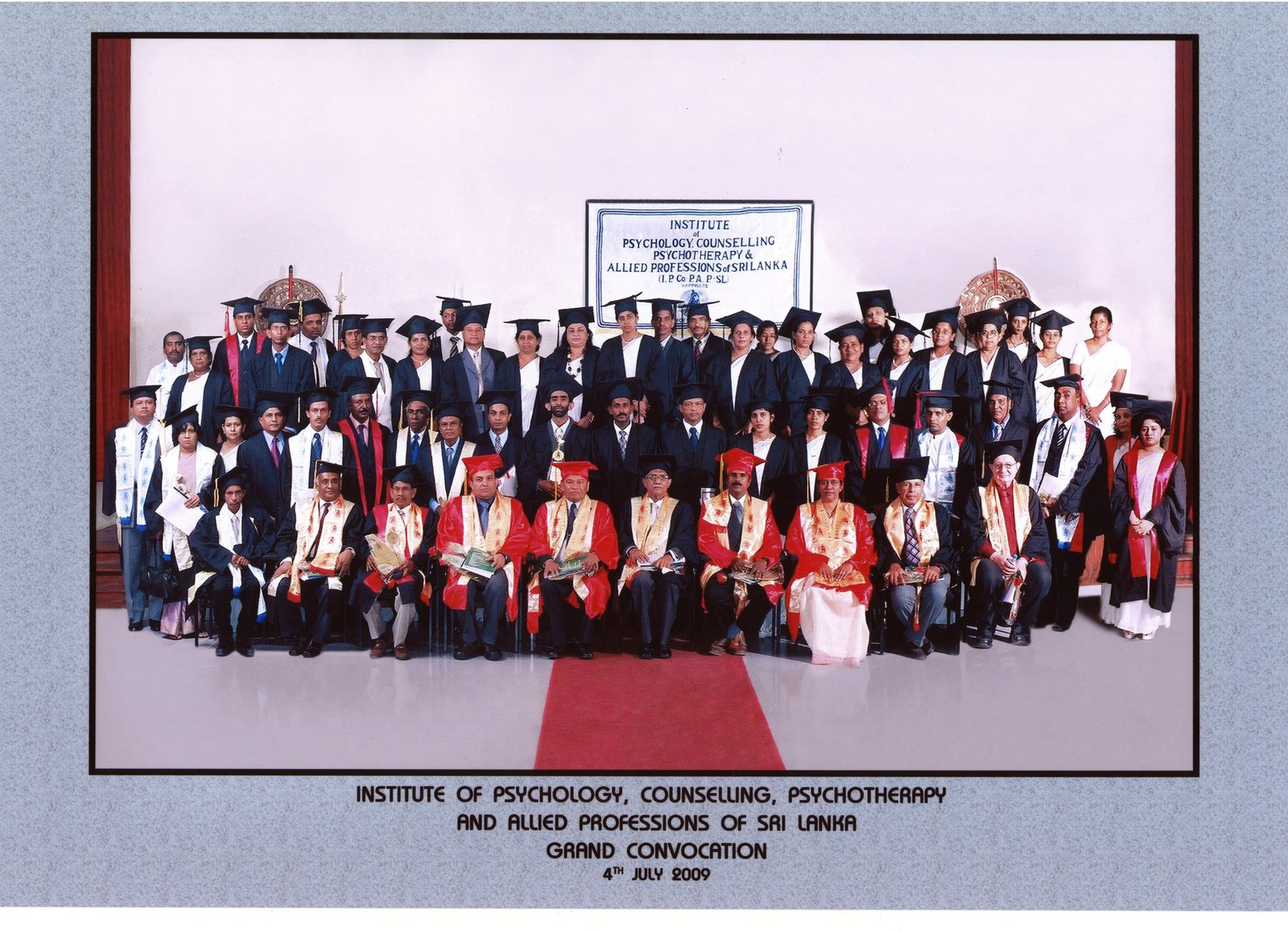
At a recently held convocation of the Institute of Psychology, Counselling, Psychotherapy and Allied Professions of Sri Lanka (Incorporated by Act of Parliament), Prof.Madurasinghe was conferred with the award " MANAWA SARANA" as a recognition of his invaluable services and dedication towards Counselling, Psychotherapy and Mental Health in Sri Lanka.

General Blog

CONFIDENCE — Feeling Good about You is the Key to Success and Happiness –

By Anne Hartley

Recently a client told me that I was her role model for being a confident person. This set me to wondering as to how I became a confident person, what happened, and when, so I created a timeline where I went back to a time when I lacked confidence and found that was when I left school, many aeons ago.

When I left school I planned to be a hairdresser and had an apprenticeship lined up. After working at the hairdresser's during the holidays, they told me to rethink my career because I wasn't suited to it. I don't know if it was because I knocked over a perm tray, spilled tint on a customer's back, or wet another customer's clothes while washing her hair. Being young, I felt totally shattered that my dream had come to an end, and it was a time when I was totally lacking in confidence and I didn't know what I wanted to do.

Click here to read the complete article.

General Blog