January
February
March
April
May
June
July
August
September
October
November
December
The doctrine of the Trinity has long served as a foundational framework for understanding divine relationality, where the Father, Son, and Holy Spirit exist in eternal perichoresis—mutual indwelling without confusion or competition. In recent interdisciplinary explorations, particularly within quantum theology, this relational structure offers provocative analogies for the emergence of consciousness in the created order.
Central to this discussion is the mediating role of the Holy Spirit as the dynamic bond that animates relational “tension” into experiential awareness. This article synthesizes insights from my prior exchanges on triadic consciousness, metaphysical tensions within the Trinity, and quantum cosmological models, while drawing on key theological and scientific contributions.Trinitarian Relationality and Metaphysical TensionIn orthodox Trinitarian theology, the Father represents absolute infinity and source, the Son the begotten expression of that infinity (Logos), and the Holy Spirit the proceeding bond of love that harmonizes their co-eternal coexistence. The “tension” between Father and Son—understood not as conflict but as creative potential—arises from the paradox of two infinite persons sharing undivided essence without negation or subsumption. This relational dynamism, mediated by the Spirit, overflows into creation as gratuitous love rather than necessity.
Theological proposals suggest this intra-Trinitarian perichoresis mirrors a primordial relational field from which finite reality emerges. The Spirit, as the “breath” or unifying principle, enables differentiation without division, allowing the “space between” Father and Son to manifest as cosmic expansion. This aligns with panentheistic leanings where creation participates in divine relationality without being identical to it.Quantum Analogies: Superposition, Entanglement, and EmergenceQuantum mechanics provides metaphorical tools for conceptualizing this process. In timeless quantum cosmological models (e.g., Wheeler–DeWitt equation), the universe exists as a static wave function in superposition of geometries and histories, with time emerging relationally through decoherence. This timeless superposition parallels the eternal Trinitarian “tension”: potentialities coexisting without temporal sequence until mediated dynamics select classical outcomes.
Quantum entanglement—non-local correlations where entangled particles influence each other instantaneously regardless of distance—offers a striking analogy to perichoresis. The Persons are “entangled” in mutual indwelling, their relations constitutive rather than additive. The Holy Spirit functions as the mediating “bond,” enabling holistic unity amid distinction, much like entanglement preserves correlation without classical locality.Ernest L. Simmons, in The Entangled Trinity: Quantum Physics and Theology (2014), develops “entangled Trinitarian panentheism,” where relational holism and quantum indeterminacy illumine God’s dynamic inter-relatedness in creation, incarnation, and sanctification. The Spirit’s role scales up to biological levels via quantum decoherence and Darwinism metaphors, suggesting the creative Spirit’s presence in nature and the “flesh” of incarnation.
John Polkinghorne, a physicist-theologian, highlights parallels between quantum interpretation challenges and Trinitarian debates, noting the relational universe fits a Trinitarian Creator. In Quantum Physics and Theology: An Unexpected Kinship (2007), he underscores how both domains grapple with counterintuitive realities (wave-particle duality vs. unity-in-diversity) through experiential coherence.The Holy Spirit and Emergent ConsciousnessTriadic consciousness posits awareness as inherently relational, structured in threes: ground (self/source), otherness (relation), and unifying synthesis (mediation). Human self-awareness reflects divine patterns: “I” grounded in awareness, “thou” in relational encounter, and transcendent unity in love or self-transcendence.
The Holy Spirit emerges as pivotal in animating this structure. Without mediation, Father-Son tension remains abstract potential—like uncollapsed superposition. The Spirit introduces procession and fecundity, “breathing” relational life into finite modes. Consciousness arises as participatory echo: matter evolves relational complexity (neural networks, social bonds) capable of reflecting Trinitarian dynamics, quickened by the Spirit.
This avoids materialist reduction (consciousness as mere brain-emergence) or dualistic soul-substance views. Instead, it frames consciousness as emergent relational participation, rooted in divine communion. The Spirit “hovers” over evolutionary processes (Gen 1:2), enabling secondary causes while allowing direct interventions (e.g., inspiration, union).Quantum theology reinforces this: entanglement analogies suggest non-local divine presence sustaining conscious experience. The Spirit as “creative spirit in nature” (Simmons) enables the leap from potential to actuality, turning eternal relational plenitude into finite subjective awareness.Implications and CautionsThis framework enriches theology in a scientific age, portraying the Trinity as attuned to a relational cosmos rather than archaic. It reframes creation as intrinsic overflow of loving relationality, sidestepping mechanistic “first cause” views. Consciousness becomes participatory in divine life, animated by the Spirit’s breath.
Yet cautions remain: analogies are metaphorical, not literal identities. Quantum concepts describe creaturely reality, not divine essence (analogy of being). Risks include blurring Creator-creation distinction or implying emanationism over ex nihilo creation. Orthodox theology emphasizes gratuity: creation is willed, not necessary.
In conclusion, the Holy Spirit’s mediating role in Trinitarian relationality offers a profound lens for understanding consciousness as emergent from divine “tension.” Quantum analogies—entanglement for perichoresis, superposition for potential, decoherence for emergence—illuminate how timeless divine communion animates finite awareness. This invites wonder at a cosmos where relationality is fundamental, echoing the eternal dance of Father, Son, and Holy Spirit.
References
Emotional intelligence is the ability to perceive and evaluate feelings accurately in ourselves and in others.
The most emotionally intelligent people can access and evoke emotion, understand non-verbal cues, and regulate their feelings to build stronger relationships. As a Harvard-trained psychologist, I’ve seen firsthand how this is key to long-term professional and personal success.
So how can you tell if you need to work on these skills? If you use any of these seven phrases, you may have low emotional intelligence:

We often refer to our minds and to what we are thinking unselfconsciously, as though it was obvious what we were referring to. However, philosophers have generally found answering the most basic – and therefore the most fundamental – questions about the mind exceptionally challenging. To say what the mind is made up of, what we really mean by terms like ‘thoughts,’ ‘ideas,’ and so on, is extremely difficult. It stretches philosophical inquiry to the boundaries of sense and subjectivity.
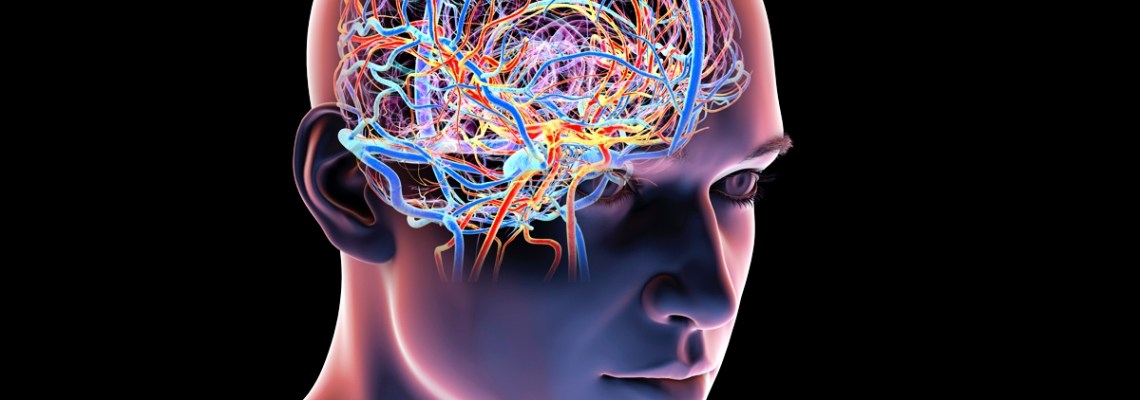
Scientists discover what happens in our brain as we die
Are our dying moments a vivid reel of our life’s memories? Do we get to experience a grand curtain call before our mortal time comes to an end? If you have ever found yourself grappling with these existential questions, you are not alone. The mysteries of death and what transpires in our brains in our final moments have puzzled scientists and philosophers alike for centuries.
Recent groundbreaking research by a team led by neuroscientist Dr. Ajmal Zemmar from the University of Louisville and involving colleagues from around the globe might just bring us a step closer to understanding these enigmatic processes.
In 2017, I was grateful for the opportunity I received to lecture on “Science of God” in which I mentioned the first microsecond of the big bang (0.000001) which modern researchers believe contained plasma, the fourth state of matter.
In 2021, researchers said they used the Large Hadron Collider to investigate this plasma which was the first matter ever to be present in our universe. And, they said, it had liquid-like properties.
Medicina Alternativa which I am heading globally, had its founder Chairman Dr.Inyushin of Alma Ata Kazakhstan postulating that the Bioplasma field which is the 5th state of matter is that which organizes and orchestrates Neurology. Physiology and biochemistry of organisms.
Even today, I am more than ever fascinated by the General Theory of Relativity, Dark matter and the Block Universe theory which is a subject that takes a considerable amount of my time these days.
When he was just a kid, Anil Seth wondered about big questions. Why am I me and not someone else? Where was I before I was born? He was consciousness-curious before he knew the name for it. This drew him initially to physics, which he thought had the ideas and tools to understand everything. Then experimental psychology seemed to promise a more direct route to understanding the nature of mind, but his attention would again shift elsewhere. “There was a very long diversion through computer science and AI,” Seth told me recently. “So my Ph.D., in fact, is in artificial intelligence.” Though it wasn’t like that was going to confine his curiosity: AI led him to neuroscience and back to consciousness, which has been his focus, he said, for “the best part of 20 years or so.”
Can human consciousness affect the physical world? Being able to reliably demonstrate that consciousness can directly interact and change the physical world would be a game-changer, especially for breaking out of the materialist paradigm, or the paradigm that believes only physical matter (and energy) makes up the world.
A potential target for testing this hypothesis is electrical plasma – an electrically conducting medium that is the so-called “fourth state of matter,” in addition to solid, liquid, and gas. Electrical plasma is now thought to make up about 99% of the visible matter in the universe and it is also associated with anomalous luminous effects reported throughout history, including phenomena called will-o’-wisps, ball lightning, and possibly with moving points of lights observed during seances, shimmering apparitions, and even unidentified flying objects.
Closely analyzing the global trends during recent months, it is evident how the human weakness of DIVISIVENESS has been exploited to bring about our own early demise: Socially, Economically, Politically, Racially, and Theologically, as we drift ignorantly toward a global catastrophe and an early extinction of human civilization.
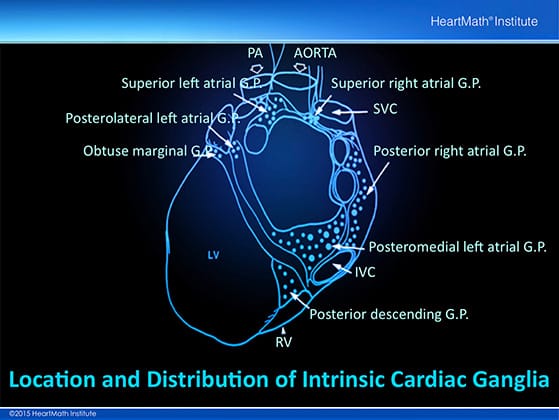
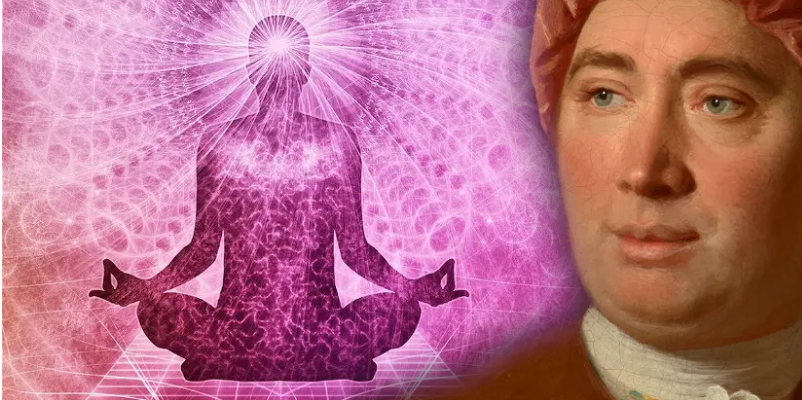
A predominant role in the awakening of consciousness has much to do with heart intelligence, expanded consciousness and heart coherence which would be the norm during this 5th Industrial Revolution as we transcend boundaries moving through this uncertain post-covid era.
If you have ever tried to erase that annoying earworm from your mind or stop thinking about whether you locked the door after leaving the house, you know how disruptive it can be to think about something irrelevant to the task at hand.
While much work in cognitive neuroscience focuses on how the human brain remembers and retains information, some cognitive neuroscientists have instead turned to forgetting – working to track exactly how we forget a piece of information and what it means for patients suffering from neurocognitive disorders.
“It may sound surprising that people can control what and how they forget,” says Marie Banich of the University of Colorado, Boulder, who is chairing a session about new research on forgetting at the Cognitive Neuroscience Society (CNS) annual meeting today in San Francisco.
“But control over working memory is critical for switching between and re-prioritizing tasks. So in many ways, it is not surprising that we have control over the ability to remove information from the focus of our thoughts.”
There is no convincing evidence that brain-training apps can make you smarter.
However, one line of enquiry has compared brain-training games to run-of-the-mill video games, and this is where things get interesting. In a 2015 study comparing the brain-training game Lumosity with the first-person puzzle game Portal 2, researchers found that Lumosity players didn’t show boosts in problem-solving and spatial skills, but Portal 2 players did.
More recently, in 2020, researchers based at the Karolinska Institutet in Sweden looked at data from some 9,000 American children and found that kids aged 9 or 10 who played video games for above-average amounts of time didn’t show any differences in intelligence compared with those who played less.
For all that education has changed in recent times—from the disappearance of cursive lessons to the rise of computer science in classrooms to pandemic-forced remote learning—one thing has remained stubbornly unchanged.
That’s stress and anxiety over math.
Even before worries mounted over “learning loss” and the ongoing youth mental health crisis, researchers observed math anxiety in children as young as 6.
EdSurge caught up with cognitive scientist Sian Beilock, author of books “Choke” and “How the Body Knows Its Mind,” to talk about how anxiety can impact students’ math performance—and how adults can help them. Beilock is also the president of Barnard College, and the president-elect of Dartmouth College.
Over the past 25 years there has been lots of research and debate about the concept, the history and state of globalisation, its various dimensions and benefits.
The World Economic Forum has set out the case that the world has experienced four waves of globalisation. In a 2019 publication it summarised them as follows.
The first wave is seen as the period since the late 19th century, boosted by the industrial revolution associated with the improvements in transportation and communication, and ended in 1914. The second wave commenced after WW2 in 1945 and ended in 1989. The third commenced with the fall of the Berlin Wall in 1989 and the disbanding of the former Soviet Union in 1991, and ended with the global financial crises in 2008.