

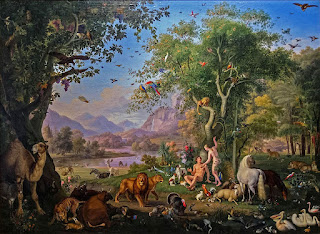
From Dust – afar and tsela – side to “Super Dust”: The Cosmic Journey of Triadic Consciousness and the Glorified Body
When we examine the archaeological record, a stunning reality emerges that perfectly validates this timeline. For nearly 300,000 years, anatomically modern Homo sapiens wandered the earth, leaving behind little more than scattered flint tools and basic pigments. Then, in a geological blink of an eye—roughly within the last 10,000 years—something unprecedented occurred. The historical record reveals an explosive, abrupt civilizational dawn.
Suddenly, humanity was no longer merely surviving; it was co-creating. Within this incredibly narrow window, we see the sudden rise of monumental architecture, from the megaliths of Göbekli Tepe to the precise geometry of the Egyptian Pyramids. We witness the birth of complex written language, which instantly gave rise to profound theological literature such as the Vedas and the Torah. Mathematics, observational astronomy, and complex agriculture appeared seamlessly across the globe. There is absolutely no record of such advanced cognitive or societal achievement prior to this specific epoch. This civilizational explosion is the undeniable historical footprint of the nĕšāmâ.
Click to read

Cosmic, Biological, and Spiritual History
Cardiology of Conscience
Cardiology of Conscience- Part 2 Suneidesis
Converging storm- Rapture and Glorified Body
Men before Adam, Tree of Life and Block Time
Original Creation and Gap Theory
The Miraculous Eucharist
The Digital Relic: Forensic Pathophysiology and The Historical Bedrock
The Case for 3 April 33 AD Crucifixion
- Jesus as the Complete Manifestation of God: A Tria…
- The Neanderthal and Modern Human Connection: A Sc…
- The E-Consciousness Framework and 4 C model?
- Uniqueness of E Consciousness a Divine gift
- E Consciousness with Philosophy
- E Consciousness with Kant’s transcendental idealism, and Boroditsky
- E Consciousness with Western, Greek, Asian and Arab Philosophers
- Mapping E Consciousness to Kant, Nietzsche, Aquinas and Church Fathers, Clement to Irenaeus
- E Consciousness with Hegelian dialectics, Marxist materialism and a pre-tribulational rapture.
 Prof.Dr Lakshman Madurasinghe